Unlocking Chalkidona: A Journey through the crossroads of history and nature
While Thessaloniki’s vibrant center—with its bustling waterfront, Roman ruins, and lively cafes—is the starting point for most travelers, some of the region's most captivating stories are tucked away just beyond the city limits.
Just a short distance from the city center lies the Municipality of Chalkidona. For both curious locals and travelers looking to escape the usual tourist trails, Chalkidona is a true hidden gem. Offering a brilliant mix of ancient history and the pivotal political drama that shaped modern Greece, this area makes for a perfect day trip.
Here are two remarkable sites in Chalkidona that you absolutely need to add to your Thessaloniki itinerary.
The Macedonian Tombs of Agios Athanasios: Unearthing the Elite of Antiquity
Εφορεία Αρχαιοτήτων Περιφέρειας Θεσσαλονίκης
Just 20 kilometers west of Thessaloniki, in the Municipal Unit of Agios Athanasios, lies an impressive archaeological site that transports you straight back to the era of Alexander the Great.
- Distance from Thessaloniki: ~20 km (West)
- Historical Era: Late 4th / Early 3rd Century BC
- Significance: Intact elite warrior burials
The Discovery
In the spring of 1994, archaeologists investigated an imposing earth mound—a burial tumulus nearly twenty meters high and one hundred meters in diameter. Their mission was delicate: to locate and uncover the ancient structures within while preserving the integrity of the tumulus itself.
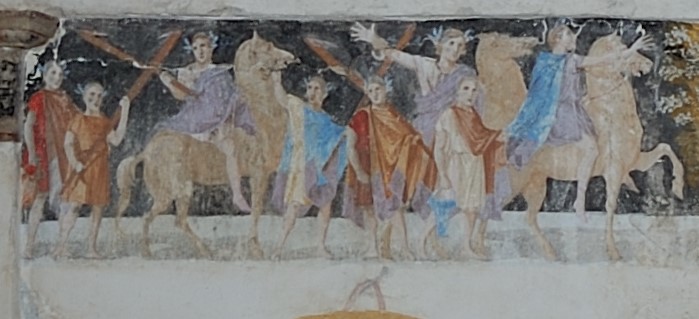
What they discovered was extraordinary. The initial excavations along the eastern side brought to light two unlooted tombs dating back to the late 4th and early 3rd century BC.
The Secrets of the Ancient Elite
Because these tombs were untouched by grave robbers, they provided an invaluable, vivid glimpse into the burial customs and daily lives of the ancient Macedonians.
- Inside a modest, chest-shaped (cist) tomb, archaeologists discovered a deceased individual accompanied by everyday personal items.
- Alongside iron scrapers (strigils) and spears, the grave contained two pairs of bronze spurs.
A Warrior's Legacy: These unique artifacts suggest the tomb belonged to a young cavalryman, a proud member of the elite companion cavalry of the Macedonian army.
Today, this site sits alongside another beautiful Macedonian tomb with an Ionic facade (discovered in 1970). Together, they are part of a unified archaeological park that honors the deep antiquity of the region.
The Balkan Wars Museum: The Villa where Thessaloniki's fate was sealed
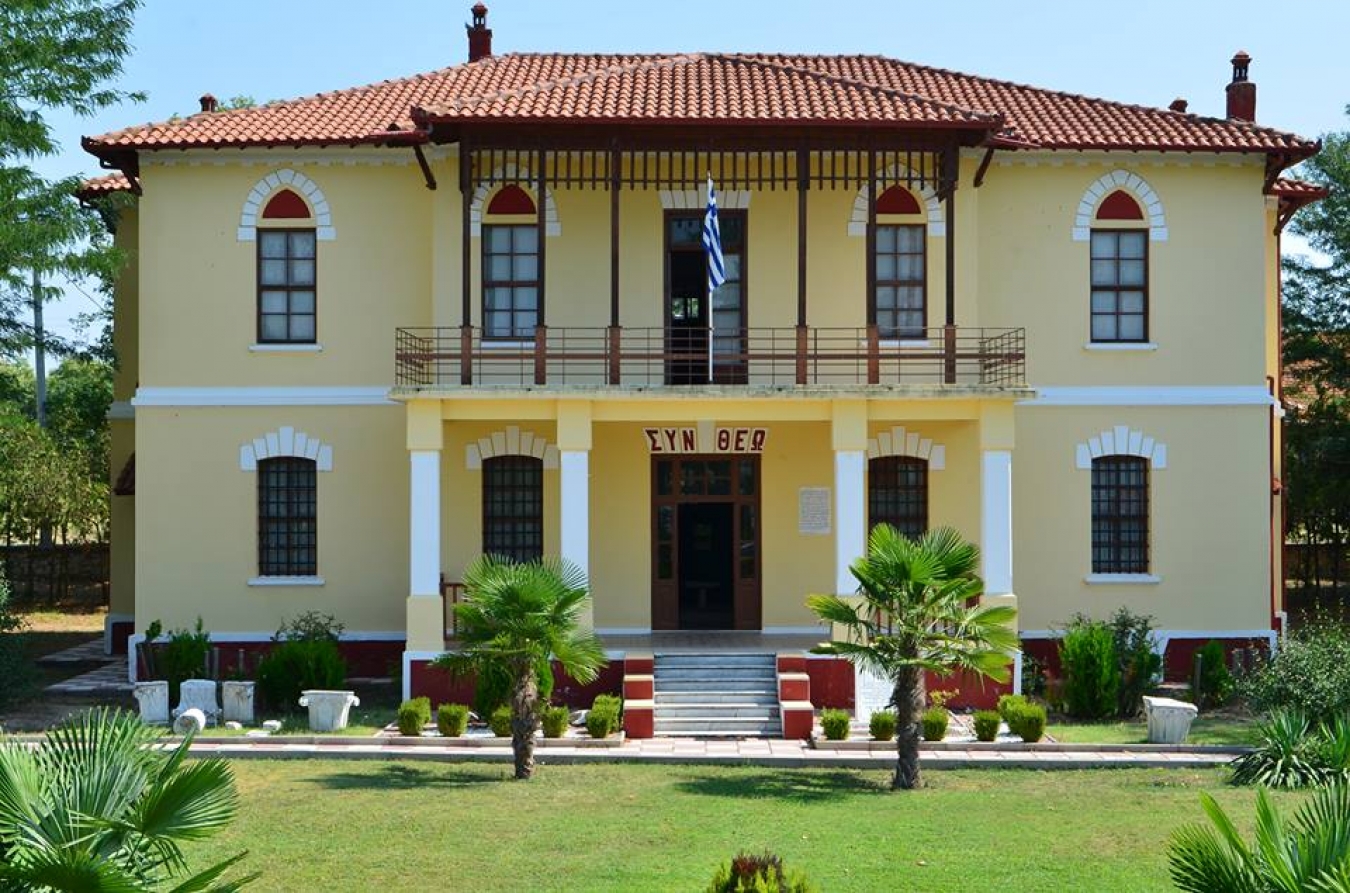
Just a few minutes further down the road, 25 kilometers from Thessaloniki along the National Road to Edessa, you will find the village of Gefyra. This quiet town holds one of the most historically significant buildings in modern Greek history: the Balkan Wars Museum.
- Distance from Thessaloniki: ~25 km
- Original Name: Villa Modiano / Villa Topsin
- Key Date: October 26, 1912 (The liberation of Thessaloniki)
From Grand Estate to Military Headquarters
Built in 1906, this elegant villa was originally the central building of the Modiano estate, owned by Yako Modiano—son of Saul Modiano, one of the largest property owners in the Ottoman Empire. Back then, the village was known by its Ottoman name, Topsin, and the estate was known alternately as Villa Modiano or Villa Topsin.
During the First Balkan War, on October 24, 1912, the villa became the General Headquarters of the Greek forces. It was in this very house, over three intense days, that the destiny of Macedonia was decided.
The Historic Surrender
Inside the villa's walls, high-stakes negotiations took place between the Ottoman commander of the city, Hasan Tahsin Pasha, and the Commander-in-Chief of the Greek forces, Crown Prince Constantine.
After several rounds of negotiations, Ottoman representatives returned to the villa on the afternoon of October 26, 1912—the feast day of Saint Demetrius, Thessaloniki's patron saint—to accept the unconditional surrender of the city. To this day, a torchlit relay race is held annually on this date from the museum to the 3rd Army Corps in Thessaloniki to commemorate the historic moment.
Exploring the Museum
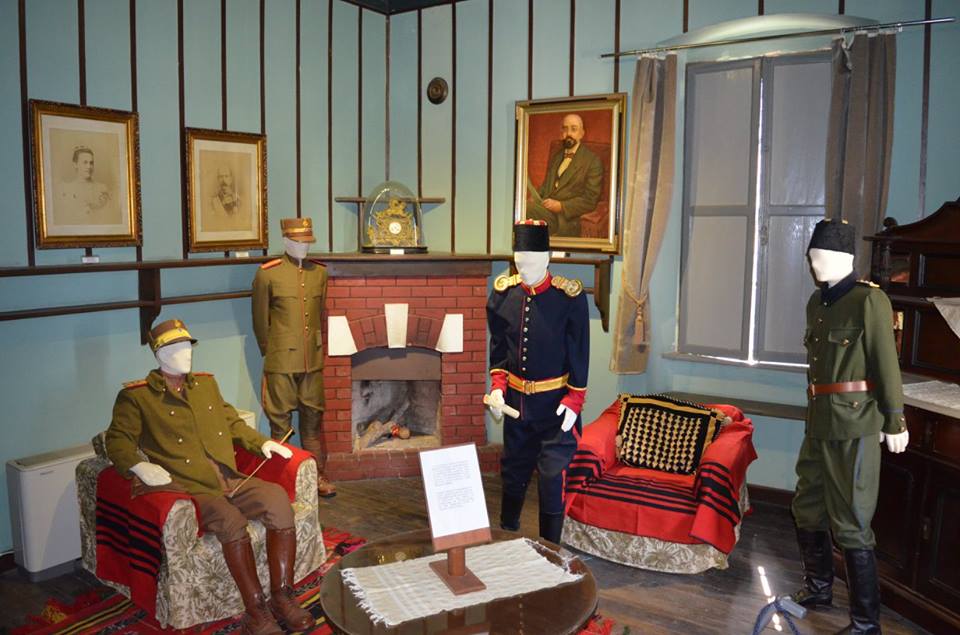
Today, the villa has been meticulously preserved. Visitors can walk through rooms that still contain the furniture of the era, alongside an incredible collection of artifacts, including:
- Greek, Turkish, Bulgarian, Serbian, Montenegrin, and Romanian military uniforms and weapons (such as the Greek Mannlicher M1903 and Turkish Mauser M1889).
- A handwritten card by the Greek Prime Minister of the time, Eleftherios Venizelos.
- An exact copy of the protocol of the surrender of Thessaloniki.
The Resting Place of a Complex Figure
In the courtyard of the museum lies the tomb of Hasan Tahsin Pasha and the remains of his son and adjutant, Kenan Mesare. Tahsin Pasha was a fascinating, dramatic historical figure. Educated at the Zosimaia School of Ioannina, he was deeply immersed in Greek culture. His respect for Hellenic civilization was a key factor in his decision to surrender the city peacefully to the Greeks rather than to the Bulgarians.
Though he fell out of favor with the Ottoman Empire and spent the rest of his life in Switzerland under the protection of the Greek state, his bloodless surrender saved the city of Thessaloniki from destruction.
Why You Should Visit
Chalkidona proves that you don't have to travel far from Thessaloniki's city center to find profound historical narratives and peaceful scenery. Whether you are a resident looking to rediscover the history of your home region, or a tourist eager to explore the authentic paths of Central Macedonia, the tombs of Agios Athanasios and the Balkan Wars Museum offer an unforgettable journey through time.