Beneath the Altar: The Crypt of Agios Demetrios
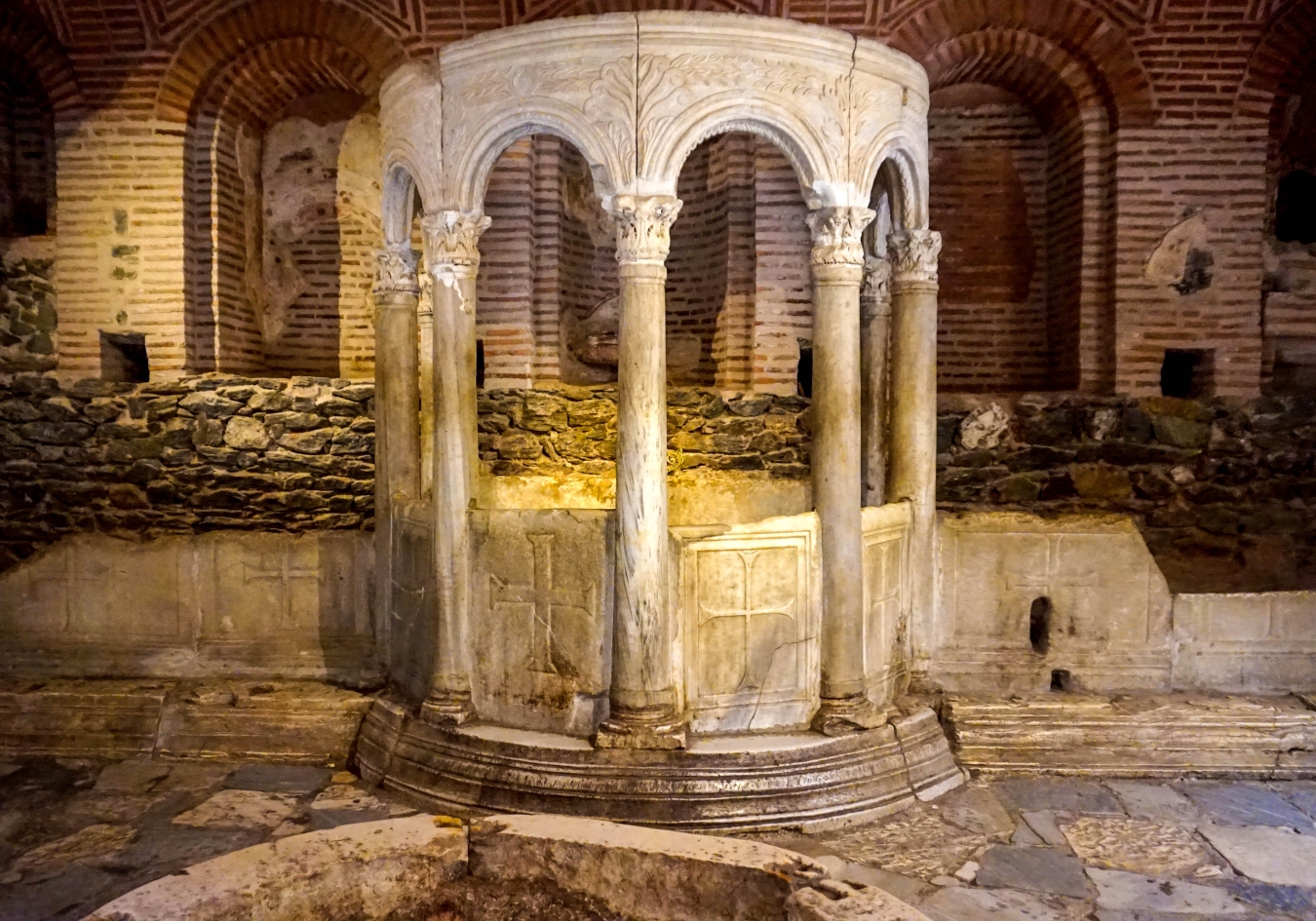
If you’ve spent even a single day exploring Thessaloniki, you’ve probably stood in awe inside the Church of Agios Demetrios. It is the majestic heart of the city—bright, expansive, echoing with soft hymns, and beautifully adorned with intricate mosaics. But while hundreds of travelers walk its smooth marble floors every day, only a fraction notice the unassuming stone staircase tucked away to the right of the altar. If you take those steps downward, the sounds of the modern city fade into a heavy, reverent silence. You are entering the Crypt—a subterranean sanctuary frozen in time, where Thessaloniki’s Roman and Byzantine souls quietly intertwine.
The Secret History Beneath the Ash
For centuries, this underground world was completely lost to time. It wasn't until the tragic Great Fire of 1917, which devastated much of Thessaloniki and severely damaged the upper church, that the earth gave way to reveal this incredible archeological treasure. As archaeologists cleared the debris, they realized they weren’t just looking at a basement. They had uncovered a monumental 3rd-century Roman bathhouse complex. According to Christian tradition, it was inside these very Roman baths that Demetrios—a young Roman officer turned passionate Christian preacher—was secretly imprisoned by Emperor Galerius. In 303 AD, because of his refusal to renounce his faith, Demetrios was executed on this exact spot.
Wandering Through the Shadowy Corridors
Walking into the Crypt today feels like stepping onto an active archaeological dig site, but with the atmospheric lighting of a hidden museum. The space is a beautiful labyrinth of low brick arches, robust marble columns, and ancient stone water basins.
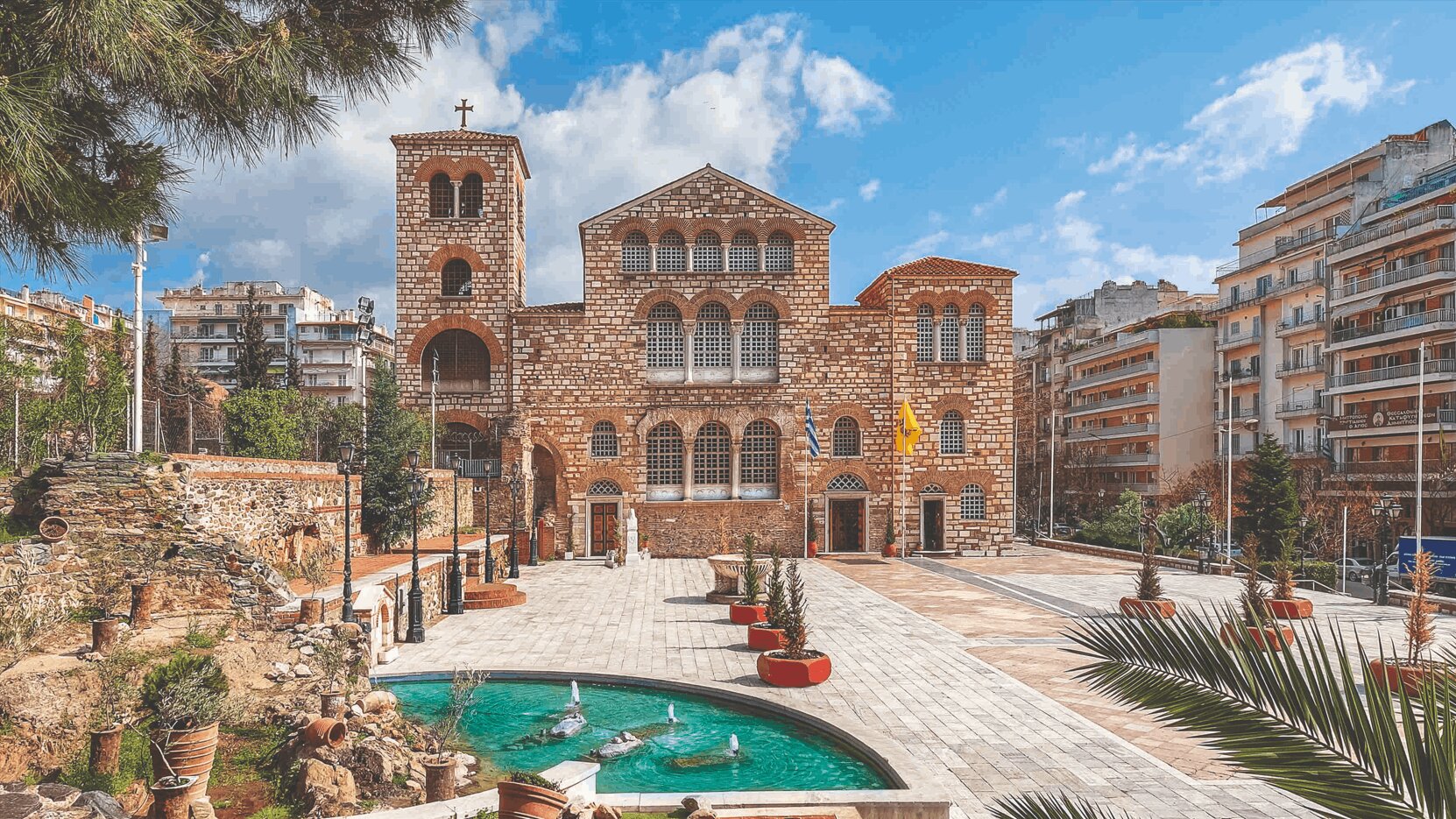
As you explore, look closely for these three remarkable highlights:
- The Marble Ciborium: In the heart of the crypt stands a circular marble structure supported by elegant pillars. This marks the traditional site where the saint was martyred.
- The Miraculous Fountain: During the Byzantine era, the ancient Roman water channels were adapted. The crypt became world-famous because a sweet-smelling, healing oil (known as myron) reportedly flowed from the saint's tomb into these basins. Faithful pilgrims from across the medieval world would travel thousands of miles just to collect a few drops in small glass flasks.
- The Hidden Museum: Displayed naturally along the ancient walls are fragments of sculptures, decorated column capitals, and clay vessels recovered from the ruins after the 1917 fire. They tell the story of a church that was built, destroyed, modified under Ottoman rule, and reborn again.
A Traveler's Tip: The crypt functions as a small museum and entry is completely free. Because it sits directly under a functioning house of worship, remember to dress respectfully (shoulders and knees covered) even when exploring the underground sections.
Why You Shouldn't Skip It
Thessaloniki is a city defined by layers. You see it when you look at Roman ruins framed by modern apartment buildings, or Byzantine walls bordering bustling cafes. But the Crypt of Agios Demetrios offers something rarer: a chance to step inside those layers. It is a peaceful, hauntingly beautiful refuge that reminds us that beneath the vibrant, coffee-loving metropolis we see today lies nearly two millennia of hidden stories waiting to be discovered.
How to find it: Head down the right side aisle of the main Church of Agios Demetrios, near the iconostasis (the screen of icons at the front). Look for the small sign pointing downstairs to the Crypt.