pinelopi

pinelopi

Thessaloniki After Dark: A Guide to the City’s Thriving Nightlife Scene
Published in Lifestyle

Thessaloniki is known for its vibrant energy and rich cultural tapestry, but when the sun sets, the city transforms into a buzzing hub of nightlife, drawing both locals and visitors into its exciting late-night scene. From stylish rooftop bars to gritty underground clubs, the city offers a wide array of options for every kind of night owl. If you're looking for an unforgettable night out, Thessaloniki has got you covered.

The Pulse of the Night: Ladadika District

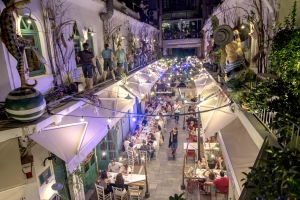
When it comes to Thessaloniki's nightlife, the Ladadika district is the heartbeat of the city after dark. Known for its colorful, cobbled streets and a mix of traditional and modern vibes, Ladadika is packed with tavernas, bars, and clubs. This historic district, once the center of the city’s oil industry, now attracts those looking for both cultural experiences and a fun night out. Ladadika’s tavernas offer an authentic Greek experience, with lively music and delicious food. You can enjoy a hearty bougatsa pastry or a fresh plate of souvlaki while sipping on a glass of local wine or ouzo. For those craving a more modern twist, the area also boasts sleek cocktail bars and rooftop lounges with panoramic views of the city.

The Bar Scene: Trendy & Diverse

Thessaloniki has an eclectic mix of bars that cater to all tastes. Whether you're in the mood for a laid-back drink with friends or an evening of dancing, there’s a bar for everyone. If you're looking for an unforgettable night of dancing and music, Thessaloniki's club scene is vibrant and diverse. Clubs here tend to offer a wide range of musical genres, from electronic beats to Greek pop, ensuring that no matter your taste, you'll find a place to let loose. 

But Thessaloniki’s nightlife isn’t just about bars and clubs—it also offers a rich variety of live music and performances. Whether you’re into jazz, rock, or traditional Greek music, you’ll find something to enjoy.

 Rooftop Bars: Chillin’ with a View

Thessaloniki’s skyline, with its stunning sea views and rolling hills, is even more breathtaking when enjoyed from one of the city’s many rooftop bars. These elevated spots provide a sophisticated atmosphere, perfect for sipping cocktails while watching the sunset or taking in the night lights.

The Late-Night Food Scene

No night out is complete without a late-night snack, and Thessaloniki certainly doesn’t disappoint when it comes to food. After a night of dancing or bar-hopping, you’ll want to head to one of the many eateries that stay open late to satisfy your cravings.

The city is home to the famous Bougatsa Giannis, where you can sample the iconic bougatsa pastry—whether sweet or savory, this flaky treat is the perfect comfort food after a night of partying. For those looking for something more substantial, Ladadika’s many tavernas offer late-night souvlaki, gyro wraps, and traditional Greek meze platters that you can enjoy with friends or as a solo indulgence.

Whether you’re out to dance until dawn, sip cocktails on a rooftop, or enjoy some live music, Thessaloniki’s nightlife is diverse and inviting. The city’s mix of traditional Greek charm and modern energy creates a nightlife scene that’s unlike any other. With its range of bars, clubs, and live venues, Thessaloniki is a city that knows how to have fun and ensure every night is an adventure. So, next time you're in Greece, make sure to experience Thessaloniki after dark—it’s a side of the city you won’t want to miss.

More
Carnival in Thessaloniki: Be part of the celebration!

Published in Tips

If you want to experience a carnival ike no other , come to Thessaloniki! The celebration begins on Tsiknopempti. It’s an experience you must live.

The entire city parties under a cloud of smoke from outdoor grills that sprout in every neighborhood. People celebrate with all their heart!

It’s the Thursday of the second week of the Triodion, which this year falls on February 20, 2025.

The origin of this strange custom is lost in the depths of time. However, it seems to be connected to the Bacchic celebrations of the ancient Greeks and Romans, who regarded feasting and partying as a ritual for the good fertility of the earth in spring.

In recent years, this Greek custom has taken incredible proportions in Thessaloniki. Every year, more and more people organize parties in the areas where they work, starting early in the afternoon and continuing until the next dawn.

Don’t be surprised if you see large grills with souvlaki and meze in front of shops in the city center, with wine flowing abundantly and music pushing you to dance even if you don’t know the steps!

In this celebration, every visitor is warmly welcomed.

Like a domino effect, the joy spreads to every neighborhood in the city!


The Carnival Parade returns to Thessaloniki!

skg karnival

Thessaloniki has a tradition of celebrating Carnival… At the beginning of the 20th century, it was the largest event in the Balkans. From Tsiknopempti to Clean Monday, men and women in costumes would parade through the streets, and the city would be flooded with visitors from all over Northern Greece.

After many years, the parade returns to the city center on Sunday, February 23, 2025, and it looks like it will make a mark with the participation of both young and old masqueraders. This year’s main theme is “Disco.”

The clock of time turns back… a few decades, and Thessaloniki returns to the era when no one could resist the dance.

The highlight of the celebration is the carnival concert with Alexandra Sieti - Souled Out and the band “Mania the Abba tribute,” who will get the crowds moving.

Thessaloniki transforms into a colorful festival, with streets filled with music, dancing, and masqueraders.

It’s an opportunity to forget your worries and give in to the magic of the moment.

And after the party… the cleansing

Clean Monday falls on March 3, 2025, and for all Orthodox Christians, it marks the end of Carnival and the beginning of Lent. A period of fasting and spiritual reflection that will lead us to Holy Week and the Resurrection.

On Clean Monday, we are called to leave behind all sinful habits and indulgences, including non-Lenten foods, thus purifying both our soul and body.

The main symbols of this “purification” are the lagana, a type of unleavened bread, and the kite, which symbolizes the flight of the human soul toward the sky and God. In the past, people believed that the higher the kite flew, the more likely God would hear their prayers.

Once again, Thessaloniki residents and visitors will head to Seih Sou or choose the park of Nea Evlavia, the beach of Aretsou, the former Karatasiou camp, the Thermis Dam, or the Thessaloniki beach.

Small and large celebrations around cauldrons of steaming bean soup, plates filled with pickles, olives, tarama, and halva create the scene of Clean Monday, and the skies will be filled with kites.

53071335 10157103274568328 4453541869434961920 n


Carnival in Thessaloniki: Be part of the celebration!

This Carnival, Thessaloniki invites you to a dance of joy and tradition! Give in to the magic of the city, where laughter and music flood every corner. Taste the unique local delicacies, dance until morning, and experience the authentic spirit of the carnival tradition. Come create unforgettable memories together, moments that will forever light up your heart. Thessaloniki awaits you with open arms, ready to give you a Carnival that will remain etched in your memory forever!

More

Future Perfect at MOMus-Museum of Contemporary Art

Published in Arts & Culture

The double reading of the word ‘perfect’ in the title of the exhibition “Future Perfect” stands at the core of it, along with the question: how will we have lived? The exhibition, coproduced by MOMus-Museum of Contemporary Art in Thessaloniki, the ifa – Institut für Auslandsbeziehungen and the Goethe-Institut Thessaloniki, along with the support of the Consulate General of the Federal Republic of Germany Thessaloniki, presents the visual proposals of 19 artists, an equal number of different answers and assumptions about the (realised) future, at the Museum, from 23 January until 30 March 2025.

Films, photographs, sculptures, objects, paintings, and collages by the participating artists comprise their artistic suggestion as speculations on the course of history. Today, the future appears to us as a critical concept, and even the near future, despite all our digital and mobile acceleration, can scarcely be anticipated. 

If in the southern Mediterranean region, civil societies are demanding a future and facing massive resistance in the process, at Europe’s center it is as if the future were more a source of concern than of motivation.

However, the ability to speculate, to name intentions, expectations, and fears, and then to make these the basis for action is what holds societies together. The works on show design spaces of imagination, action (and play) for the future and they “translate” important social questions into artistic concepts.

Artistic Director: Thouli Misirloglou

Curated by: Angelika Stepken, curator and former director of Villa Romana-Florence, Philipp Ziegler, research collaborator ZKM | Center for Art and Media-Karlsruhe, Theodore Markoglou, art historian-curator MOMus-Museum of Contemporary Art 

Participating artists: Nikos Arvanitis, Nairy Baghramian, DAS INSTITUT (Kerstin Brätsch & Adele Röder), Mariana Castillo Deball, Cyprien Gaillard, Dani Gal, Annette Kelm, Jutta Koether, Armin Linke, Antje Majewski, Henrik Olesen, Yorgos Sapountzis, Nora Schultz, Lina Theodorou, Nasan Tur, Danh Vo, Clemens von Wedemeyer, Vangelis Vlahos

More

Bougatsa: A Delicious Taste of Thessaloniki's Culinary Heart

Published in Food & Drink

When you visit Thessaloniki, you’re bound to be enchanted by its lively atmosphere, stunning landscapes and rich history. But one experience that truly captures the essence of the city is indulging in bougatsa—a beloved pastry that has become a signature snack of Thessaloniki and a symbol of its culinary tradition.

What is Bougatsa?

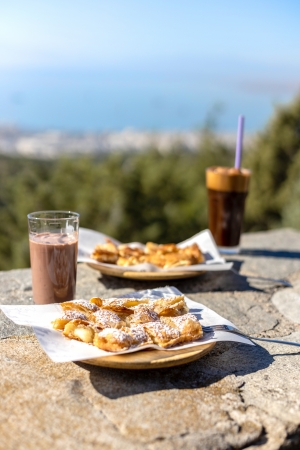
Bougatsa is a flaky, golden pastry that can be filled with a variety of ingredients, most commonly custard, minced meat, or cheese. The dough is incredibly light and crispy, achieving that perfect balance between flakiness and tenderness. While bougatsa is enjoyed across Greece, Thessaloniki holds a special place as the birthplace of this delectable treat.

Traditionally, bougatsa was introduced to Thessaloniki by the city’s many Ottoman inhabitants, and it has evolved over time into a local specialty. The sweet version with custard is probably the most iconic, but savory bougatsa filled with cheese or minced meat (often spiced with a hint of cinnamon) is also a beloved choice.

A Taste of History

Bougatsa’s history is deeply intertwined with the cultural melting pot of Thessaloniki. The city has long been a crossroads of different cultures, from Byzantine and Ottoman influences to the more recent European flavors. This rich history is reflected in its food, and bougatsa stands as a perfect example of how diverse culinary influences can come together to create something uniquely Thessalonian.

In the early 20th century, bougatsa was mainly made by Greek refugees who arrived in Thessaloniki after the population exchanges between Greece and Turkey. These refugees brought their recipes and traditions, which merged with the city’s existing Ottoman flavors. Over time, bougatsa became not just a breakfast snack but a part of Thessaloniki’s identity.

Beige Brown Minimalist Photo Collage

Where to Enjoy Bougatsa in Thessaloniki

If you want to experience bougatsa in its most authentic form, Thessaloniki is the place to be. The city is dotted with bakeries and pastry shops where you can sample this delicious pastry, often served warm right out of the oven. 

If you’re a first-time visitor to Thessaloniki, you may want to start with the sweet bougatsa, filled with creamy custard and topped with powdered sugar. This version is both delicate and indulgent, a perfect introduction to the city’s culinary heritage. If you prefer savory options, try the meat-filled bougatsa, often spiced with cinnamon and served with a side of Greek yogurt. The cheese bougatsa is another great choice, featuring a rich, savory filling that pairs wonderfully with a strong Greek coffee.

 A Cultural Ritual

For many Thessalonians, bougatsa is more than just a pastry; it’s part of their daily ritual. It’s common to see locals grabbing a warm piece of bougatsa in the morning to enjoy with a cup of coffee before heading to work or school. The flaky pastry is a comforting breakfast that pairs perfectly with the bustling rhythm of the city.

In Thessaloniki, bougatsa is often eaten at any time of day—whether as a mid-morning snack, a light lunch, or even as a late-night treat. Whether enjoyed on the go, in a café, or at home, bougatsa brings people together, offering a moment of joy and nostalgia.

Why Bougatsa is a Must-Try

Bougatsa is a pastry that is not only delicious but also deeply tied to Thessaloniki’s identity. Every bite of this flaky treat offers a taste of the city’s history, a reminder of its diverse cultural influences, and a connection to the everyday lives of Thessalonians. Whether you’re exploring the city’s vibrant markets or taking in the beautiful sea views, stopping for a warm bougatsa is an essential part of experiencing Thessaloniki.

As you wander through the city’s lively streets, be sure to seek out this iconic pastry and savor its perfect combination of crispy, creamy, and comforting flavors. Bougatsa is not just food—it’s an unforgettable part of Thessaloniki’s heart and soul.

So, the next time you’re in Thessaloniki, make sure to treat yourself to a piece of bougatsa. It’s not just a pastry; it’s a delicious piece of the city’s history that’s waiting for you to discover!

More

St. David’s Church: A Hidden Byzantine Gem in Thessaloniki’s Upper Town

Published in Hidden gems

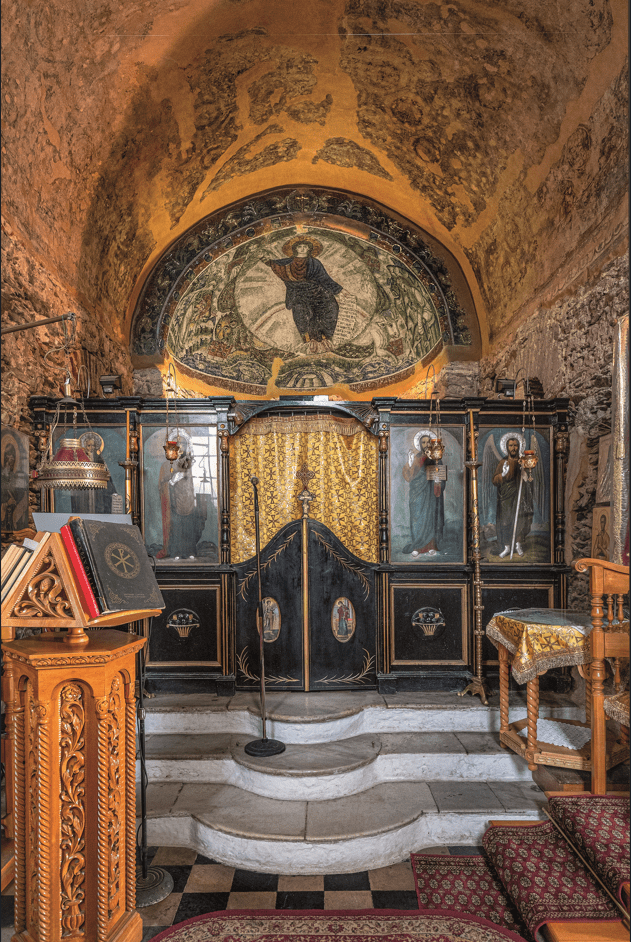
Nestled within the narrow, picturesque alleys of Thessaloniki’s Upper Town, St. David’s Church, also known as Latomou Monastery, is one of the city's most precious Byzantine treasures. Built in the 5th century as the katholikon (main church) of the Monastery of Christ the Savior, it now functions as a church. What makes this monument stand out is the breathtaking Early Christian mosaic depicting Christ as a young, beardless man—a rare and invaluable work of art. According to tradition, the mosaic was miraculously revealed in the 9th century and remains one of the most unique examples of Byzantine mosaic art.

The church offers visitors a magical experience, located in a spot with panoramic views of Thessaloniki, blending serenity with historical grandeur. When visiting, you not only admire its architectural and artistic beauty but also feel the spiritual depth it radiates, revealing the hidden mysteries of Byzantine heritage.

Στιγμιότυπο οθόνης 2025 02 20 112259 min

More

Exploring the 27th Thessaloniki Documentary Festival: A Celebration of Storytelling and Innovation

Published in Events

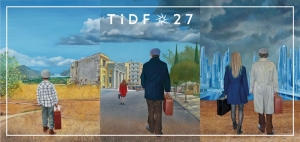
The 27th Thessaloniki International Documentary Festival (TiDF) is set to take place from March 6 to 16, 2025, in Thessaloniki, Greece. This year's festival promises a diverse and engaging lineup, featuring 71 Greek documentaries across various competition sections, including the International Competition, Newcomers, and Film Forward.


Highlights of the 27th TiDF:

  • Focus on Greek Documentaries: A total of 71 full-length and short documentaries from Greece will be showcased, reflecting the rich tapestry of Greek storytelling and cinematic talent.

  • Tribute to Artificial Intelligence: The festival will feature a special tribute titled "AI, an Inevitable Intelligence," offering a selection of thought-provoking documentaries, an impressive visual installation, a masterclass, and a special event.

  • Agora Pitching Forum: The TiDF's Agora will present the Thessaloniki Pitching Forum projects, along with the new AGORA XR Lab, a workshop dedicated to XR and new media projects in development.

  • Masterclasses and Special Events: Renowned documentary filmmakers Nicolas Philibert and Lauren Greenfield will attend the festival to showcase their work and conduct masterclasses, providing valuable insights into the art of documentary filmmaking.


Competition Sections:

  • International Competition: Ten films will compete for the Golden Alexander and Silver Alexander awards, among others. The jury comprises Dimitris Athiridis, Lauren Greenfield, and Signe Byrge Sørensen.

  • Newcomers and Film Forward: These sections aim to highlight emerging talent and innovative storytelling, offering a platform for new voices in the documentary genre.


Attending the Festival:

For those interested in attending, the festival offers a range of screenings, workshops, and networking opportunities. Detailed information on the schedule, ticketing, and special events is available on the official TiDF website.


The 27th Thessaloniki International Documentary Festival stands as a significant cultural event, celebrating the art of documentary filmmaking and its power to inform, inspire, and provoke thought.

More

4 Ski Resorts near Thessaloniki Worth Visiting this Winter

Published in Getaways

If you love winter sports and are looking for destinations near Thessaloniki, we've got the solution for you! Here are the four most popular ski resorts, just a short drive from the city, offering unique experiences for snow lovers.

3-5 Pigadia Ski Resort

Pigadia 2023 1

Located on the slopes of Mount Vermio, 3-5 Pigadia is known for its altitude, reaching up to 2,005 meters. In addition to its five ski slopes, the resort offers other activities such as hiking, mountaineering, and paragliding. With its artificial snow system ensuring snow quality, the resort attracts skiers of all levels, as well as national teams for training.

Seli Ski Resort

seli min

Seli Ski Resort is the oldest organized ski resort in Greece, operating since 1934. At an altitude of 1,530 meters and just 95 km from Thessaloniki, it offers a variety of activities, such as slopes for recreational and competitive skiing, as well as hiking trails. Its modern facilities and rich history make it one of the most popular destinations for ski enthusiasts.

Elatochori Ski Resort

ski 04

Located on the Pierian Mountains, about 105 km from Thessaloniki, Elatochori Ski Resort offers stunning views of Mount Olympus and the Aliakmonas River. With 10 slopes of varying difficulty levels, it's perfect for both beginners and more experienced skiers. At the base of the resort, there is a chalet where visitors can relax after their snowy activities.

Kaimaktsalan Ski Resort

1667603937 1633

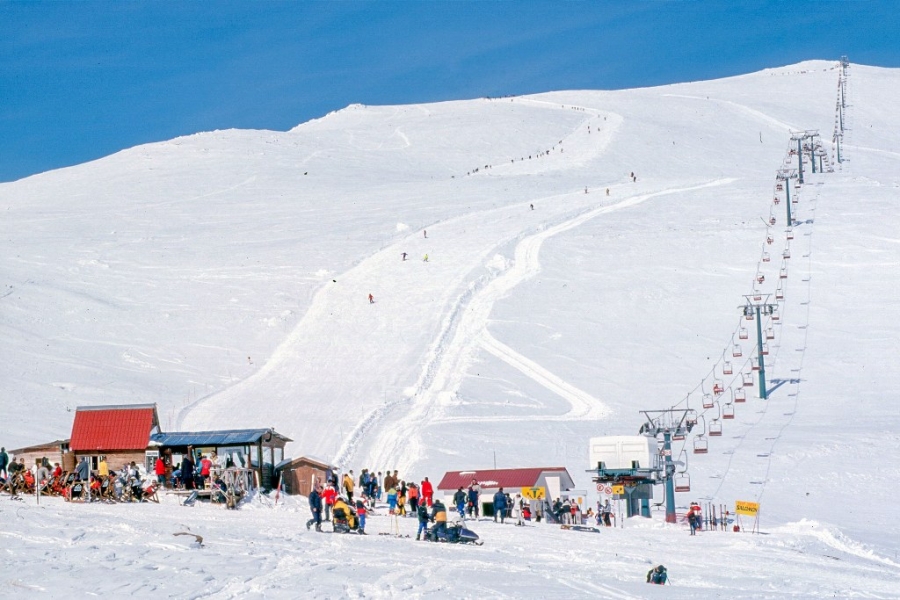
At a distance of 140 km from Thessaloniki, Kaimaktsalan Ski Resort offers 14 slopes at an altitude reaching 2,524 meters, making it one of the highest ski resorts in Greece. Its operating season lasts from November to May! Nearby is the picturesque village of Palaios Agios Athanasios, ideal for accommodation and culinary delights.


More

Discover Thessaloniki’s most historical and impressive cemeteries

Published in Arts & Culture

Discover Thessaloniki’s most historical and impressive cemeteries

Every corner, every alley, every small square in Thessaloniki has its own story to tell. The city that became a point of coexistence of Greeks, Ottomans, Jews, Armenians and other nationalities throughout the centuries who left a piece of their own history here. This Thessaloniki boasts today of its multiculturalism and the fact that it has always been an open and outward-looking city.

And this is proven by the large number of cemeteries that existed or exist within its borders. These monuments today remind us that apart from its cosmopolitan past, Thessaloniki throughout history has always been at the centre of battles and warfare and this past attracts great interest.

In the last 10-15 years, it seems that another form of tourism, a little special, has made its appearance more noticeable, although it used to coexist among the tourist routes of visitors to Thessaloniki. These are visitors interested in the battlefields of the great battles in Europe, war memorials and cemeteries, but also in the dark events and adventures of important historical cities, also known as dark tourism.

Fans of this tourism, come together! Thessaloniki will once again surprise you with the choices it offers and the stories it can tell you.

Zeitenlik Allied Military Cemetery

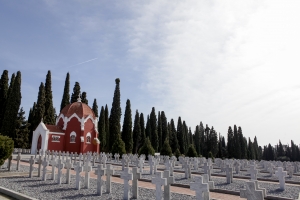
If you find yourself in the western part of the city and you love to learn about dark war stories that have been "buried" in the depths of decades past then you can check out the Allied cemeteries of Zeitenlik on Lagada Street. At first sight you will be surprised by their organization and symmetry, which gives an aesthetically perfect image. In Zeitenlik, 20,000 French, English, Russian, Italian and Serbs who died in World War I are buried in Thessaloniki. Among them, Bulgarian prisoners of war were buried on the same site.

Military Cemetery of the British Commonwealth – Mikra Thessaloniki

The cemetery you will see in the area of Mikra is on the same wavelength of history as the above cemetery. A monumental site of similar architecture and symmetry to that of Zeidelik. A place also full of memories , human stories, military campaigns and war plans for the conflicts of the most turbulent periods of the 20th century. This is the British Commonwealth Military Cemetery. It is the resting place of 1,810 British Army soldiers and 149 British Navy soldiers, and in the cemetery you can also find the Mikra Memorial dedicated to the 500 Commonwealth casualties lost at sea in the Mediterranean, including: nurses, officers and soldiers. If you wander eastwards, don't miss it. It is no coincidence that a British newspaper, on the 100th anniversary of the end of World War I, included Thessaloniki in the top 10 most important destinations in Europe for historical memory tourism.

Military Cemetery of the British Commonwealth – Exohi Thessaloniki

A similar monumental site can be found in the area of Thessaloniki. This war remnant of the First World War also started its operation in 1916, and later in 1917 medical units were operating in the area for the treatment of patients, most of them victims of the Spanish flu. Today, visitors can see the 588 graves of 58 British Commonwealth soldiers, 58 Bulgarians and 17 British victims of World War II.

Armenian Cemetery

Another strong community that was flourishing in Thessaloniki is that of the Armenians who also have their own cemetery in Thessaloniki. Besides, Thessaloniki and Armenia share many common historical memories. Thus, true to their friendship, Greeks and Armenians in Thessaloniki "sleep" side by side, since the two cemeteries border each other in the area of Evangelistria. From 1887-1888 until today the Armenians have their own cemetery in this corner of the city.

Indian Cemetery of the British Commonwealth

Here's something that not many people are familiar with and it's surprising. In Thessaloniki there is an Indian cemetery! It belongs to the Commonwealth Military Cemeteries Commission, located in Dendropotamos and is the only Indian cemetery in Greece. There, 358 Indians of the colonial army who died during the First World War are buried. Along with them, 107 other Indian Muslims are buried, while in the northern part of the cemetery there is a Hindu memorial containing the ashes of 220 of the fallen who were cremated according to their religion's customs.

Ottoman Cemetery of Thessaloniki

Given that Thessaloniki had been under the Ottomans for about 500 years, the Ottoman cemeteries were a reality for the city and there were several of them, but none survive today. A site of Ottoman cemeteries was once delineated on the boundaries of the present-day TIF, the eastern walls and the beach.

Jewish Cemetery of Thessaloniki

The best known cemetery that existed in the past is that of the Jews of Thessaloniki, located on the site of the present-day University Campus. Within it, historical scholars estimate that there were thousands of graves. The cemetery was destroyed during the Occupation, in 1942. By then, it was certainly one of the largest Jewish cemeteries in Europe.

Bulgarian Cemetery

The Bulgarian community has also left its imprint on the city with a cemetery in the area of the present-day Evangelistria area. The cemetery was built and operated there in the 18th-19th century, while today the only thing that survives to remind us of its existence is the church on the eastern side of the old cemetery.

Romanian Cemetery

"Romanian" is how the residents of Neapolis refer to the cemetery where the fallen of the First World War were once buried in Thessaloniki. Although today there is nothing left to remind of its existence, locals know it as the old "shack" of Makedonikos and it was located between the streets of Konstantinos Karamanlis and Andreas Papandreou.


More

The smart tourist card of Thessaloniki

Published in Tips

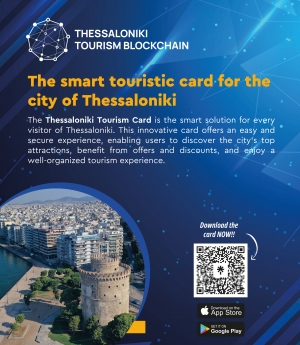
Thessaloniki_Tourism_Blockchain: The digital destination card of Thessaloniki.

Aiming at the dipole'sustainable tourism - sustainable mobility' and starting from the most innovative trends of the modern digital era, the digital destination card of the city of Thessaloniki (ΤΤΒ) becomes a reality.

TTB (Thessaloniki_Tourism_Blockchain) application represents an integral information portal for the city of Thessaloniki, providing information on attractions, points of interest and relevant digital material about the city. At the same time, it enables the user to create a secure and fully personalized digital city tourist card, ensuring the tourist a reduction in delays for on-site ticketing and waiting times, while facilitating the creation of a visit plan.

Among the services available to choose from (booking and prepayment) are sustainable mobility services, tours, day trips, exercise and contact with nature, as well as access to places of interest. In addition, through blockchain technology, the authenticity of the card and its connection to the user is ensured.

Download app for iOS: https://shorturl.at/m6Ol7
Download app for Android: https://shorturl.at/dkhef

More

Wild Horses: The unknown heritage of Axios Delta

Published in Getaways

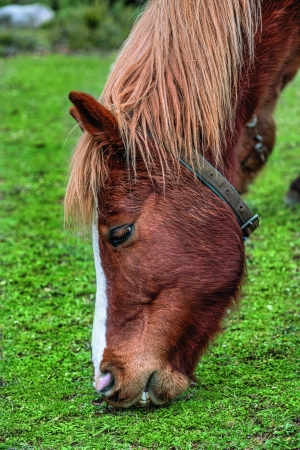
The area around the Axios Delta never ceases to surprise visitors and travellers. The entire area of the Delta Municipality is a rich wetland that, apart from the many-photographed fishermen's houses and the impressive flamingos, also hides many small and unknown stories.

One of them is especially dedicated to the wild horses that have found their own shelter in the area and if you are lucky enough you might run into one of them.

And indeed luck will be a good ally as there are now around 30 wild horses left, as a medium sized herd in other words, but once numbering around 100 horses.

But, how did these animals end up free in the wild again? The truth is that they have not always been there, but their case is quite a positive example of the presence of animals in their natural environment. The replacement of animals and humans in agriculture, with the industrialization of the 1960s, reduced and eventually made their use unnecessary, so they were set free.

Today's (few) horses are the descendants of their domesticated relatives who 60 years ago served farmers in their work. They are medium-sized horses with their roots in Pindos and Thessalian breeds, but they face risks due to lack of food and medical care. Delta Municipality and residents take the initiative and leave food in some of the horses' favorite places.

You can certainly increase your chances of seeing them up close if you are close to the islet near the dam of Axios or when they are galloping on the east bank. In any case, the sight of the lovely horses galloping in small groups or all together surviving freely will surely put you at ease, even from a distance.

More
Subscribe to this RSS feed

#visitthessaloniki