pinelopi

pinelopi

19 things you need to know about Thessaloniki before your visit
Published in Tips

If you're visiting Thessaloniki and want to get a glimpse of what Thessaloniki is all about, we've put together a list of 19 important things to know about the city.

  1. Thessaloniki is the second largest city in Greece and the capital of the administrative district of Central Macedonia.
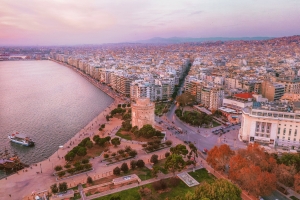
  2. Thessaloniki is bordered by Thermaikos Gulf, which is the largest of the Aegean Sea.
  3. Thessaloniki has its own airport, "Macedonia Airport" and its own port, which is the second largest commercial port in Greece.
  4. There are 3 major universities in Thessaloniki: The Aristotle University of Thessaloniki, the University of Macedonia and the International Hellenic University, creating for the city a large academic reserve.
  5. Thessaloniki is very closely linked to its patron saint and protector, Saint Demetrios, whom it honours every year on 26 October.
  6. Thessaloniki is also called by many the "Nymph of Thermaikos".
  7. Thessaloniki has been inhabited since prehistoric times, while preserved findings date back to the 6th-5th millennium.
  8. Cassander, husband of Alexander the Great's sister, founded it in 316-315 BC and named it after his beloved wife: Thessaloniki. ( She became the mermaid who searches for him in all seas and asks the sailors: Does King Alexander live?). This new city quickly developed into a commercial center and naval base for the kingdom.
  9. Thessaloniki during the period of the Roman Empire grew even more. Thessaloniki became the capital of the second Roman administrative region of Macedonia. The Romans constructed the Egnatia Odos, which became a hub connecting Asia Minor, the Adriatic and the Hellespont.
  10. Thessaloniki in the Byzantine period was at its peak. "The first after the first" (i.e. Constantinople), Symvasileuousa (=the city that rules the empire together with Constantinople) as it used to be called, had created the ideal environment for the flourishing of letters, arts and commerce. The intellectual conditions of the time were ideal for the activity of the two brothers from Thessaloniki, Cyril and Methodius, who created the Slavic alphabet and christianized the Slavs.
  11. In 1430 Murat II besieged Thessaloniki and the city remained under Ottoman occupation until its liberation in 1912.
  12. Ιn 1917 a great fire breaks out in the city and destroys much of the city, leaving 73,000 people homeless and unemployed.
  13. In 1922 and 1923 Thessaloniki received two large waves of population from the Asia Minor catastrophe and the Greek-Turkish population exchange, but in the following decades they managed to give the city a new dynamic.
  14. Thessaloniki became a pole of attraction and residence for many cultures throughout the centuries. In the past, the coexistence of Greeks, Ottomans and Jews gave the city a multicultural character, elements of which we can still be found today.
  15. Due to its rich historical past, Thessaloniki has 15 monuments that are protected and inscribed on the Unesco World Heritage List.
  16. The traditional neighbourhoods of the city, Ladadika and Ano Ladadika are still today some of the most famous areas for their nightlife.
  17. Thessaloniki has also been awarded the title of Gastronomic Capital by Unesco, joining the Network of Creative Cities of Gastronomy.
  18. Thessaloniki is the hometown of koulouri, mpougatsa and "trigona panoramatos". 
  19. Until today there are traditional open-air and closed (spepasti) markets in Thessaloniki.
More

Summer in Thessaloniki also means... Festivals

Published in Tips

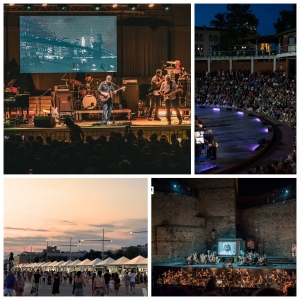
Summers in Thessaloniki have a character of culture. And indeed, it is difficult to meet a resident of Thessaloniki who has not been to one of the city's festivals. Year after year, Thessaloniki's festivals are becoming establishments, some as old and traditional now and others as new ones that are slowly finding their own place on the city's cultural map.

It is a fortunate thing for a city to remain alive during the summer months through its activities and to keep its cultural identity unchanged but at the same time constantly renewed. Every year, residents and visitors of the city make their annual rendezvous with the summer festivals that host a multitude of artistic and cultural activities.

In Thessaloniki you will find many small and large events, festivals, festivals within festivals and performances, many of which take place in historic locations.


Moni Lazariston Festival

The Festival that every year increases its presence and brings for the audience a rich program of concerts and events including artists of the world music scene.

All kinds of group ages gather to enjoy their favourite musicians and the courtyard of the Lazariston Monastery is transformed into a lavish celebration that welcomes and celebrates summer in the city.

Artistic, classical and rock rhythms come alive until the end of September and invite everyone to enjoy themselves to their tunes. Once you've chosen the act you'd like to see, make sure you book your tickets early, as many concerts sell out in a flash.

Next event: 18/07 George Perris.

Learn more here

Eptapyrgion Festival 

The culture of Thessaloniki at its best. Concerts, operas, performances, musical events in one of the most historic and emblematic locations of the city: within Eptapyrgion, one of the 15 UNESCO Cultural Heritage Sites in Thessaloniki.

As a relatively new addition to the list of the city's festivals, it proves every year its dynamics since 2019 and seeks to make Eptapyrgio a pole of attraction for visitors not only because of its historicity but also because of the cultural activities that take place there.

If you're thinking of attending the Eptapyrgion Festival, don't think about it for too long. Availability is limited and festival fans are showing their warm response early for the festival's activities.

Next event: 18/07 Federico García Lorca: Poetry Nights

Learn more here

Festival "Kalokairi sto Theatro Kipou" 

And if you still don't consider Thessaloniki to be the city of summer festivals, then, Kalokairou at Theatro Kipou can tell you that you haven't seen it all yet. 

The event organized by the Municipality of Thessaloniki promises a summer of culture and activities at the Theatro Kipou for young and old alike. Among a rich program you will find children's performances and of course concerts, music and theatrical events for adults.

The Festival will accompany residents and visitors until September and its proposals will fill our summer nights with song, dance and fun for all.

Next event: 22/7 8 Gynaikes (8 Women), theatre performance.

Learn more here

43rd Book Festival

The meeting point for book lovers. And it was only natural that such an initiative could not be missing from the city's summer festivals.

In front of the waterfront, at the White Tower Square, overlooking the Thermaikos Gulf, the festival welcomes its visitors with a number of books and publications that will be the best summer companion this year.

With a special tribute to Cypriot Letters and Cypriot poetry, the 43rd Book Festival writes its own history in the city as for over 40 years it has been highlighting the importance of continuous learning and access to knowledge.

At the White Tower Square until 21/07.

Learn more here

10th Forest Festival

Forest Festival celebrated its tenth birthday in the city this year with performances and concerts, most of which were sold out.

Especially if you are a fan of ancient theatre, then the festival is for you. Its activities will revive ancient comedies and tragedies in the venues of Theatro Dasous and Theatro Gis in lush green locations within the urban landscape. Among others, Forest Festival hosts concerts with the most famous and beloved names of the music scene.

Besides, there is no summer in Thessaloniki without a concert at Dasos Theatre or Gis Theatre and the locals already know that.

Next event: 19/07 Aeschylus' Oresteia, theatre performance. 

Learn more here

More

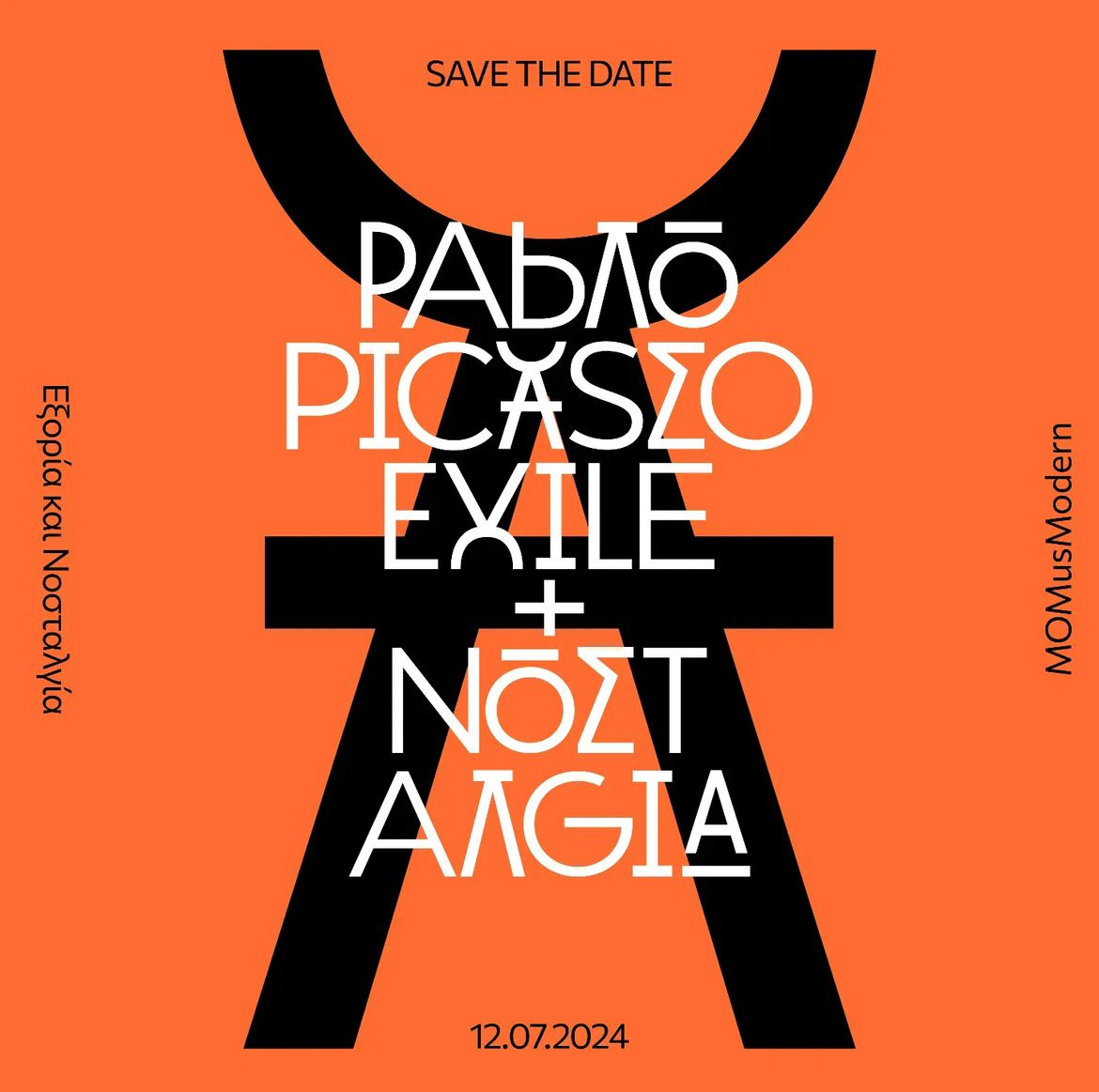
“Pablo Picasso: Exile and Nostalgia.” The new exhibition of MOMus, opens its doors to the public of Thessaloniki.

Published in Arts & Culture

IMG 1524

Focusing on the friendship between the famous Pablo Picasso and his political exile friend, Eugenio Arias, the exhibition "Pablo Picasso: Exile and Nostalgia" opens at the MOMus Museum of Modern Art-Costakis Collection for the dates 12 July 2024 – 10 November 2024 including 98 artworks of Museo Casa Natal Picasso collections in Malaga.

The chronicle of their friendship

The love for the Mediterranean, the bullfights and the homeland, solidarity towards the compatriot, fellow fighter and (co-)exile brings the two men together and initiates a strong friendship which is reflected in the long-lasting correspondence of the two friends.

The first pages of their diverse friendship were written in Vallauris in the South of France, where Eugenio Arias had fled as a left-wing politician in exile from Franco's regime and worked as a barber. It was there, in Vallauris, on France's Côte d'Azur, that Picasso had found his own retreat in the Mediterranean after the end of World War II.

The friendly correspondence between the two men, which peaked between 1962 and 1968, sheds light on the turbulent period of the Spanish Civil War and the subsequent period (1936-1952). This correspondence became known shortly after Eugenio Arias' death, when his family found a bundle of sheets of the Spanish monarchist and right-wing newspaper ,ABC ,in which Picasso had inserted drawings and signs in the margins of the chronicles of the bullfights, and handwritten the surname 'Arias' as an address to the recipient of this particular correspondence. The family of Picasso's close friend decided in 2017 to grant the Documentation Centre of the Picasso’s Birthplace Museum (Museo Casa Natal Picasso) and deposited an important collection of drawings, engravings, illustrated books and other materials.

What you can expect to see in the exhibition

Among the exhibits that visitors to MOMus will have the opportunity to see is a copy of the book Dibujos y Escrutons, written by Picasso and published in 1961 by Camilo José Cela, a Spanish author who was awarded the Nobel Prize for Literature in 1989. In 1966 Picasso decided to have this book painted and give it as a birthday present to his beloved friend Eugenio Arias. The pages are distinguished by 35 painted pages of drawings, arabesques and marker pen creations. Among them is the striking Bearded Man, a male form with brushstrokes that seem to follow the hairs of the beard, a work perfectly linked to his friend's capacity as a barber.

Picasso's support for the Spanish people is also evident in illustrated books such as Sueño y mentira de Franco (The Dream and the Lie of Franco) (1937), which will be among the objects in the exhibition. Through this and other important illustrated books, Picasso was able to use his poems and illustrations against the Spanish dictator, Francisco Franco. With his resistance art he helped well-known resistance and anti-Nazi poets and writers, such as Paul Eluard or Robert Desnos, to spread the cause. For the first time, two surrealist poems by Picasso himself are published in Greek, translated by Adri Michail.

In collaboration with the Museo Casa Natal Picasso in Malaga, from 12 July to 10 November 2024, a number of drawings, engravings and ceramics from Malaga will be exhibited at the MOMus Museum, in the Lazariston Monastery in Thessaloniki, many of which will be presented for the first time outside the Spanish borders, while 450 artworks from Kostakis Collection are in the hands of   the Agencia Pública Para la Gestión de la Casa Natal de Pablo R. Picasso y Otros Equipamientos Museísticos y Culturales Ayuntamiento de Málaga to form part of the temporary exhibition entitled: "Utopia and Vanguard. Russian Art in the Kostakis Collection of the MOMus Museum of Modern Art" from 4 July 2024 to 31 March 2025.


Opening Hours:

Tuesday-Sunday: 10:00-18:00

Wednesday: 12:00-20:00

Monday: CLOSED

Info: MOMus-Museum of Modern Art- Kostakis Collection, Kolokotroni 21, Moni Lazariston, Thessaloniki.

Tel: +302310-589143


More

5 festivals in Thessaloniki in the coming days that you should not miss out.

Published in Lifestyle

May, for Thessaloniki, is a month full of festivals. Small and large events alike find the ideal environment in Thessaloniki, a city that loves fun, food, cinema and new trends, while its locals keep their eyes wide open to the events of their home town.

Below is a list of 5 festivals worth visiting for the month of May in Thessaloniki that will definitely not let anyone down.

Street Food Festival

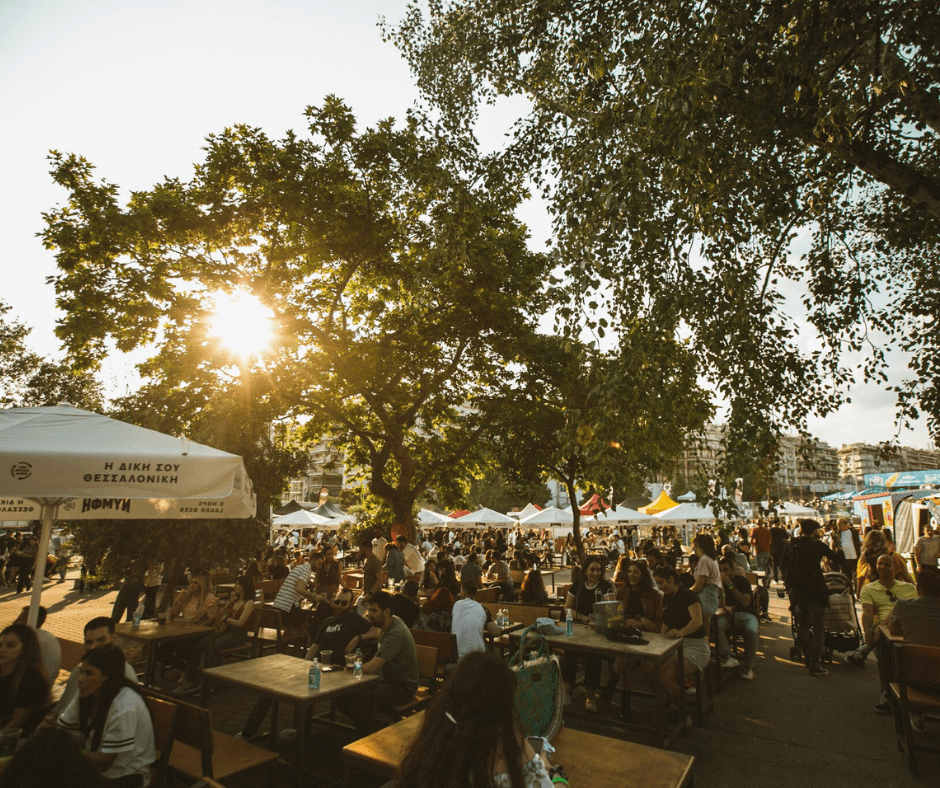
The ultimate celebration for food lovers returns to Thessaloniki for the seventh year and invites us to take part in an event full of street food, music and parallel events at the Thessaloniki International Fair from 30 May 2024 to 2 June 2024. During the days, the courtyard of TIF will be transformed into an open-air market of kiosks with flavors from every corner of the world.

SoulFood, the organiser of the Street Food Festival, has ensured that this year's street food celebration will be a more refreshing experience than ever before, including 30 food entries from cuisines around the world. Among these, there will be 25 street food booths and impressive food trucks while at the same time, 2 spectacular stages are going to be set up to host a rich music program: Pan Pan, Years of Youth, Xatzifrageta, Mora sti Fotia, Giaginides Live Band and many more, along with Dj sets that will accompany the music nights, are just some of the music performances that visitors will have the opportunity to enjoy this year.

3 min

Moni Lazariston Festival

Having already started its events from 19 May 2024, Moni Lazariston Festival promises a summer full of music, performances for young and old, concerts, events and musical tributes. Τhe Festival has been an important institution for the artistic events of the city, which over the years has been loved by citizens and summer visitors alike.

This year Thessaloniki will once again have fun to the rhythm of the dozens of concerts that have already been announced to take place in the emblematic space of Moni Lazariston. The summer nights of residents and visitors are expected to be transformed into artistic and entertaining events with the protagonists being foreign and Greek artists who are constantly renewing the program of events. In the period of May-June-July the following artists are expected to take the stage: Michalis Hatzigiannis, Stelios Rokkos, Marina Spanou, Panos Vlachos, Thrax Pankc, Social Waste, Konstantinos VIta, Tzamal, Archive and Novel 729 while among the foreign participants are Dire Straits, Steel Panther, Scream Inc, Thievery Corporation etc.

RIZES FEST

The festival that will take us to the frenetic summer feasts, to the summer taverns, to the Aegean rhythms and will bring back memories of the festivals of our childhood, is coming on Saturday 25 May 2024 at 19:00 among the events of this year's Moni Lazariston Festival.

ΡΙΖΕS is an online community created to promote intangible cultural heritage, grown and loved by the public and celebrated for the first time in September 2022. Through a rich program of traditional music that reaches a wide range of ages, it marks the beginning of summer in Thessaloniki this year.

IN-EDIT FESTIVAL 2024

Music lovers and cinema lovers meet at the IN- EDIT FESTIVAL, an event that this year marks its tenth year in Greece. For four days (22-26 May 2024), Warehouse D of the Port of Thessaloniki is expected to host all those who love cinema, documentaries and music and create special memories for them. Screenings and premieres of films and documentaries, live performances that have already been announced and invite us to take part in this year's special event.

This year, highlighting the multidimensional identity of IN-EDIT, which combines music and cinema, becomes a central idea, presenting a variety of selections from films such as "The White Tower Decibels", "Fatboy Slim: Right Here Right Now", "Peter Doherty: Stranger in My Own Skin", which showcase both the variety and depth of music culture.

Vegan Life Festival

Would you like to learn more about this alternative lifestyle through a fun experience? The sixth Vegan Life Festival is coming to Thessaloniki to offer a unique experience to its visitors through educational talks, vegan cooking workshops, an exchange bazaar, children's activities and market of vegan products and services.

The courtyard of the City Hall of Thessaloniki for the days 25-26 May  from 11 in the morning until 11 at night, will be filled with happy voices and smiles on the occasion of the Vegan Life Festival waiting to welcome us with free entrance.

More

THE HOLY WEEK IN THE HOLY CHURCHES OF THESSALONIKI

Published in Easter in Thessaloniki

Thessaloniki is revealed daily through the small and large fragments of its eventful history, treasuring its rich heritage as part of a continuous process of renewal, embracing the past while transforming it into a creative present. One such significant effort, in collaboration with the city’s creative entities and under the auspices of the Holy Metropolis of Thessaloniki, is the initiative to revive the “Week of Worship,” which was reintroduced in our city last year.


SCHEDULED EVENTS

FRIDAY, APRIL 4 | 7:00 PM | Holy Church of Saint Therapon

Service of the Akathist Hymn

Presided by His All-Holiness Metropolitan Philotheos Psauon of Thessaloniki

Georgios Patronas, Protopsaltis (Lead Chanter)

Ioannis Tziastas, Lambadarios (Second Chanter)

Performances by:

The Chanters’ Choir of the Holy Church of Saint Therapon & students of the course Introduction to Byzantine Music

Eu Neanides Women’s Vocal Ensemble and female students of the course Introduction to Byzantine Music


SATURDAY, APRIL 5 | 7:30 PM | Holy Church of Panagia Acheiropoietos

Part I

Anthology of Religious Hymns

Youth Choir of the Holy Metropolis of Thessaloniki

Musical Direction: Heracles Panagopoulos

Part II

“Asmasin os Anthesin”

Psaltic selections for the Divine Passion

Women’s Byzantine Choir Agia Anysia of the Greek Union for Music Education

Chanting of ecclesiastical hymns in Greek, Latin, Arabic, Slavic, Romanian, Aramaic, Georgian, and German.

Musical Direction: Maria Alexandrou, Professor at the Department of Music Studies, Aristotle University of Thessaloniki


SUNDAY, APRIL 6 | 7:00 PM | Holy Church of Saint Demetrius

Service of the Repentant Vespers for the Fifth Sunday of Lent

Performances by Byzantine Choirs (scales):

Historic Society of Hieropsaltes of Thessaloniki “Saint John of Damascus”

Association of Hieropsaltes of Pieria “Saint Dionysios of Olympus


MONDAY, APRIL 7 | 7:30 PM | Holy Church of God’s Wisdom

“Theotokos Virgin, Rejoice, O Full of Grace”

Contributors:

Sokratis Sinopoulos: Organ improvisations

Chanters: Ioannis Liakos, Christos Chalkias, Fr. Cherubim Tsinoglou, Georgios Patronas

Vocal Ensemble Chorostasia | Department of Music Science and Art

Women’s Choir Eu Neanides | Laboratory of Poetics, University of Macedonia

Orchestra O.K.E.M. (Orchestra of Secular Greek Music)

Byzantine Choir Evdromountes | Research Team Evdromountes, University of Macedonia

Artistic Direction: Georgios A. Patronas

TUESDAY, APRIL 8 | 6:30 PM |Agioritiki Estia

“The scene of the unseen”

Opening of a photography exhibition by Polish photographer Tomasz Mościcki, featuring Mount Athos. Includes material from the preparation and celebration of Athonite Easter.


TUESDAY, APRIL 8 | 7:30 PM | Holy Church of Panagouda

“The Sorrowful Spring of Poets”

Divine and Human Passions in Modern Greek Poetry

Recitation of poems on divine and human suffering by actors and living poets, accompanied by cello and violin.

Poems by: Christianopoulos, Themelis, Pentzikis, Vafopoulos, Aslanoglou, Karouzos, Vrettakos, Elytis, Palamas, Ritsos, and others.

In collaboration with the State Theatre of Northern Greece


WEDNESDAY, APRIL 9 | 8:00 PM| Rotonda

Part I

“CRUCIFIXUS: 6 Fragments for the Darkness of Passions and the Hope of Light”

Women’s Vocal Ensemble VOCI CONTRA TEMPO

Choral and Artistic Direction: Sofia Gioltsasi

Part II

Requiem by Simos Papanas

The work draws on the historical tradition of the Requiem genre, using traditional Latin texts with subtle rearrangements to explore human-centered emotions (agony, fear, grief, anger) surrounding mortality. A child’s voice symbolizes innocence confronting existential questions.

Movements:

Requiem aeternam – Kyrie, Dies irae, Tuba mirum, Sanctus, Benedictus, Agnus Dei, Libera me

Performers:

Thessaloniki Municipal Symphony Orchestra

Conductor: Charis Iliadis, Principal Musician

Mixed Choir Kyrios & Methodios

Choral Direction: Maria-Emma Meligopoulou, Assistant Professor, Department of Music Science and Art

Soloists: Vasilis Kavayas (tenor), Chrysa Malamani (soprano), Christoforos Stampoglis (bass)


THURSDAY, APRIL 10 | 7:00 PM | Catholic Church οf Thessaloniki

“Wade in the Water”

Concert by the Nakas Gospel Choir


THURSDAY, APRIL 10 | 8:00 PM | Holy Church of Panagia Acheiropoietos

Chanting of Ecclesiastical Hymns

Byzantine Choirs of Priests and Chanters from the Holy Metropolis of Thessaloniki


FRIDAY, APRIL 11 | 7:30 PM | Holy Church of God’s Wisdom

“Ear mikro, ear vathi, ear sintetrimeno”

A dialogue between poet Nikos Karouzos and the mixed/children’s choir “Fones” of the Holy Church of Agia Varvara, Thessaloniki

Soloists: Andreas Karakotas, Manolis Chadjimanolis

Piano: Konstantinos Diminakis

Direction: Chrysostomos Stamoulis

Narrator: Chara Zaravela

Children’s Choir Instruction: Iosifina Katoglidou

Mixed Choir Instruction: Chrysostomos Stamoulis & Despoina Koltsida


SATURDAY, APRIL 12 | 7:30 PM | Holy Church of Panagia Acheiropoietos

Spanish Vocal Ensemble “Schola Antiqua”

Dialogues with God: Medieval Latin Repertoires

Musical Direction: Juan Carlos Asensio Palacios

The internationally acclaimed, award-winning ensemble Schola Antiqua (Madrid) specializes in medieval Western ecclesiastical monody and polyphony. For the closing concert of this year’s Holy Week, they will perform Ambrosian, Old Roman, Beneventan, Visigothic, Gregorian chants, and early polyphony.

More

The pink plain of Veria welcomes spring

Published in Getaways

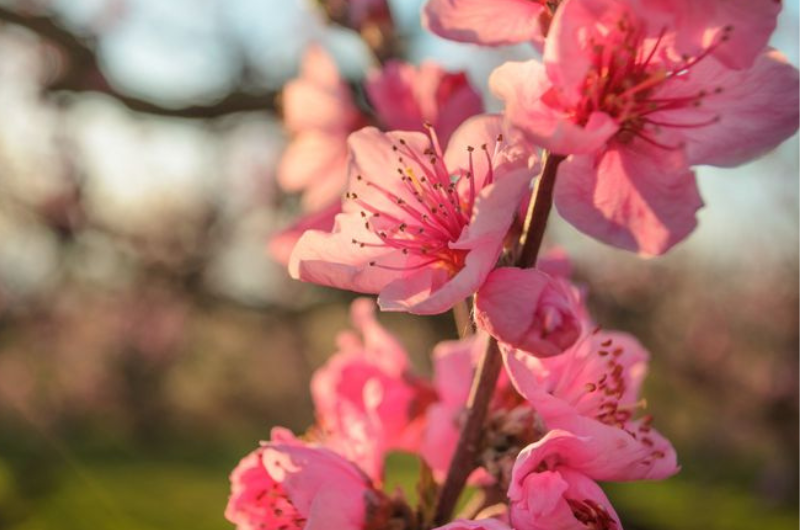
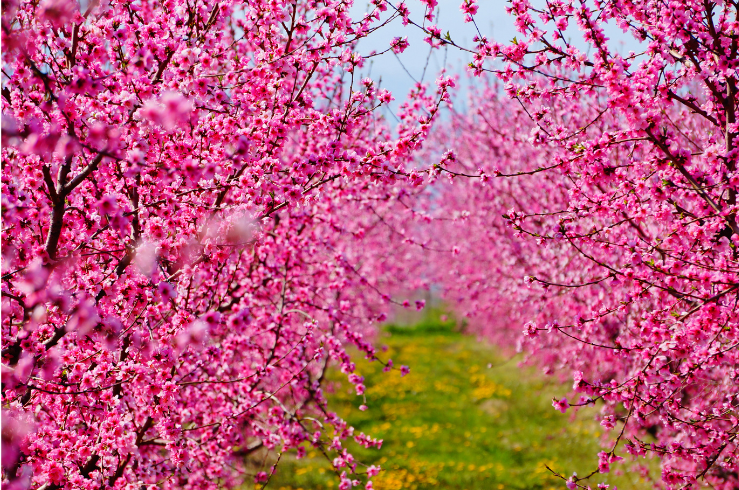
Welcome to the plain of Veroia, a unique piece of nature that highlights the magic of spring with the spectacle of peach blossoms. Veroia extends on the eastern foothills of Vermio and is today one of the largest forest municipalities in the country, which creates the right climatic conditions for the cultivation of peaches, known for their taste and aroma all over the world. The spectacular picture of blossoming peach trees and cute pink blossoms develops for a limited period of time each year, from the end of February to the first days of April, when the crops are in bloom throughout the entire plain.

veria rodakina

This stunning view is spread over an area of approximately 170,000 acres. A pink carpet seems to stretch with over 8 billion flowers each year, creating a stunning sight that captivates visitors. Whether looking down on the plain from above or crossing it along the road from Thessaloniki, the visitor is confronted with a spectacle that invites us for unforgettable photos and walks through the flowering meadows.

2

If you visit the destination you are likely to come across several cultural and sporting events for everyone that take place under the trees. It is now an established part of the events, to organize a cycling route around the flowering areas. The location is suitable for picnics, so don't forget to bring a snack or snacks from home.

The journey to the site from Thessaloniki is extremely short and takes less than 1 hour (55 minutes) by car or by bus.

More

The ancient custom of Koudounophori is revived every year in Sochos, Thessaloniki.

Published in Getaways

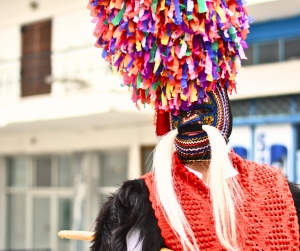
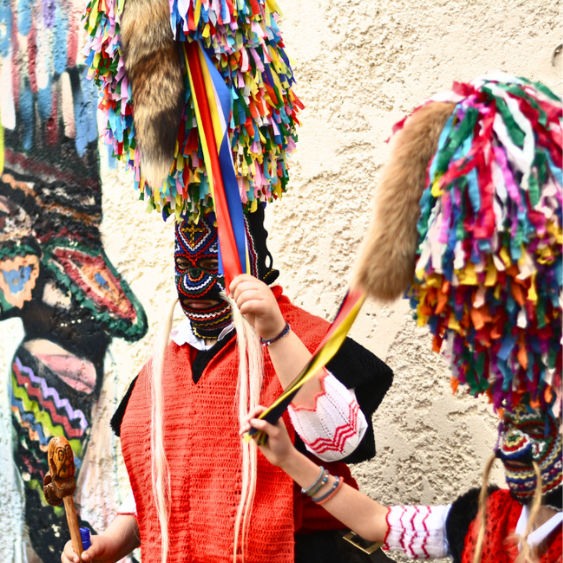
The ancient custom of the Koudounoforoi of Sohos is revived every year two weeks before Clean Monday.

The peak of the event takes place on Clean Monday and the weekend before, with the revival of the customs of Koudounophori in the streets of Sochos or Merio as the village is also called. The life of the residents is closely intertwined with the existence of the custom (and the unique phenomenon) and once the preparations lasted the whole year. Along with the distinctive Koudounophori costume, which in itself is a must-see for many in Sochos, the celebrations that begin two weeks before Clean Monday include cultural events that are revived with Koudounophori themselves as the main protagonists. On the Saturday evening before Clean Monday, we witness the custom of "Zambus", a cleansing fire in three places in the village, in order to exorcise the evil of winter. Another one,  is the custom of forgiveness known as "Provotsani": the younger ones ask the older ones for forgiveness and the older ones, in turn, offer forgiveness along with an orange. The culmination of the events is the gathering-parade of the Koudounophori  in the streets of the village on Clean Monday, accompanied by dancing and Lenten treats, activities and events that will bring the frenetic atmosphere of the carnival to all visitors. 
The deep roots of the custom can be traced back to ancient times and seem to be connected to the spring festivals associated with fruit-bearing, the Dionysian rituals and the Bacchia. Besides, for centuries the locals believed that if the carnival did not succeed then their crops would not do well either.
Ανώνυμο σχέδιο 1
The Christian tradition refers to the story of Saint Theodore the soldier who found himself in a difficult point of a war with the barbarians when they cut off the supply of the region, threatening its residents. Placing his last hopes in his deep faith and in God, the general gave orders to slaughter the last goats in the surrounding area so that the army could satisfy its hunger. But apart from this, he distributed their skins to the soldiers and asked them to wear them and even hung the animal bells on them. In this way they broke the enemy's cordon, frightening the opponents who, terrified, fled.
The impressive costume with its unique parts can weigh up to 20 kilos, which seems plausible if one considers the fact that the masqueraders carry on them, passed around a 7-meter cloth belt, a set of bells known as the "dozen" consisting of 4 small bells and a larger one, from which the name of the "Bell Ringer" (=Koudounophori) comes.
But it is not only the bells on them that arouse the interest and excite the visitors in Sochos during the Carnival season. The entire inner costume is made out of goat skin. Their elaborate, black mask is embroidered with colourful threads in vibrant colours, leaving only the eyes and mouth uncovered. The white or black whiskers that appear to hang from the mask are made of horse tail, while the headgear that bears the well-known calico, as the natives call it, has an impressive plume from which hundreds of colourful ribbons hang, and to keep its shape, it is filled with hay on the inside. This successful disguise used to provide the young people of the village with a sure way of expressing their interest in the girl they loved without revealing their true identity.
More

Exploring Sun-Kissed Beaches and Seaside Delights

Published in Sea and sun

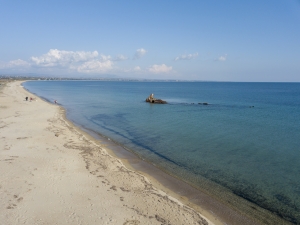
Nestled along the azure shores of the Thermaic Gulf lies the enchanting Thessaloniki Riviera. A hidden gem known for its sun-kissed beaches and vibrant seaside atmosphere, this coastal paradise is a must-visit for beach lovers and water enthusiasts. Join us as we embark on a virtual journey to explore the seaside delights of the Thessaloniki Riviera.

Peraia Beach: A Tranquil Escape Peraia Beach, with its serene ambiance and crystal-clear waters, is a haven for those seeking tranquility. Whether you're looking to sunbathe on the sandy shores or take a refreshing dip in the sea, this beach provides the perfect escape from the city's hustle and bustle.

Nea Krini: Where City Meets Sea Nea Krini offers a unique blend of urban charm and seaside beauty. Stroll along the picturesque promenade, lined with cafes and restaurants, and savor a seaside meal with a view. The marina adds a touch of luxury, making it a hotspot for yacht enthusiasts.

Agia Triada: Family-Friendly Fun Agia Triada Beach is a favorite among families. Its shallow, calm waters make it ideal for children to play and swim safely. The beach is equipped with amenities like sunbeds and umbrellas, ensuring a comfortable day under the sun.

Agelochori Beach: WaterSports Wonderland For the adventure seekers, Aretsou Beach is the place to be. Enjoy a variety of water sports activities, from windsurfing to paddleboarding. The beach's energetic vibe and beachfront bars make it a dynamic spot for those looking for some action by the sea.

Whether you seek tranquility, family fun, water sports, or a touch of history, you'll find it here. So pack your sunscreen, swimsuits, and a sense of adventure, and discover the six sun-kissed beaches and seaside delights that make the Thessaloniki Riviera an exceptional destination for beachgoers. Your coastal escape awaits!


More

Greek for Foodies: Ordering, Dining, and Enjoying Greek Cuisine

Published in It’s all Greek to me

One of the greatest pleasures of traveling to Greece is indulging in its delectable cuisine. From the savory souvlaki to the sweet delight of baklava, Greek food is a culinary adventure that promises to tantalize your taste buds. To fully savor this experience, it's essential to know a few key Greek phrases that will make dining a breeze. In this blog post, we'll take you on a journey through the Greek culinary world and equip you with the essential phrases to enhance your dining experience.

1. Greetings and Common Courtesies: Begin your culinary exploration with polite greetings. "Kalimera" (καλημέρα) means "good morning," while "Kalispera" (καλησπέρα) means "good evening." These greetings will warm your interactions with locals, creating a friendly atmosphere.

2. Ordering at Restaurants: When you're ready to order, saying "Tha ithela na paragilo..." means "I would like to please order..." Follow this phrase with the name of the dish or drink you desire, and you'll impress the waiter. If you want the waiter to reccomend you a dish , you should say "Ti tha mou protinate?" (Τι θα μου προτείνατε;) - "What would you recommend?". 

3. Dietary Preferences: If you have dietary restrictions or preferences, it's helpful to convey them. For example, "Den troo kreas" (Δεν τρώω κρέας) means "I don't eat meat." This will help you receive suitable meal recommendations.

4. Compliments to the Chef: After enjoying your meal, show appreciation with a friendly "Efharisto poli, itan fantastiko!" (Ευχαριστώ πολύ, ήταν φανταστικό!), meaning "Thank you very much, it was fantastic!" Your compliments are sure to be well-received.

5. Bill and Payment: To request the bill, say "To logariasmo, parakalo" (Το λογαριασμό, παρακαλώ), meaning "The bill, please." When paying, you can ask, "Deheste karta?" (Δέχεσε;), which means "Do you accept card?" or "Poso kanei?" (Πόσο κάνει;), asking "How much is it?"

Exploring Greek cuisine is an adventure for the senses, and knowing a few Greek phrases can transform your dining experience from enjoyable to unforgettable. Whether you're savoring traditional moussaka or indulging in a plate of fresh seafood by the seaside, these phrases will open doors and hearts. So, dive into the world of Greek food, relish the flavors, and don't forget to say "Kali orexi" (Καλή όρεξη) before your meal to wish yourself a hearty appetite and enjoy your Greek culinary journey to the fullest!

More

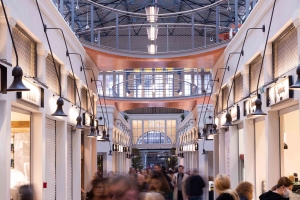
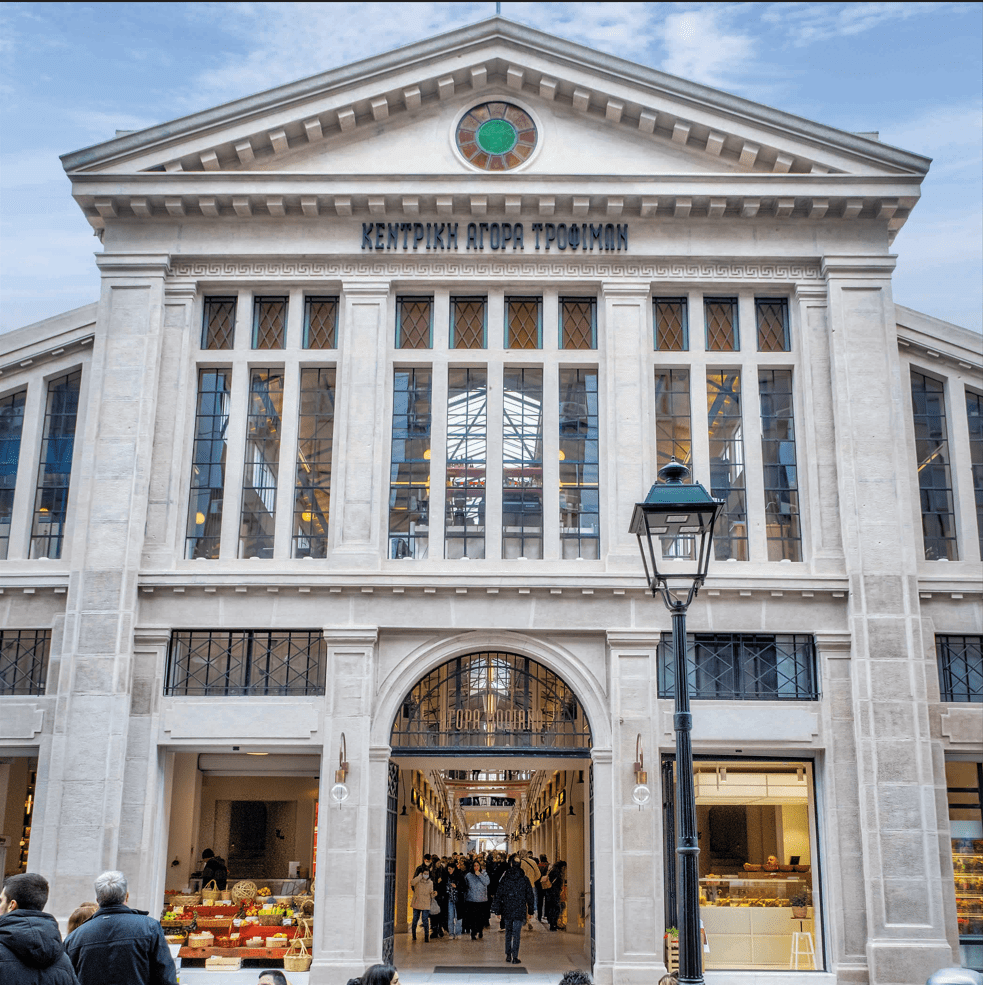
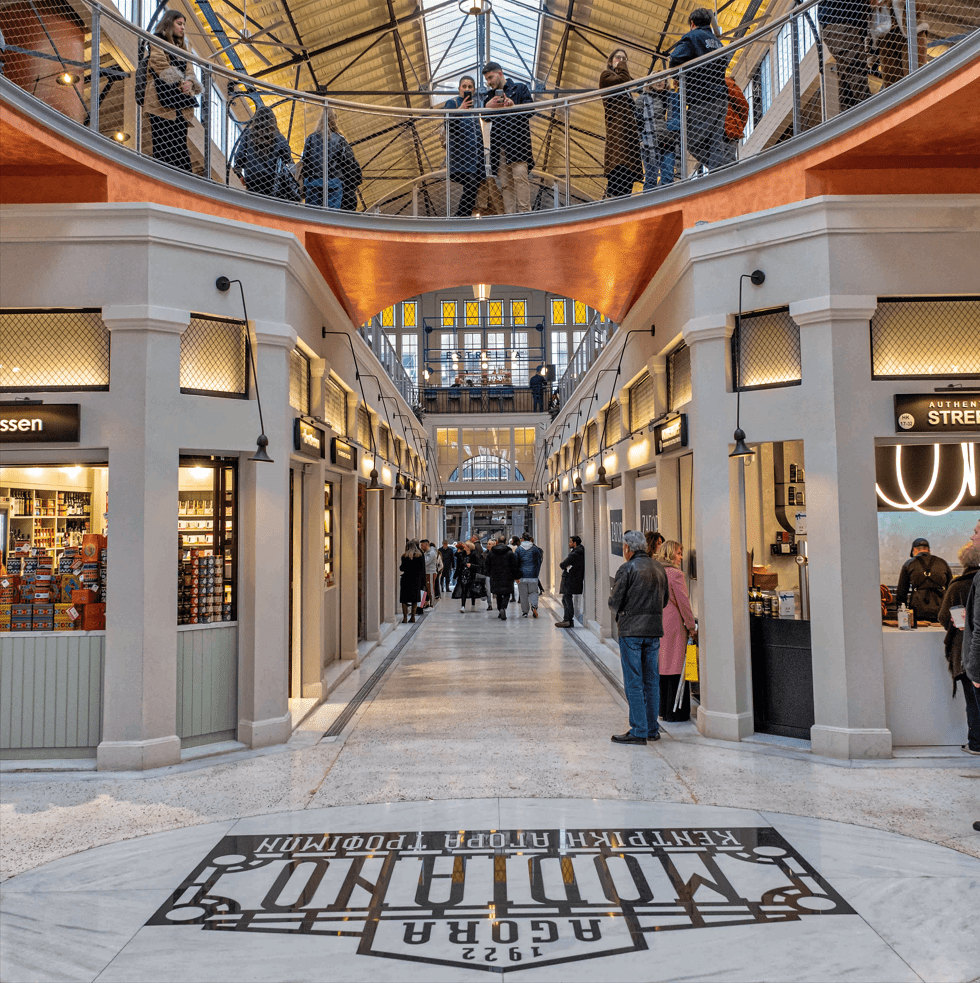
A Morning in Modiano: Exploring Thessaloniki's Historic Food Market

Published in Food & Drink

In the heart of Thessaloniki, a bustling world of flavors and aromas awaits at the Modiano Market. This historic food market, with its narrow alleyways and bustling stalls, has been a culinary cornerstone of the city for over a century. Join us as we step into this vibrant tapestry of tastes, where the past and present coexist in harmony. 

A morning in Modiano Market is more than just a shopping excursion; it's a journey through the history and culture of Thessaloniki. It's a place where tradition and innovation coexist, and where the essence of the city's food culture comes to life. As you leave the market, your senses will be filled with the memories of this unforgettable experience, making it a must-visit destination for anyone exploring Thessaloniki.

Στιγμιότυπο οθόνης 2023 11 02 135048 min

The Market's History: A Glimpse into the Past

Modiano Market was established in the early 20th century, a testament to Thessaloniki's rich cultural and culinary heritage. Named after the Jewish merchant and benefactor Eli Modiano, the market has been a melting pot of diverse influences. Over the years, it has evolved to become a symbol of the city's unique food culture.

The history of the Modiano Market, also known as the "Central Food Market of Thessaloniki," is intricately woven into the city's recent past, spanning two centuries of significant chapters. In 1917, after a devastating fire in August, engineer Eli Modiano and architect J. Oliphant initiated the design of the Market. This site was previously occupied by the Talmud Torah Synagogue and was marked for the creation of bazaars according to the Hebrard Plan. The Market's French title in the plans was "Bazar Central Salonique."

By 1925, Eli Modiano constructed an elongated, single-story building with a basement and internal balconies, making it the first traditional food market and one of Thessaloniki's largest indoor markets. Its grand opening in 1930 was celebrated with great pomp, closely entwined with the history of the Jewish Community and Thessaloniki's commercial center. In 1983, the Modiano Market received recognition as a listed building by the Ministry of Environment and Public Works, and in 1995, it was classified as a historic monument by the Ministry of Culture, exemplifying a covered market building. However, after a gradual decline with most of its 144 shops being abandoned, the market closed its doors in 2016. In 2017, it officially passed into the hands of the Fais Group through a contract with the Hellenic State Property Fund.

Fast forward to 2022, after nearly five years of planning, construction, and rebranding, the Modiano Market is poised to reemerge as a next-generation food market concept.

Exploring the Market: Sights and Sounds

As you enter the market, your senses are immediately overwhelmed. Stalls are brimming with fresh fruits and vegetables, aromatic spices, and an array of local delicacies. The vibrant colors and enticing scents create an atmosphere that's truly one-of-a-kind. One of the highlights of a visit to Modiano is the opportunity to meet the passionate vendors. These individuals are not just sellers but storytellers, each with a unique narrative about their products and their connection to Thessaloniki. From olives and cheeses to spices and sweets, their knowledge is a window into the city's history.

Στιγμιότυπο οθόνης 2023 11 02 135027 min

Local Flavors: What to Taste

No visit to Modiano Market is complete without indulging in some of its culinary treasures. Try a sample of the famous koulouri, a sesame-crusted bread ring, or savor a selection of olives and feta. For those with a sweet tooth, Loukoumades, Greek donuts drizzled with honey and cinnamon, are a must-try.

Preserving Tradition: The Market's Role Today

While Thessaloniki has modernized over the years, Modiano Market has remained a bastion of tradition. The market continues to thrive, offering a unique blend of old-world charm and contemporary convenience. It's a place where locals and visitors come together to celebrate the city's culinary legacy.


More
Subscribe to this RSS feed

#visitthessaloniki