pinelopi

pinelopi

10+1 events you should not miss in September
Published in Lifestyle

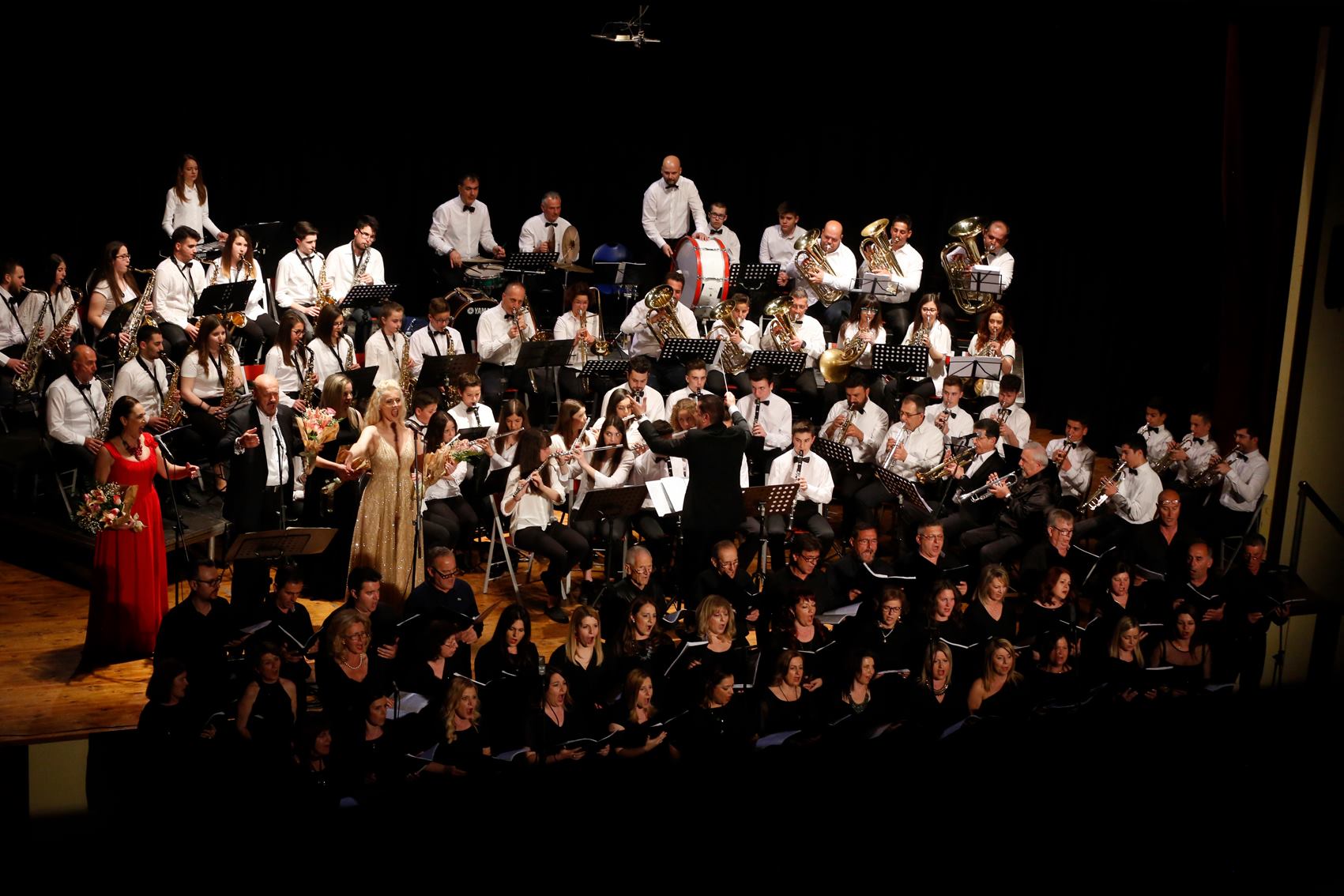
23rd International Youth Band Festival || 24-26. 8. 2022 || Municipality of Delta
69240107 2220242478084274 816239018273406976 n

“Music Unites Us” generated the launch of the International Youth Band Festival in 1998. True to its fundamental principle, namely cooperation between young people from around the world through music, the festival continues its long journey.

Program of Sindos

Courtyard of the Cultural Centre at 21:00

Wednesday 24 August

Thursday 25 August

Friday 26 August


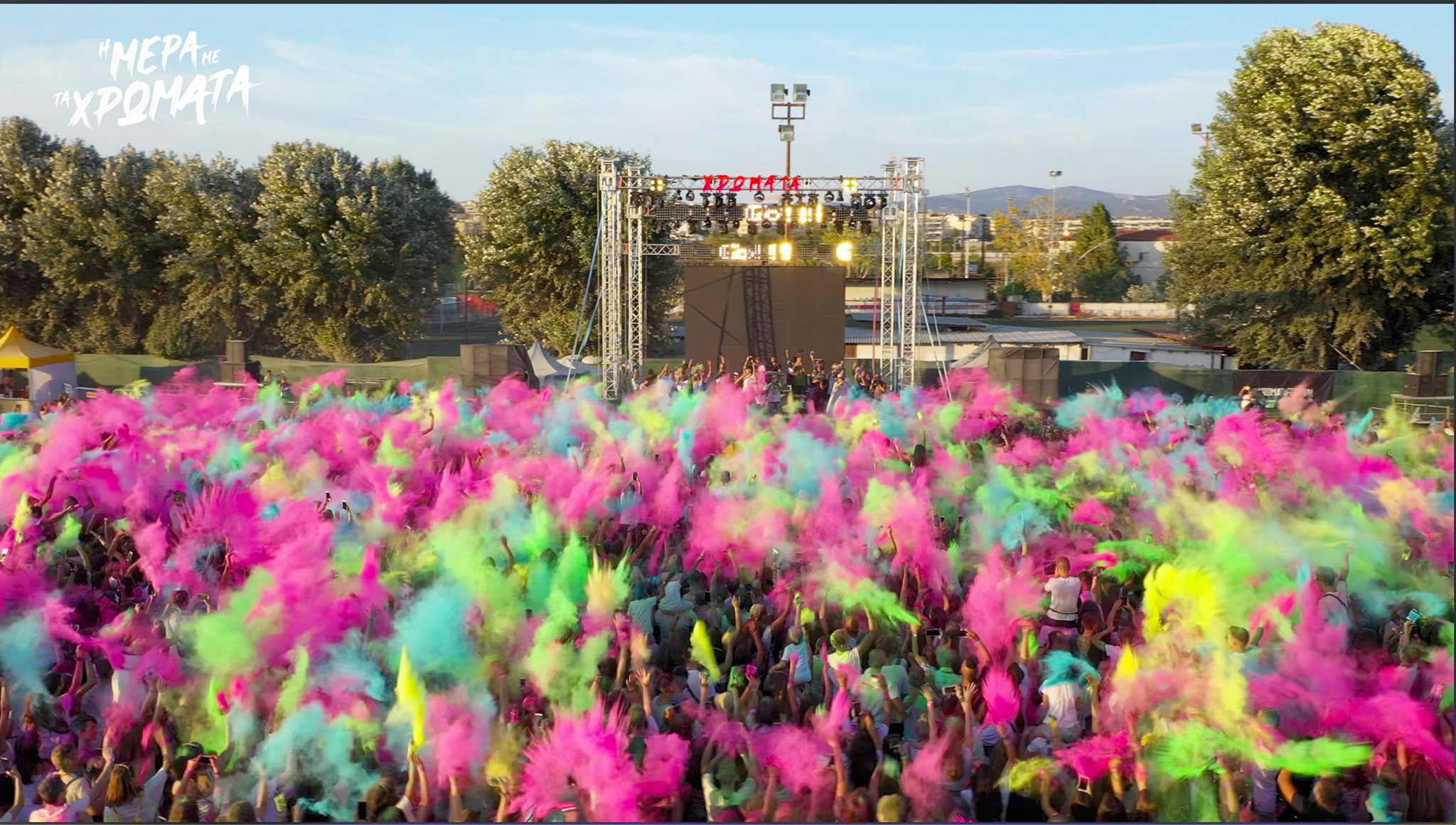
Thessaloniki Color Day 2022|| 3.9.2022 || Kaftantzogleio Stadium
197059255 2969402393318108 7419242771409840183 n

The most colorful action returns to Thessaloniki and promises us dynamic and innovative events! The participation of the people, the communication and the game are the quiver with its weapons to become better and more creative every year. The purpose of the festival is to make its audience feel good and even better, as an institution in order to give color and create.


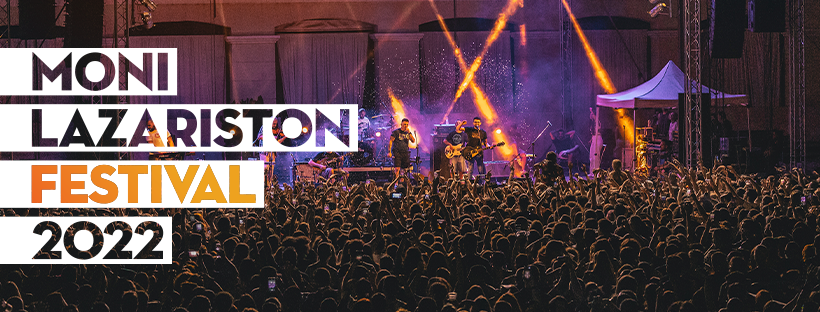
Moni Lazariston Festival || 2-22.9.2022|| Moni Lazariston
295967039 5411927918829966 6379348991778630739 n

Having as a background the natural light that is offered by the summer nights Moni Lazariston Festival provides artistic diversity, by organizing concerts, dance performances, theatrical plays and art exhibitions in their most contemporary form. The surrounding atmosphere is constituted by many levels: The open space with the amphitheatric setting, where the large concerts take place, 2 exhibition rooms, and a smaller stage designed to host “special editions” of every cultural expression.

Events


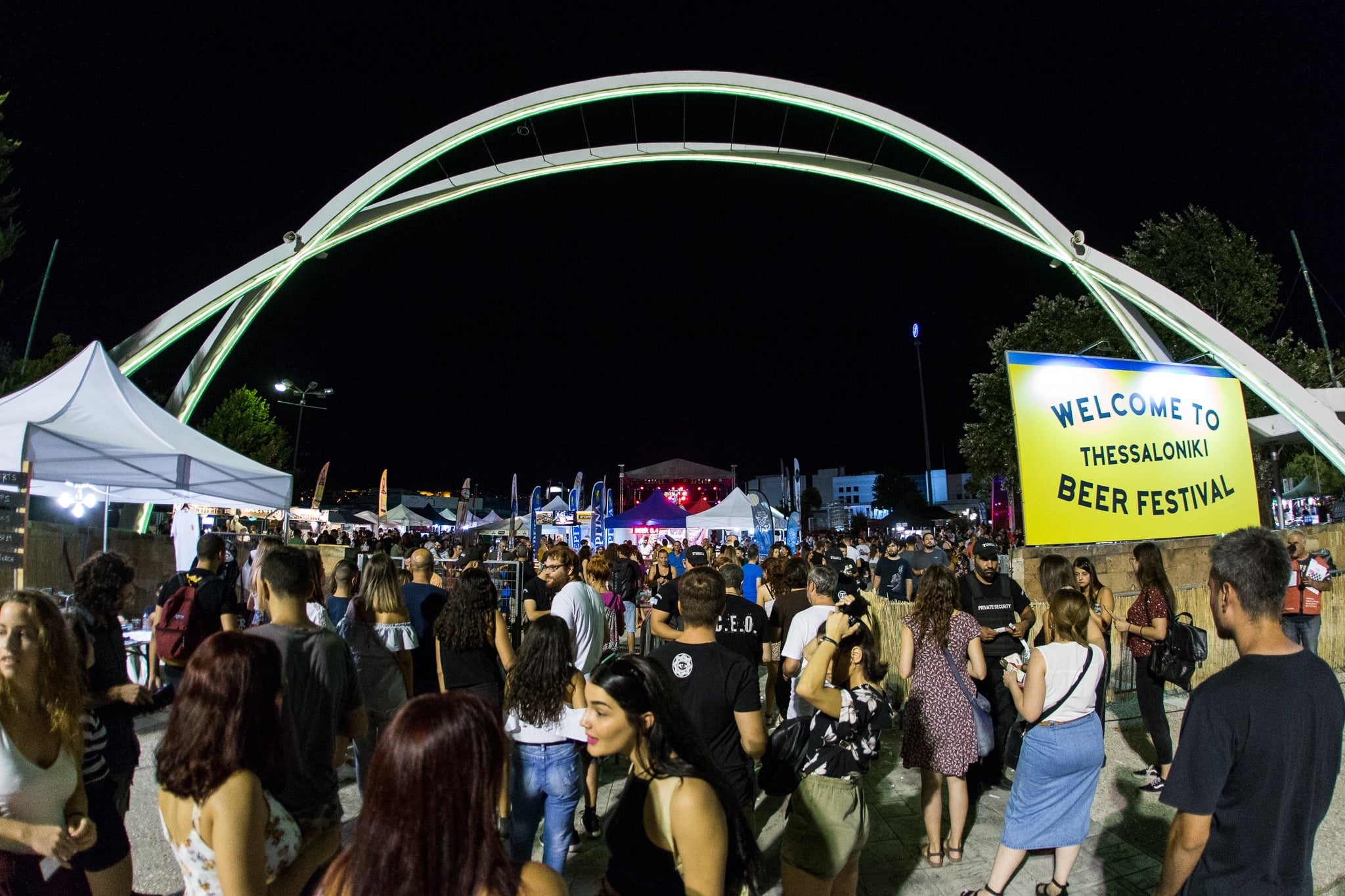
Beer Festival || 1-4.9.2022|| TIF Helexpo
244697302 1785865371616388 671106327498818128 n

Rare beers, unique aromas, official first appearances, classic favorite microbreweries from Greece, but also from abroad are combined with favorite street food & lots of music for 4 days in the most central part of Thessaloniki! Thessaloniki Beer Festival 2022 Is Back…Βeer Out Loud! 


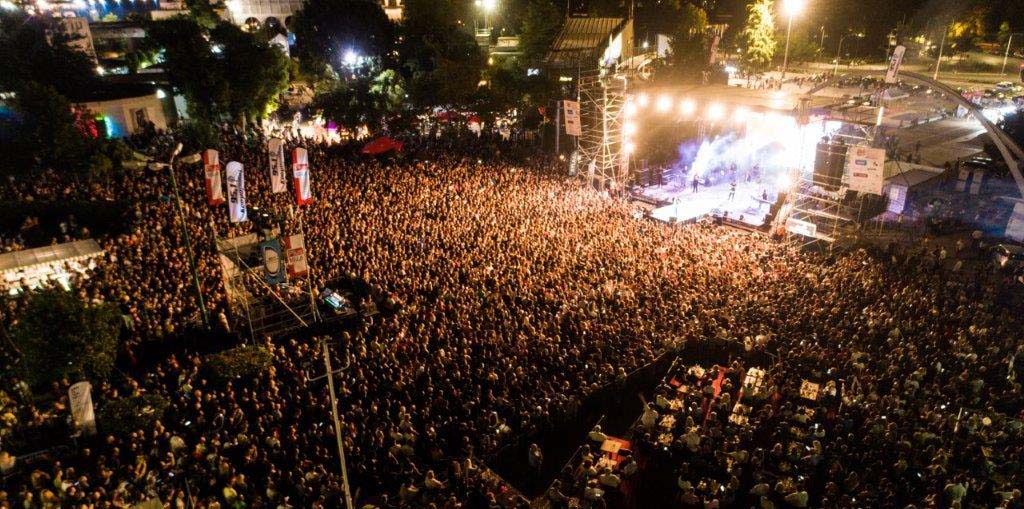
86th Thessaloniki International Fair || 10-18.9.2022
293785640 4210420769083124 1984986553886054871 n

Thessaloniki International Fair in a World of Change! Guided by the new reality in the world economy, the changing environment in the fields of health and energy, but also the galloping developments in technology, the 86th TIF comes to declare its timeless presence and contribution to the life of the country, faithfully serving its multidimensional character. Taking into account the importance of approaching new markets, this year’s event welcomes the United Arab Emirates through the institution of the honored country, giving the opportunity to the two nations to strengthen their historical ties of friendship, together with the incentive for further development of bilateral trade, investment and cultural relations.


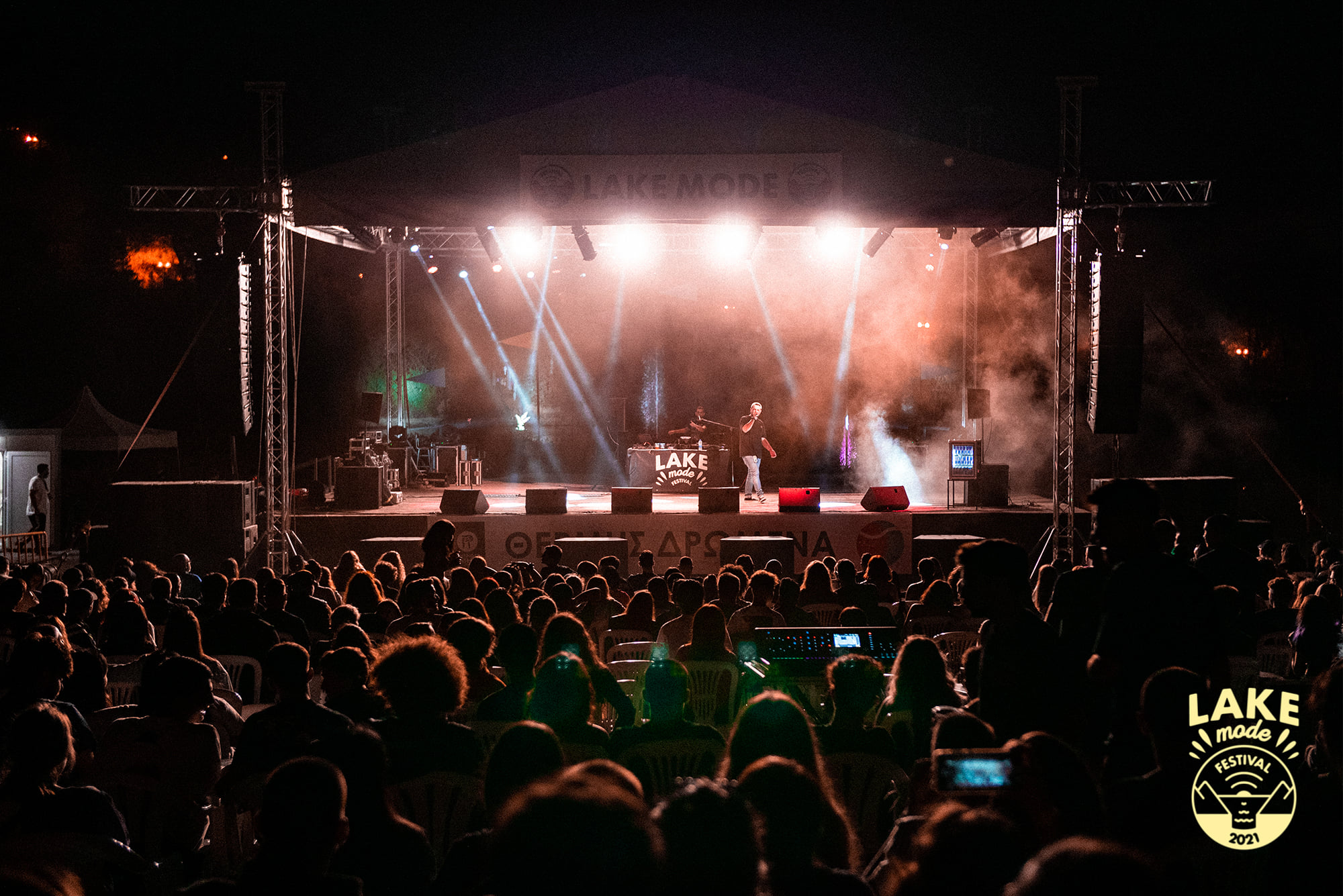
Lake Mode Festival 2022|| 1-2.9.2022|| Dam of Thermi
243125057 136474432038646 2866140610942312998 n

In a "hot", concert summer, the new, open-air festival of "Thermis Dromena" comes for the second year in a row to cool us off in the enchanting, natural landscape of the lake of the Thermis Dam! Top names of the domestic, hip-hop (and not only) scene, will appear in a special two-day event.

More specifically, on the stage of the 2nd Lake Mode Festival on Thursday, September 1st, Eisvoleas and Hatzifrageta will take the stage, while on Friday, September 2nd, Logos Timis and Ethismos together with Golden Child.


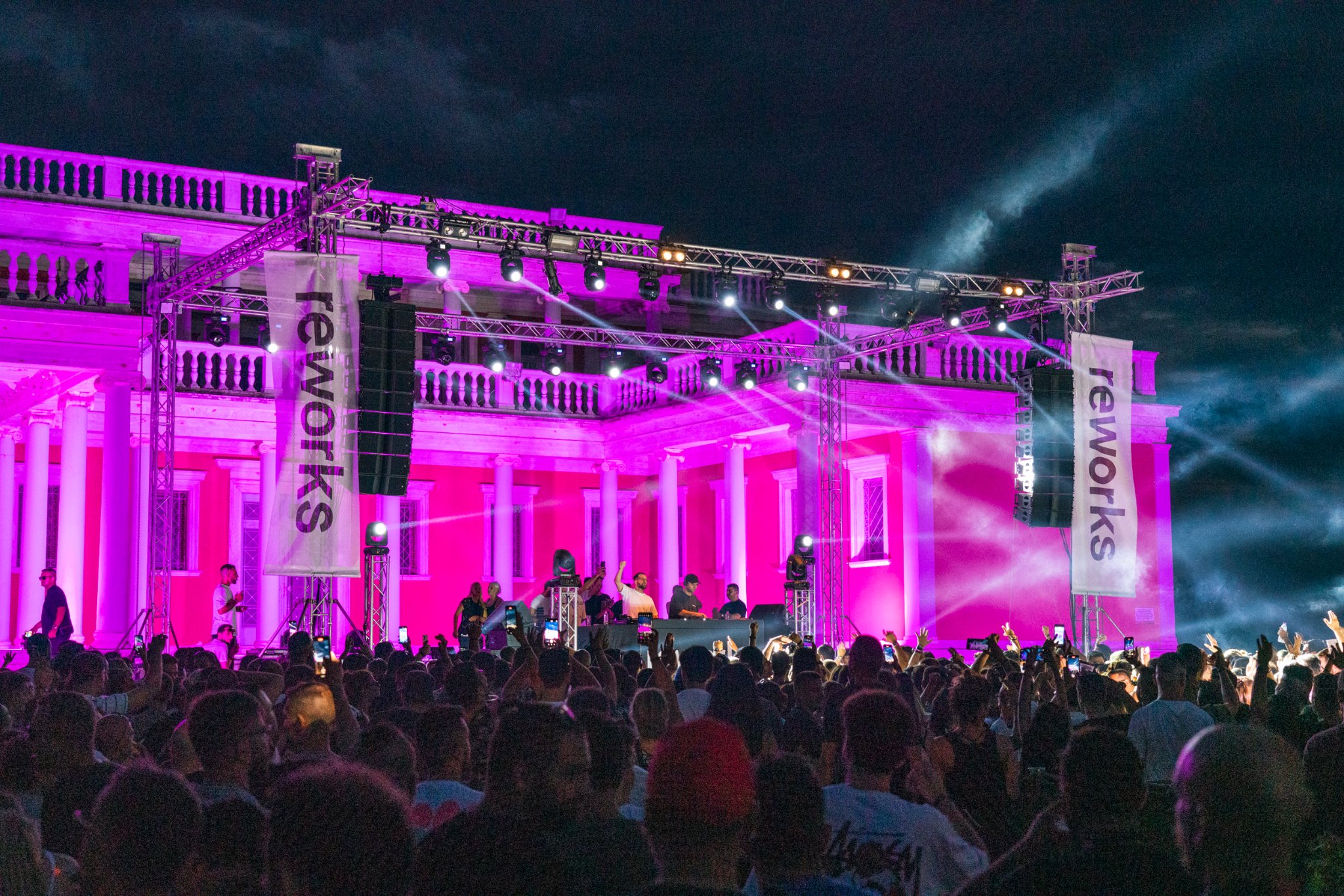
Reworks Festival || 14-18.9.2022
294078787 5249239031837422 5297701241930911389 n

This year Reworks returns with a full-time schedule hosting the hottest sounds in electronic music and introducing fresh and upcoming musical trends on various locations of the city of Thessaloniki. From Wednesday 14th to the morning of Sunday 17th of September, Reworks aspires to be a meeting point for friends of electronic and contemporary music. Reworks celebrates its 18th edition this September bringing together music lovers from all over the world, transforming Thessaloniki into a contemporary music-breathing city every September.

1st Wave of Acts

The festival is excited to present this September its first 14 acts of this year’s lineup.

Solomun, Ben Klock, Adriatique, Innellea, Kas:st, Daria Kolosova, and Lebanon Hanover

A range of Hellenic acts will be presented, including Ison, Alpha Sect, Momery, ArKI, Andreas Athineos, Pink.wav and Julie.

Many more acts to be announced soon.


Street Mode Festival 2022|| 23-25 September 2022|| Sonik Arena
155364906 283485633132779 7618677469346904371 n

"Back from the dead! Get ready for chapter 12…"

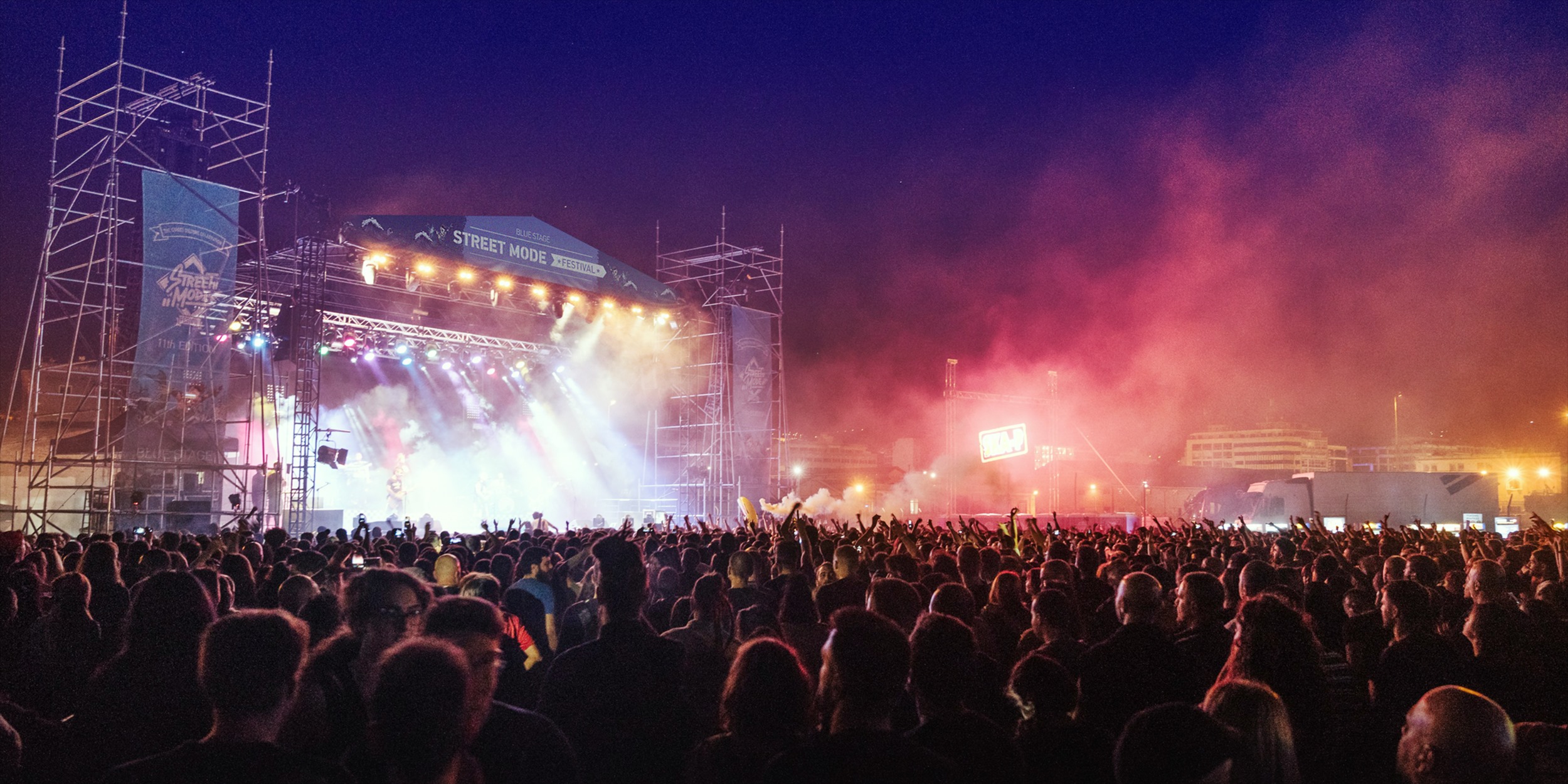
With this phrase and this year's signature artwork, Street Mode Festival returns for its 12th year, and as always promises countless concerts along with events dedicated to street culture. Street Mode: ON!

The Experience: Street Mode is an annual music, art, and sports festival held in Thessaloniki since 2009. It is one of the largest festivals in Greece, reaching thousands of visitors, with a program that includes lots of musical stages and street culture events. Get into "street" mode and enjoy 3 days of live music, street art, street dance, action sports and much more!

► MUSIC ACTS (A-Z):

Already announced: 1000mods • Anser • Bad Movies • Βήτα Πεις • Bloody Hawk • Buzz • Γιάννης Αγγελάκας & 100°C • Delinquent Habits • DJ Krush • Ζήνων • Fun Lovin' Criminals • Fundracar • Immune • Locomondo • Perkele • Πεθαίνουν Στο Τέλος • Planet Of Zeus • Professional Sinnerz • Social Waste • TDK • Tortuga • Villagers of Ioannina City • Vlospa • Vodka Juniors

More more acts coming soon!

► STREET CULTURE EVENTS:

  • • Meeting of Styles (Street Art & Graffiti)
  • • Battle of the Best (Street Dance & Breaking)
  • • 5th pan-Hellenic Parkour & Freerunning Contest
  • • Body Painting Shows & Workshops
  • • Music Contests ΤΒΑ
  • • Special DJ Sets ΤΒΑ


Kapani Project|| 1-2 October 2022|| Kapani Open Market
16252399 1731327147184455 3652702422163351981 o

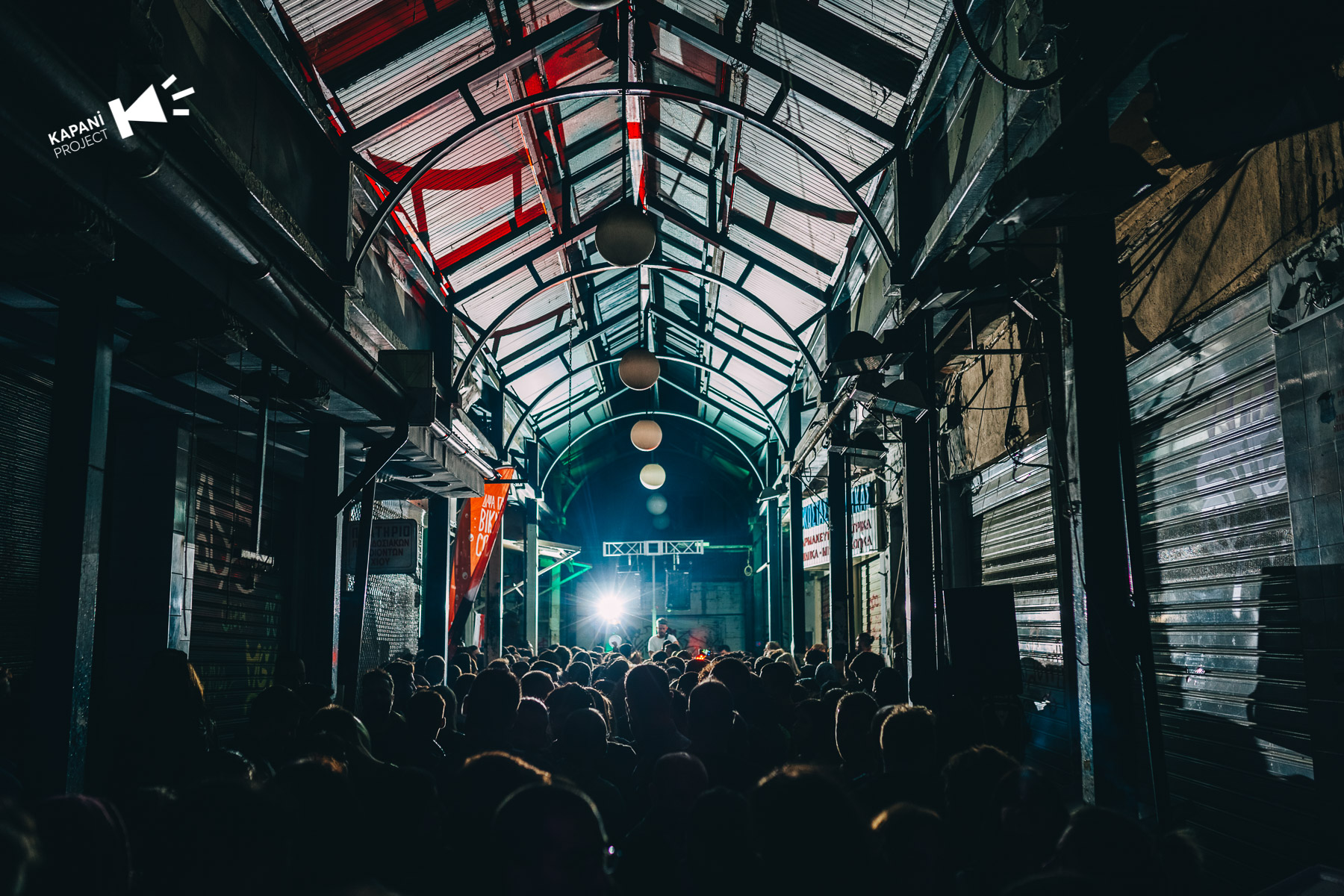
It may have been almost 3 years since we last met, danced and sang in the market, but the #KapaniProject is back again! The 5th edition of the Kapani Project is coming on October 1 & 2 to fill the streets of the market with live, dj sets and street food in another two days that will be unforgettable. More TBA


57th Dimitria Festival || 1-20 .10.2022
246040879 4313273808785187 1847988983318740620 n

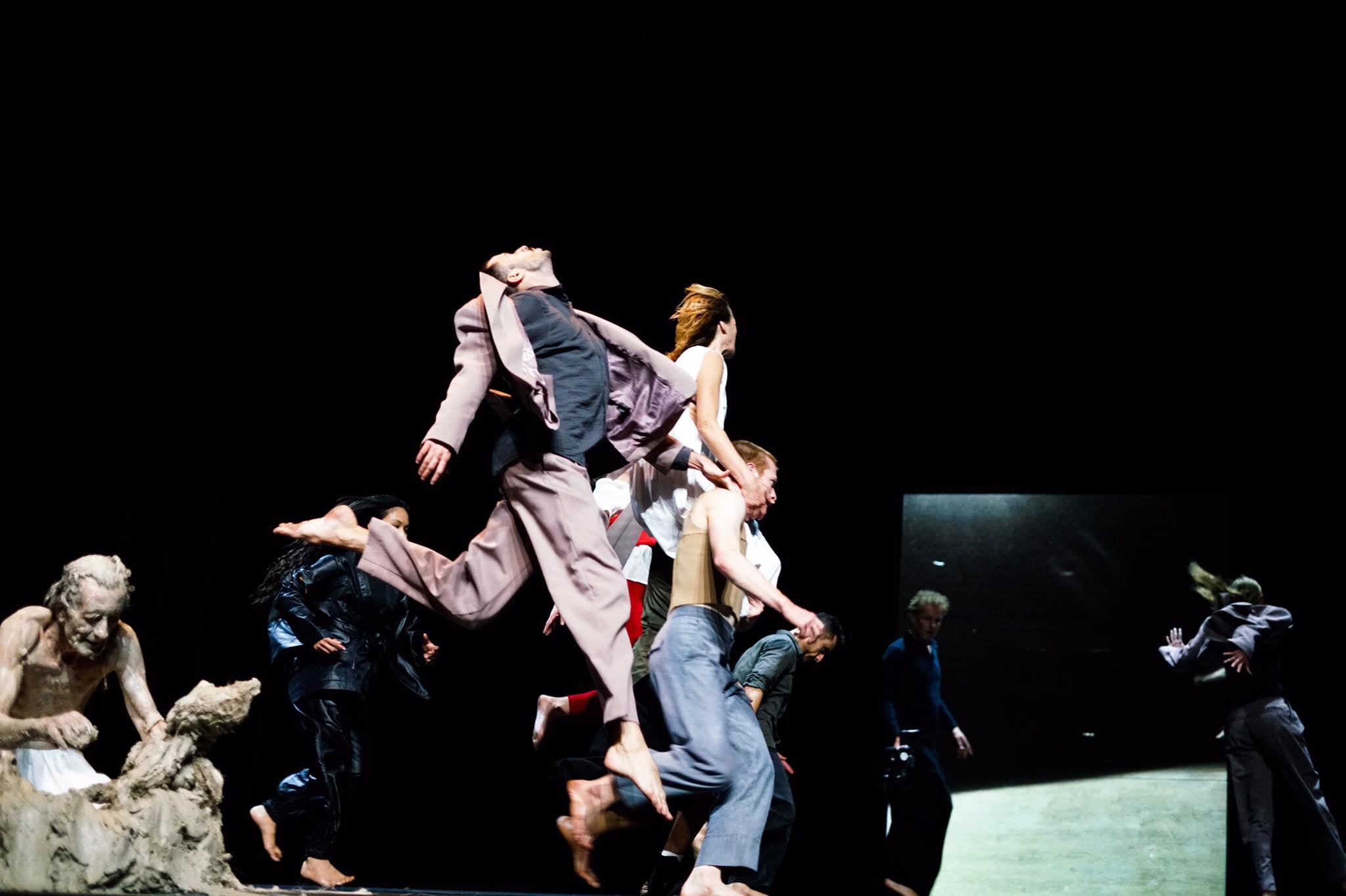
Dimitria is the largest cultural & intellectual festival in Thessaloniki & Northern Greece. Every year, in early Autumn, the Festival marks the beginning of a series of major artistic & intellectual events held in Thessaloniki, covering all the arts & interests. Live classical and contemporary music, dance, theater, visual arts, cinema, excellent performances, unique and internationally recognized artists bring sparkle and life to Thessaloniki in October. See you all there!


 10th International Night Halfmarathon|| 15 October 2022


More
City walks: ANO POLI (OLD TOWN)

Published in Arts & Culture

Thessaloniki’s Old Town is full of atmosphere. It covers the area in between the city walls (to the north and east) and Olympiados Street (to the south), and has had the luck to remain untouched by the 1917 great fire. It was virtually uninhabited until the mid-15th century, when it was conquered by the Ottomans who selected it for settlement on account of its fine climate, panoramic views and strategic position. The two and three-storey houses bear mixed Macedonian and Ottoman architectural elements; there are also residences with neoclassical and eclectic style motifs where the Dönmeh lived, i.e., converts to Islam who secretly remained Jews. After 1922 many refugees settled in the area. Despite the construction of newer buildings and the opening up of new streets in recent decades, it has kept its original town planning, to a large extent, with narrow alleys and scant squares, as well as its original architectural features, particularly in the west and east part of the town. This particular atmosphere has lured intellects, artists and students who chose it for settlement in recent years.


AGIA AIKATERINI [SAINT CATHERINE] CHURCH

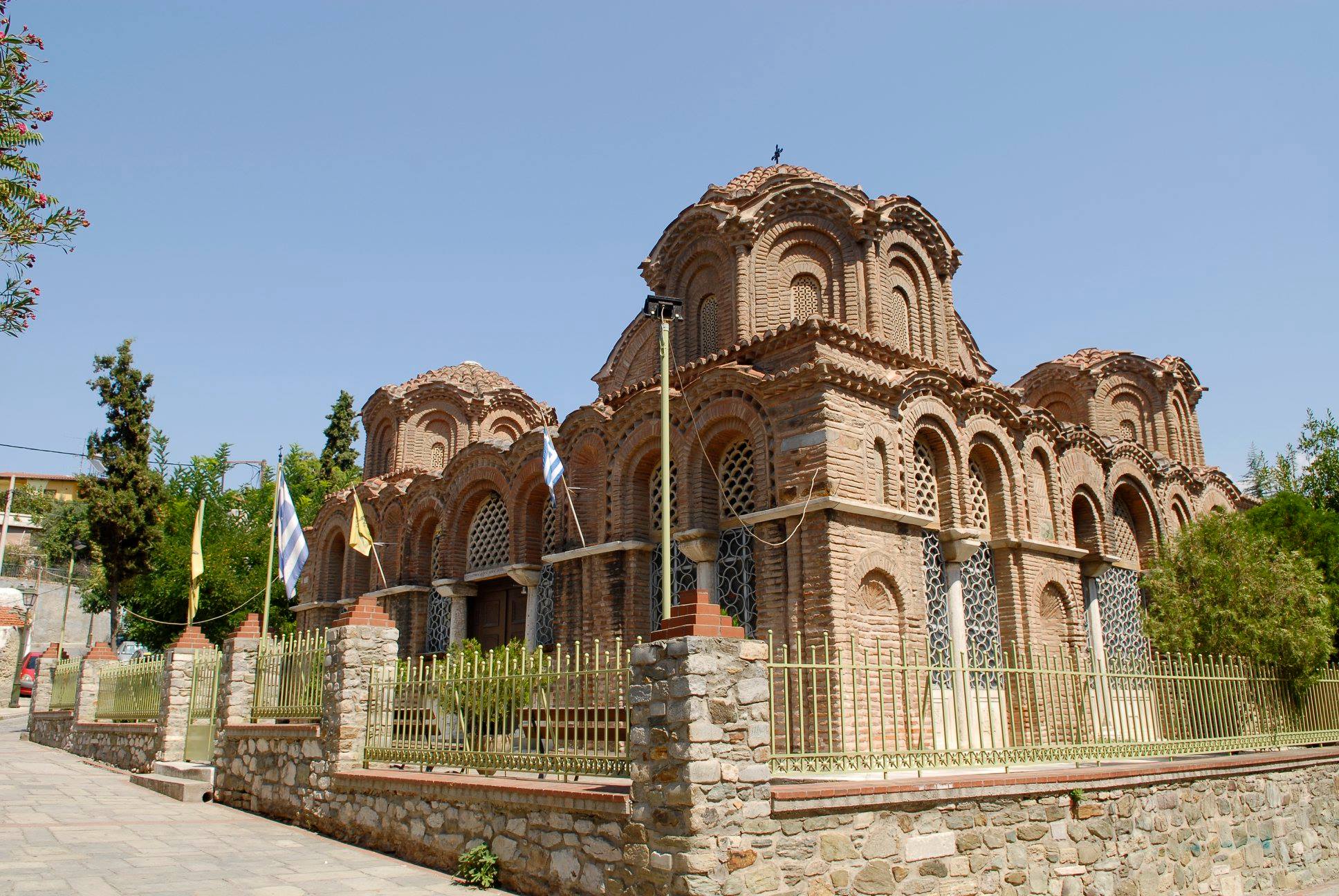
This 14th c. Byzantine church is situated in the centre of Agia Aikaterini town quarter in Ano Poli [Upper City] area. It is a complex tetrastyle inscribed cross-in-square five-domed church with an ambulatory. It bears an elaborate brick-work on the external surfaces and outstanding murals, contemporary to the construction of the edifice, which depict figures of saints, scenes from the Gospel, miracles of Christ etc. During the Ottoman Rule the church was converted into a mosque (Yakup Pasha Camii) and the murals were covered in plaster, to be exposed once again during the restoration works that took place in 1947 – 1951.


TSINARI

Wanderlust Greece Τhessaloniki 27

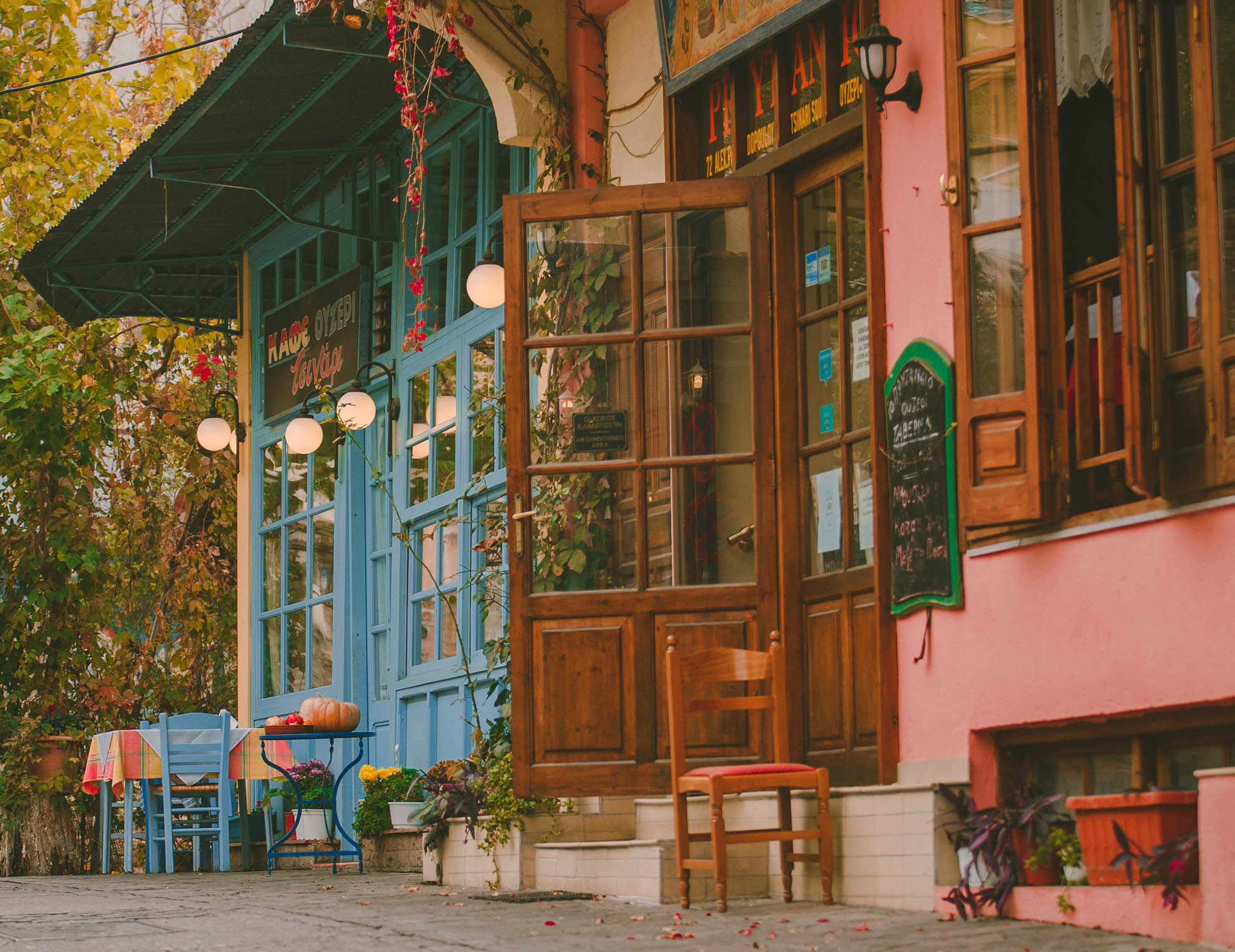
This area was named after the plane tree which was planted there in the early 20th c. (çınar is turkish for plane tree). You can reach it through Al. Papadopoulou Street, one of Ano Poli’s hallmark areas as are Tsamadou, Sachtouri and Isminis Streets. In Isminis Street you will find the House of Pontian Greeks. This is Ano Poli’s downtown spot and people who want to reach the neighbouring Sykies area go through here. In the centre, there is an ottoman fountain with a marble Roman sarcophagus; this is also where you will find the oldest restaurant in town (open since 1885), a café and small shops.


TERPSITHEA SQUARE

Take a good look at the remarkable listed buildings and the more recent ones as you walk along Pileos Street and head for Terpsithea Square. The buildings surrounding the square are amazing and offer a wonderful view of the town and the seafront; in the centre there is a playground and a small open-air theatre. Another impressive monument is the Tϋrbe (Tomb) of Musha Baba (1543), one of the late ottoman monuments of Thessaloniki, shaped as an octagon with decorative pointed frames on windows and an once lead-covered dome.


ROMFEI SQUARE

This is Ano Poli’s central square. To reach it, take Theofilou Street where the neoclassical building housing the Vice-Mayor’s office for Culture is located. In the square, you will see a Byzantine bath-house known as Koule Kafe; the entire area has been named after it. On the NE side of the square (7, Krispou st.) you will notice the architectural masterpiece of a 19th c. neoclassical building which houses the municipal Library of Ano Poli. On Theotokopoulou Street, near the square lies the 14th c. Byzantine church of the Taxiarchs [Archangels] which used to be a monastery katholikon [main church] and has undergone later changes.


TSITSANI SQUARE

Εικαστικά Τσιτσάνης

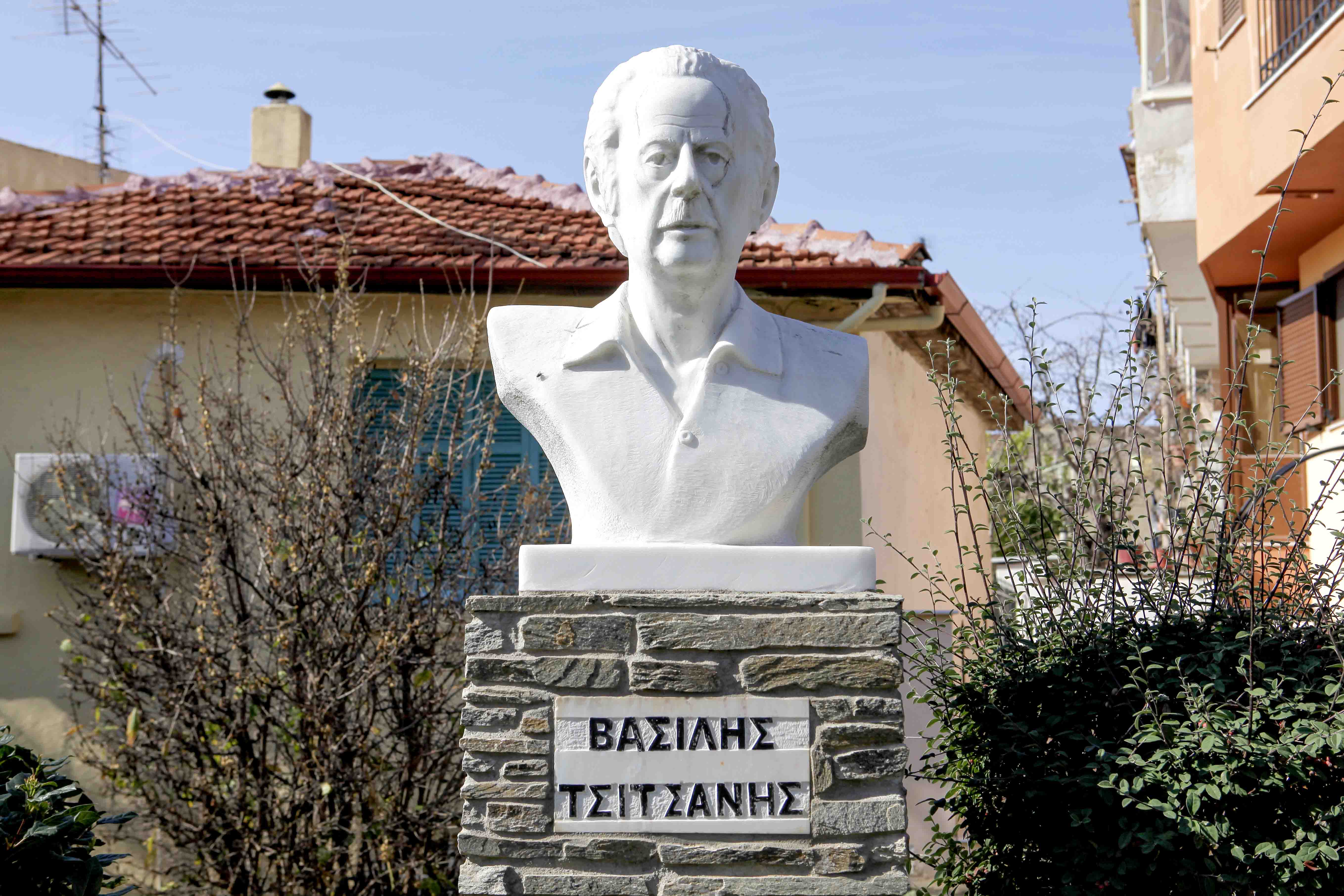
This small square with beautiful, well-tended houses is located in between Moni Vlatadon and Hosios David where you can go if you take Timotheou Street (notice the ottoman fountain) and Dimitriou Poliorkitou Street. In the square centre you will see the bust of V. Tsitsanis (1915 – 1984) a leading Greek popular composer who lived and worked in the town during World War II.


EPTAPYRGIOU STREET

This is one of the most interesting roads of Ano Poli quarter. It follows the interior line of the northern city walls which used to be the ramparts of the Acropolis. It is worth taking a walk from the corner of Eptapyrgiou and Palamidiou Streets (to the west) where the 3rd Gate is - also known as “Eski Delik” – and head for the main Gate. Besides the interesting traditional buildings and the deserted Zihne Camii [Mosque] (1902) you will pass by the old refugee houses called “kastroplikta”; these were built along the line of the city walls or adjoining them – as far back as the early 1920’s. Similar houses can be seen also on the eastern and western walls.


MONI VLATADON

It is the only Byzantine monastery in the city with an active community. It was founded in the 14th c. by the monks Vlatis (or Vlateus) brothers and was dedicated to Pantocrator Christos [Almighty Christ]. Celebrations take place on the Transfiguration of Christ feast day. Its main church [katholikon] is of the inscribed cross-in-square type but the dome rests on the walls and on two piers instead of columns. It is surrounded by a portico and there are two chapels. Murals were painted during 1360 – 1380 and the 17th c. iconostasis is particularly noteworthy. It is surrounded by a large garden offering a wonderful view of the city and there is also a small peacock farm; in the grounds you will also find the newer buildings of Misirogleios Library, the Patriarchal Foundation for Theological Studies (1968), a space provided for the study of pictorial manuscripts from Mount Athos, a bookstore and a shop


TRIGONIOU TOWER

G.T 6 min

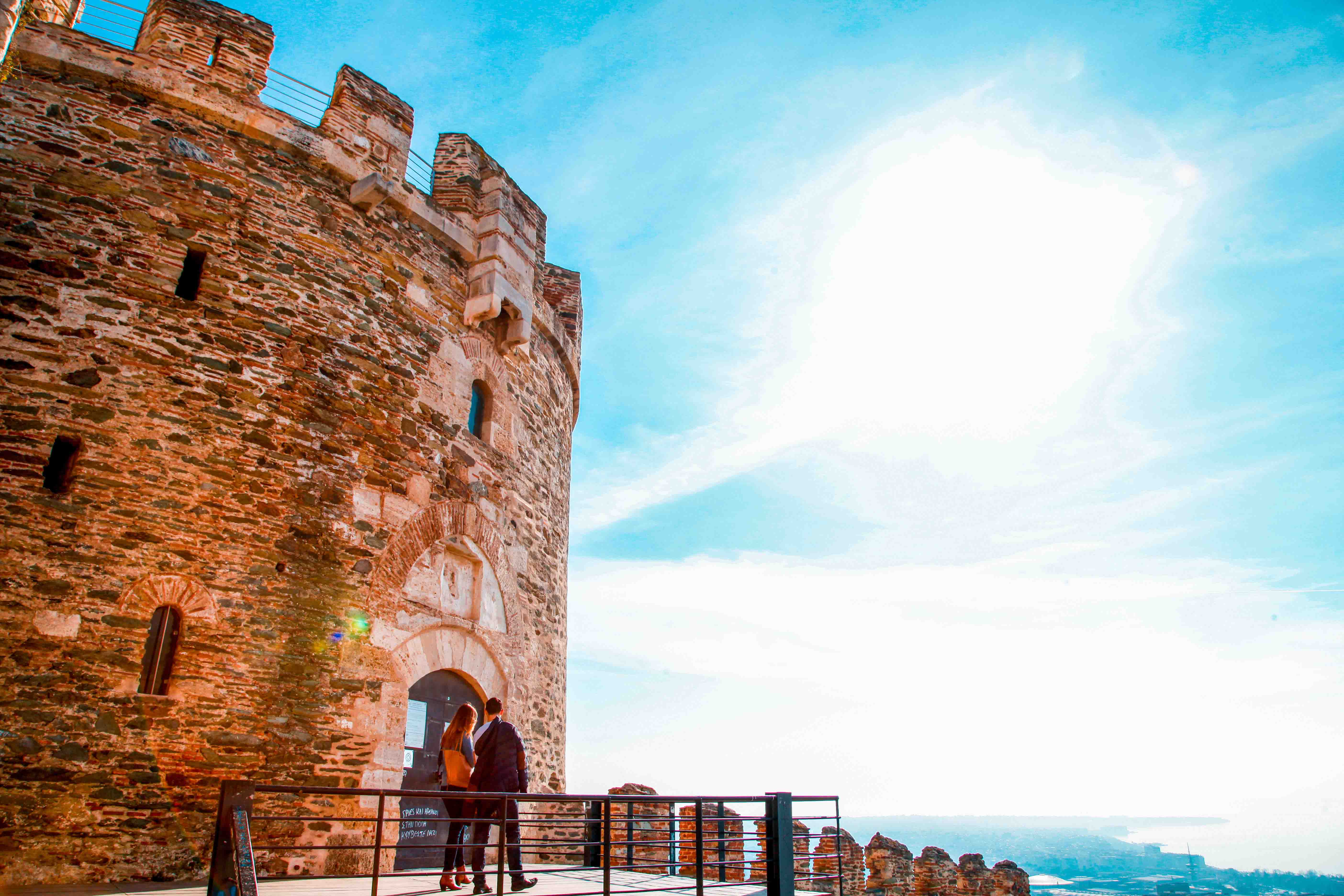
Also known as Alyseos [Chain] Tower, this building stands on the spot where the north and east walls meet. It was built in the 16th c. possibly in the place of an earlier tower dating to the Venetian period; the White Tower, Vardariou Tower and Trigoniou Tower formed part of the construction works completed by the Turks for the fortification of Thessaloniki. Known as Kastra [meaning Towers], this is a popular sightseeing area for locals and visitors alike since the view of the eastern walls as well as of the entire city is breathtaking from this location.


PORTARA

This is one of the two main gates (the other one is Eski Delik) on the northern city walls. Near the gates, the construction of the walls was done particularly carefully and many spots were decorated with ceramics, inscriptions etc which can be seen best from Polydorou Street. This location is a very busy road junction and you will find tourist shops and tavernas nearby.


ACROPOLIS – EPTAPYRGIO (YEDI KULE)


This impressive fortified area is situated on the NE end of the city walls, within the acropolis - one of the few remaining citadels that are still populated worldwide. To get there from Portara, follow Polydorou Street, alongside the northern walls and then take Gialourou and Erasmou Streets. Eptapyrgio was built in the 12th c., presumably on an older 9th c. fortress and took this name as at first there were seven towers there. The current structure includes ten towers and a small street that goes around it. The north side used to be a part of the city’s Early Christian walls, whereas the towers on the south side were added during the Byzantine period. In 1431, the Ottoman Turks made certain modifications to them, according to an inscription placed above the entrance. Circa 1890 the construction was changed in order to house long-term convicts and newer buildings were added on the inside as well as on the outside area. In 1989, the prison, known by its Turkish name – Yedi Kule, was housed elsewhere and the fortress became a monument open to visitors. It is well worth crossing the ring dirt road of the fortress where an early Christian cistern remains as well as parts of an early Christian basilica - the spot affords a lovely view!

PALAIOLOGINA’S GATE

To reach Trigoniou Tower, you will go past the picturesque Agioi Anargyroi square, under a blanket of plane trees, where you will see Agioi Anargyroi church and small, traditional caffés and restaurants. This is the location of the double gate of Anna Palaiologina (the one lying west is also called Gate of Agioi Anargyroi), constructed by the Byzantine empress in 1355, during her stay in the city.


GARDENS OF THE PASHA

GARDENS OF THE PASHA 2 min

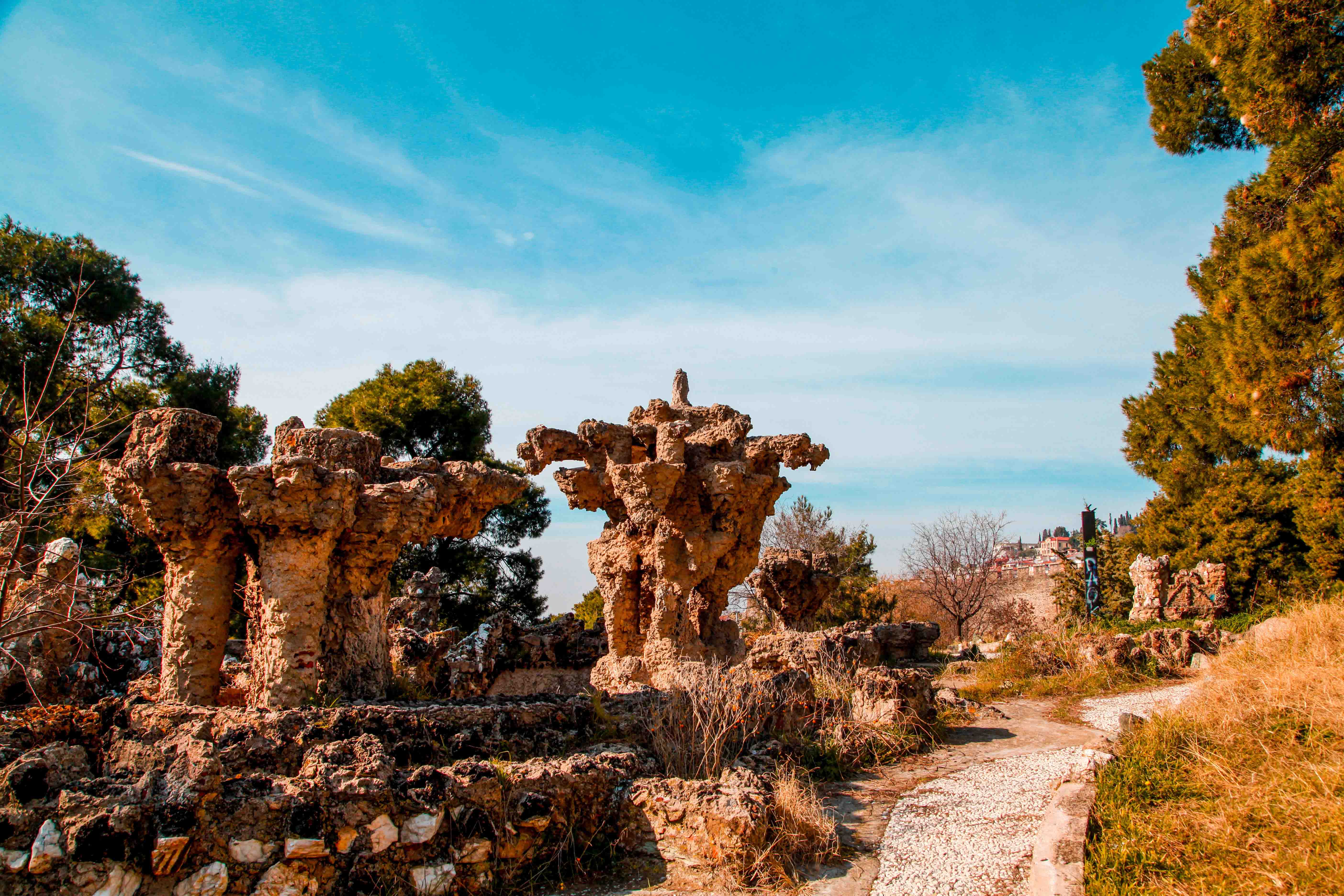
They were built in 1904 by an unknown architect and are the only specimen of eccentric architecture in town. They cover a 1000 m2 area, the decorations are quite peculiar and they include an art nouveau fountain which is no longer functional. At the far end lies Agios Pavlos [Saint Paul] church in the area by the same name. According to the legend it was named after the fountain where Apostle Paul drank water during his stay in town.

EVANGELISTRIA CEMETERY

Evangelistria is a privileged area in the city centre, thanks to its low buildings and ample green spaces. This is the location of the city’s oldest Christian cemetery created in 1875 by the Charity Brotherhood; some of the greatest personalities of Thessaloniki were buried here. On the opposite side (on El. Zografou Street) you will see the Armenian and Protestant cemetery as well as the machine works / foundry of E. Axylithiotis, which closed down in 1990 and is now a historic monument, used as a venue for cultural events. The New Golden Gate used to be at the corner of Agiou Dimitriou and Olympiados Streets and it was one of the central gates of the eastern walls which were demolished to make way for the opening up of two roads (very few segments remain). Opposite the cemetery you will spot the neoclassical building of G. Gennimatas hospital.

AGIOS NIKOLAOS [SAINT NICHOLAS] ORPHANOS

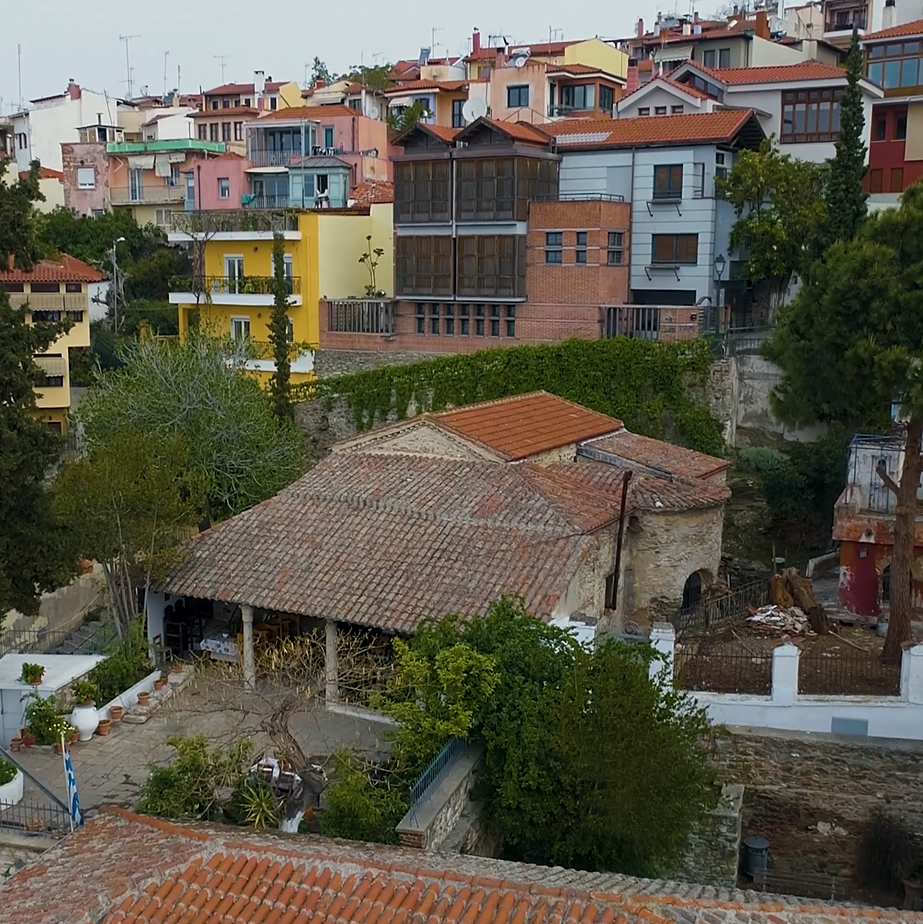
It was built in the 1310s, as a dependency of Vlatadon Monastery and it served as a monastery main church. Within the same grounds there used to be an orphanage at earlier times – hence the name “Orphanos” [meaning Orphan]. It is an aisleless timber-roofed church sided by an ambulatory forming the shape “Π”. The 14th c. murals inside are true masterpieces depicting scenes of Dodekaorto [the Twelve major religious feasts of the year], of the Passion of Christ, the Resurrection and the Liturgical Cycle as well as figures of saints; the monument is considered as one of the best preserved in Thessaloniki. It is surrounded by lush and serene gardens.

KALLITHEAS SQUARE

Take Olympiados and Ap. Pavlou Streets to reach the picturesque Kallitheas Square (with a small playground) in Ano Poli, where major streets begin, such as Irodotou, Andokidou and Gorgous. The last street will lead you out of the city walls. The Children’s Museum of Thessaloniki was housed in one of the street’s traditional buildings until 2009.

SEICH SOU (CEDAR HILL)

The Seich Sou forest (the spring of the Sheikh) or Cedar Hill or Thousand Trees is the biggest forested area bordering the city, covering a 3,000 hectare area. Only a small section of the old oak forest remains in Kouri area as a result of the exploitation that occurred during the Byzantine period. Today’s landscape is the result of systematic reforestation that took place in the 1930’s. Despite the spreading of the adjacent suburbs and the 1997 big fire, it remains a particularly popular destination for Thessalonians who come here to enjoy hiking, mountain biking and other sports, picnicking or just to drink in the lovely view


More

City walks: UNESCO BYZANTINE MONUMENTS

Published in Arts & Culture

Thessaloniki is an open Museum of Early Christian and Byzantine Art. In 1988 the UNESCO declared World Heritage Sites 15 of the 'finest monuments' of the city, representative samples of this period of its history. We summoned up these monuments in the thematic 'UNESCO Monuments Route' to include them into your own list!


HOLY TWELVE APOSTLES CHURCH

One of the town’s oldest churches was built in 1310 – 1314 under the sponsorship of Patriarch Nephon I. It used to be a katholicon [main church] of a monastery dedicated to Theotokos [Mother of God] as shown by the mural depicting Theotokos and the Founder, as well as by the iconography on the aisle with images of the Holy Virgin’s life. Out of the original monastery complex, -apart from the katholicon – there remain the portal to the southwest and the cistern to the northwest. It is a complex tetrastyle cross-in-square church with a narthex and a peristyle on the three sides and extremely symmetrical proportions. When it was converted into a mosque, during the Turkish rule, the murals and mosaics – outstanding specimens of Palaeologan art dating to the 14th c. – were covered by plaster and a minaret was added to the southwestern side.


PANAGIA CHALKEON CHURCH

It is located on the SW side of Dikastirion Sq. [Law Courts Sq.]. It was built in 1128 on the site of an ancient temple of Hephaestus or Kaveiros. It is a representative specimen of the architecture of the “School of Constantinople” and was thus named because of the area it was built on, known as the district of coppersmiths (masters of copper – chalkos). The most prominent feature is the level above the narthex. In 1430 it was converted into a mosque and was named Kazancilar Camii.


ACHEIROPOIITOS CHURCH

It was founded in the second half of the 5th c. on the site of the roman public baths and it was dedicated to Panagia (Virgin Mary). It is a three-aisled, timber-roofed basilica with a narthex and a gallery. The nave is separated by the side aisles with colonnades of Theodosian style pillars and impost capitals made of marble as is made the floor of the nave. The preserved mosaic decorations date to the 5th c. whereas the murals on the south aisle date to the 13th c. After the city was captured by the Turks, this was the first church to be turned into a mosque. In 1922-1923 it housed refugees from Asia Minor and in 1939 Christian worship was once again practiced in it.


AGIA SOFIA CHURCH [or ΗAGIA SOPHIA]

It was built in the mid-7th c. on the ruins of a 5th c. basilica, as a copy of Hagia Sophia [Holy Wisdom of God] in Constantinople, and is one of the most important early Christian monuments in the Orthodox world. It is a cross domed basilica and used to be the Metropolitan Church (Cathedral) until 1523 when it was converted into a mosque; it was restored to Christian worship after 1912. The capitals date to the 5th – 6th c. (they were part of the older church); the wonderful mosaics are an absolute must-see, particularly the ones on the dome with the image of the Ascension of Christ, as are the murals crafted in different stages from the 8th to the 11th c. In the church’s south side, amid green surroundings you will find the church of Agios Ioannis Prodromos [St. John the Forerunner] (1940); from this point you will enter the early-Christian baptistery (catacomb) of Agia Sofia, built on the ruins of roman baths.


TRANSFIGURATION OF THE SAVIOUR CHURCH [METAMORFOSI SOTIROS]

It is located on Egnatia Street almost between Kamara and the Palace of Galerius). Construction took place possibly around 1340 and it is a typical example of the transitional type in Byzantine church-building, found particularly in Macedonia. Fine depictions of the Ascension of Christ, the Prophets and the Divine Liturgy decorate the dome


ROTUNDA [ROTONTA]

57484662 10157212932858328 1858611603734265856 n

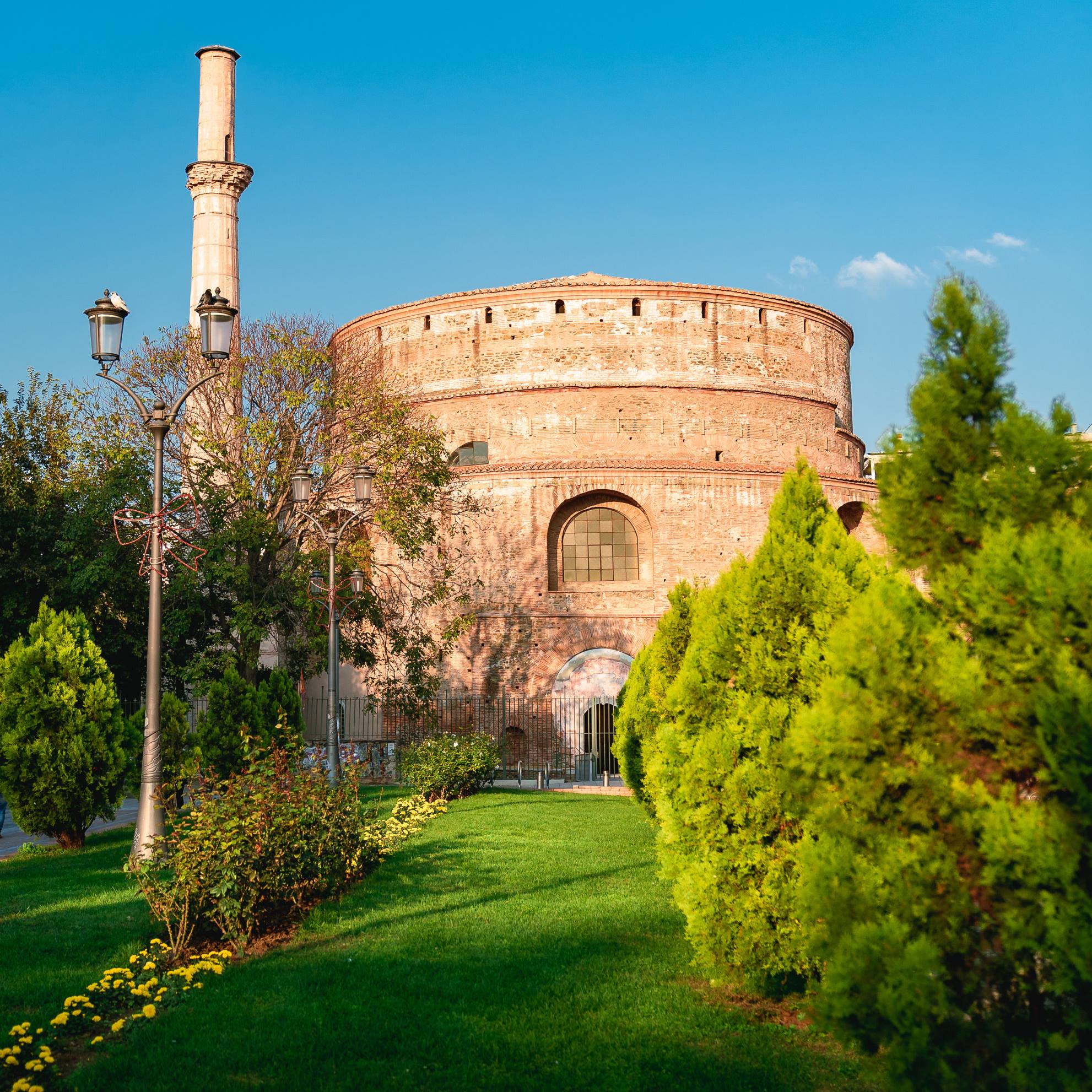
This impressive round building lies on the route connecting the triumphal arch of Galerius (Kamara) and the Palace of Galerius. It has a diameter of 24.5 m. and its gigantic dome is 30 m. high. It was built in 306 AD by Galerius, probably as a temple of Zeus or Kaveiros or as a mausoleum; in the 5th c. it was converted into a church dedicated to the Holy Bodiless Powers. The 5th c. outstanding preserved mosaics impress with their variety of themes, their naturalistic rendering, the colour diversity and the brilliance of the gold and silver tesserae. In 1591 it was turned into a mosque when a towering minaret was added, which survives today. In the square, next to Rotunda, lies the small church of Agios Georgios [St. George] whence the monument took its other name; there are also many cafés and bars. In the adjoining Melenikou st. you will see segments of the town’s eastern walls.


AGIOS PANTELEIMONAS CHURCH

It is on Iasonidou st., pretty close to Rotunda. According to certain scholars, this was the main church of the Monastery of Kyr Isaac or Theotokos Perivleptos, founded by Jacob, the Metropolitan Bishop of Thessaloniki (1295-1314). It is a tetrastyle cross-insquare domed church with a surrounding portico ending to the east in two chapels. During the Turkish Occupation it was changed into a mosque under the name Ishakiye Camii (the mosque of Isaac). Remaining murals date to the 13th – 14th c. and depict saints and prelates as well the Virgin Mary.


AGIOS DIMITRIOS CHURCH

It is the best-known Byzantine church of the town as Agios Dimitrios [St. Demetrius] is Thessaloniki’s patron saint. It was built during the 7th c. on the ruins of a 5th c. Basilica and in 1493 it was converted into a mosque. It was destroyed in 1917 by the fire but it was restored and reopened in 1948. It is a five-aisle transept basilica with a women’s gallery and a narthex. The sculpted decorative motifs originate from the 5th c. basilica and other buildings and this explains their variety; equally interesting are the capitals (5th and 6th c.). The mosaics found on the west side date to the 5th c. while those on the piers around the sanctuary [bema] are later additions. Those depicting the saint among children, flanked by the bishop and the prefect are of great value. In the basement lies the Krypt on the site where Roman public baths used to be. This is the place of martyrdom for Saint Demetrius in 303 or 305. When the 5th c. Church was built, the baths became a place of special worship and the water flowing was believed to be holy. Since 1988 it is an exhibition area for sculptures, capitals, panels, vessels etc, where cultural events also take place.


AGIA AIKATERINI [St. CATHERINE’s] CHURCH

aikaterini

This 14th c. Byzantine church is situated in the centre of Agia Aikaterini town quarter in Ano Poli [Upper City] area. It is a complex tetrastyle inscribed cross-in-square five-domed church with an ambulatory. It bears an elaborate brick-work on the external surfaces and outstanding murals, contemporary to the construction of the edifice, which depict figures of saints, scenes from the Gospel, miracles of Christ etc. During the Ottoman Rule the church was converted into a mosque (Yakup Pasha Camii) and the murals were covered in plaster, to be exposed once again during the restoration works that took place in 1947 – 1951.


PROFITIS ILIAS [PROPHET ELIJAH] CHURCH

This imposing church (late 13th – mid 14th c.) towering over Olympiados st. in the outskirts of Ano Poli is thought to have been the main church of Nea Moni [New Monastery] or Moni Akapniou [Akapniou Monastery]. It was situated in the area of the Byzantine palaces and this is why the Turks had named the area Balat (Palace) and the church Eski Saray Camii (Old Palace Mosque). It is a tetrastyle cross-in-square domed church with features related to the monasterial architecture of Mount Athos. The central dome is supported by granite columns in the shape of a cross, the building’s central part was enlarged by the addition of two conchs [semi-domes] whereas in the west section there is a rectangular cupolaed narthex. The murals (14th c.) depict images of saints and scenes from the life and miracles of Christ. Also, at the junction of Olympiados and Amfilochias Sts. there is a surviving ottoman fountain.


BYZANTINE BATHS (KULE KAFE)

It is located on Romfei Sq. in Ano Poli and it is the only surviving Byzantine bath house, a domed 13th c. building made of brick, which was open to the public until 1940. During the Ottoman period it was named Kule Hamam and was divided in two (male and female section).


HOSIOS DAVID (MONI LATOMOU)

david

Moni Latomou [Latomou Monastery] has a huge archaeological and historical value, since it is an early type of a cross-in-square domed church. Its construction dates back to the 5th or 6th c. and it is believed to have been built by Theodora, daughter of the Byzantine emperor Maximilianus, who had been baptised a Christian. The monastery was dedicated to Hosios David [Saint David] in 1921. Especially noteworthy are the mosaic depictions on the ceiling which show the Vision of Ezekiel and are contemporary to the construction of the monastery; the later ones of the 12th, 13th and 14th c. are also great art specimens of the Komnenian period. There is a surviving minaret entrance built in the 16th c. when the church was converted into a mosque. The small picturesque yard offers an unobstructed view of the city and the Thermaic gulf.


MONI VLATADON

It is the only Byzantine monastery in the city with an active community. It was founded in the 14th c. by the monks Vlatis (or Vlateus) brothers and was dedicated to Pantocrator Christos [Almighty Christ]. Celebrations take place on the Transfiguration of Christ feast day. Its main church [katholikon] is of the inscribed cross-in-square type but the dome rests on the walls and on two piers instead of columns. It is surrounded by a portico and there are two chapels. Murals were painted during 1360 – 1380 and the 17th c. iconostasis is particularly noteworthy. It is surrounded by a large garden offering a wonderful view of the city and there is also a small peacock farm; in the grounds you will also find the newer buildings of Misirogleios Library, the Patriarchal Foundation for Theological Studies (1968), a space provided for the study of pictorial manuscripts from Mount Athos, a bookstore and a shop


AGIOS NIKOLAOS [SAINT NICHOLAS] ORPHANOS CHURCH

It was built in the 1310s, as a dependency of Vlatadon Monastery and it served as a monastery main church. Within the same grounds there used to be an orphanage at earlier times – hence the name “Orphanos” [meaning Orphan]. It is an aisleless timber-roofed church sided by an ambulatory forming the shape “Π”. The 14th c. murals inside are true masterpieces depicting scenes of Dodekaorto [the Twelve major religious feasts of the year], of the Passion of Christ, the Resurrection and the Liturgical Cycle as well as figures of saints; the monument is considered as one of the best preserved in Thessaloniki. It is surrounded by lush and serene gardens.


CITY WALLS

unescoo

Thessaloniki was walled immediately after it was founded by Cassander; in 390 AD a series of largescale changes took place by Theodosius I. In the Byzantine times a harbour was constructed (in the SW part) and the Acropolis wall was raised. During the Venetian Rule (1st half of the 15th c.) there were efforts to boost it in the light of the Turkish threat; this is why certain scholars support that the Trigoniou Tower and the White Tower were built during that period. In the following centuries, the Turks completed reinforcement works in various places. The wall inscriptions describe the interventions and restorations that took place over time. The walls followed the shape of an irregular trapezium and ended to the west in Vardariou Tower and to the east in the White Tower, reaching a total length of 7 km. After 1870, demolition of the seafront walls as well as of parts of the western and eastern walls began, in order to sanitise the plains and also to expand the city. Today there are 3 remaining km of city walls (mainly on Ano Poli); their height ranges from 8.30 to 10.50 m. and their width may measure up to 4.50 m, making them an impressive monument and one of great archaeological and cultural value.

*Note: To get a complete picture of the town’s Byzantine art monuments make sure you visit the Museum of Byzantine Culture

More

Thessaloniki: Summer stories of a city that never sleeps

Published in Tips

What does the word “getaway” mean to you?

A calm afternoon in a picturesque harbor, enjoying the sea breeze?

Endless hours on a golden beach with emerald crystal-clear waters?

A refined cocktail in an inviting and exciting atmosphere with friends?

A city with a cosmopolitan character that will fill you with knowledge and images of its heavy cultural heritage?

Countless local delicacies filled with colors and flavors?

Walks to enchanting destinations such as mountains, lakes, waterfalls and forests?

The city of Thessaloniki checks all these boxes and much more! Full of delicious food, amazing history, and breathtaking coastlines, the northern port city of Greece is the ideal city-break destination for tourists of all tastes!

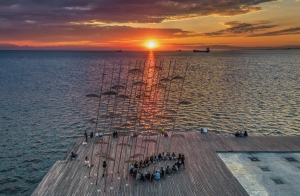
Even if you have visited it in the past, its promenade is a pole of attraction and experiences. Even the Thessalonians themselves admit it. "No sunrise, no sunset is the same in Thermaikos Gulf".

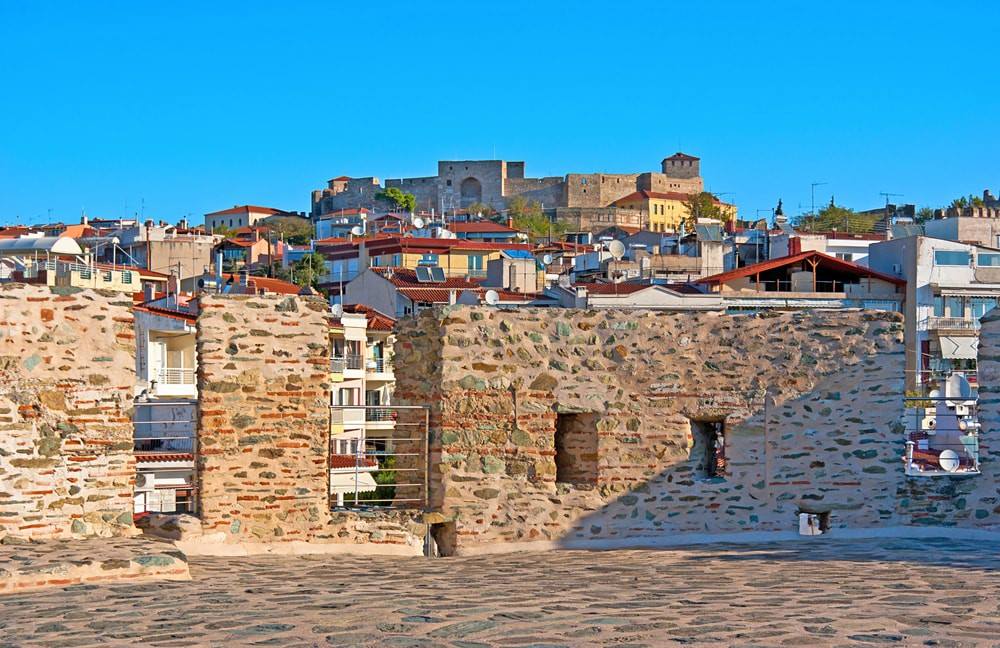
Ascending towards Ano Poli, a different aspect of Thessaloniki is being revealed in front of you. The fortifications for the city’s defense that dominate the scenery, will take your breath away. Colored houses and stone alleys compose a backdrop that will make you feel like you’ve traveled back to another era.

And then it’s the Old Ladadika. This is where the cobbled streets teem with lively tavernas, colorful buildings, cafes, bars and restaurants. From the simplest tavern, to the most luxurious restaurant, food is made with heart to give joy and pleasure. Natural ingredients, delicious dishes, recipes and little secrets of taste bring people together around the big table of friends.

Not to mention Thessaloniki’s creme de la creme: Short-distance getaways that change the scenery.

Choose among the “Potamos”, the “Fanari “, the “Agelaradiko “, the “Aggelochori “, the “Aghia Triada”, the “Baxe” or the “beach of Perea“.  In the dozens of taverns, literally on the sea, you can enjoy fresh seafood and traditional dishes accompanied by excellent local wine and raki made by local producers in the traditional way, born and transferred from generation to generation.

In the southeast of Thessaloniki, Halkidiki, with the characteristic shape of the three peninsulas, the golden beaches, the hidden secluded coves and the exotic bays, the reviving Mediterranean light and the pristine nature invites you to truly discover a place of dreams.

The Koroneia and Volvi National Park together with the Axios Delta National Park, offers excellent opportunities for walking, observation, bird watching, photography or just an escape from the hustle and bustle of the city that can be can combined with religious tourism and historical search of the course of Macedonia in time.

In the lagoon of Kalochori, the spectacle of pink flamingos surprises while in the Delta of the Gallikos river the refuge of the imposing water buffalo impresses every visitor.

Thessaloniki is a city that has many stories to tell. Modern and old stories with roots that are lost in the depths of the centuries.

Keep your eyes and ears open to see and hear them all. But mainly keep your soul open to feel the value of the people of the city.

They are the ones who make your experiences unforgettable.

Thessaloniki. Many Stories- One Heart!

More

Hop Into Easter Finds - Commercial shops operating hours

Published in Easter in Thessaloniki

The Thessaloniki Trade Association has announced the Easter 2025 holiday operating hours for the city's commercial stores. From Thursday, April 10, to Holy Saturday, April 19, stores will be open from 10:00 AM to 9:00 PM on weekdays, with adjusted hours on weekends and specific days:

  • Thursday, April 10 & Friday, April 11: 10:00 AM – 9:00 PM

  • Saturday, April 12: 10:00 AM – 6:00 PM

  • Sunday, April 13 (Palm Sunday): 11:00 AM – 6:00 PM

  • Monday, April 14 to Thursday, April 17: 10:00 AM – 9:00 PM

  • Friday, April 18 (Good Friday): 1:00 PM – 7:00 PM

  • Saturday, April 19 (Holy Saturday): 10:00 AM – 4:00 PM

All stores will remain closed on Easter Sunday, April 20, and Easter Monday, April 21.

More

Easter Getaways

Published in Easter in Thessaloniki

Embrace the Mystical Spirit of Easter in Halkidiki

With respect to the Greek traditions and customs, Halkidiki is an excellent location to celebrate Easter. Dressed in the cheerful colors of spring and committed to the local customs, Halkidiki provides the ideal scenery for an Easter getaway. Although all villages celebrate the biggest religious holiday in Greece with the utmost devoutness, each community is identified by special traditions.

Traditional Easter in Olympus Riviera, Pieria

Easter in Olympus Riviera, Pieria hides many surprises for both young and old. Various events take place in various regions throughout the Prefecture, reviving customs and traditions. Pieria offers guests unique choices for all seasons. So, Easter, whether you choose the mountain or the sea for your stay, the distances are relatively small and you can watch various events and customs.

More

Experience…like a local

Published in Easter in Thessaloniki

Resurrection at Agios Dimitrios, Agia Sophia or the Monastery of Vlatades?

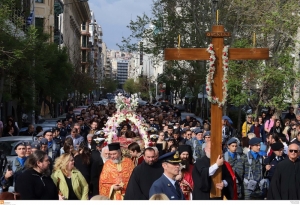
The Holy Temple of Profitis Ilias may have the most views on social media, but the Resurrection Divine Liturgy and the “Christ is Risen” have their own real and special mystagogy in three different temples of the city. In the Monastery of Vlatades there is the whole view of the illuminated Thessaloniki under the light of the candles held by the congregants. In “Agia Sophia” (Holy of Wisdom of God) the image of the precinct with the congregants and the countless lit candles is impressive. In Agios Dimitrios the imposingness of the church and the Byzantine atmosphere is always in the heart of history, of the inhabitants and unites the traditions of yesterday and today.


Holy Friday: At the Epitaphs of the city


The Epitaph of Saint Minas

It is the Epitaph that precedes all the other temples and is the peculiarity, a special custom of Thessaloniki, on Holy Friday. It starts at 5.00 p.m. in the Shopping Center of Thessaloniki giving the opportunity to shopkeepers, customers, tourists and residents of the Shopping and Historic Center to participate by following the procession. The Epitaph of Agios Minas also passes through Tsimiski Street.

At Agios Nikolaos Orphanos

It is without a doubt the most overnight visit on Holy Week. World Cultural Heritage Site, on the northeast side of the Walls of Thessaloniki. Time Travel. In Byzantium. In the painting of the Palaeologian Renaissance. Murals of unparalleled beauty and value (1314). On the surface of the walls the miracles and the Passions. See the most expressive: The one with the “Kiss of Judas”. Also pay attention to the yard. With benches and birds. Secret and unknown to many.

The Epitaph of Rotunda

It is considered special because it is one of the few religious events held at the monument in recent years. For the congregants who choose the Rotunda (a church dedicated to St. George) it has been characterized as a unique experience of immersion and grandeur. The procession takes place around the monument.

The Epitaphs in Nea Mesimvria of Thessaloniki

In Nea Mesimvria of Thessaloniki, on Holy Friday, the two Epitaphs of the parishes, after their procession in the streets, meet in the cemeteries. There, residents light candles on their loved ones who have passed away.

More

A taste of Greek Easter

Published in Easter in Thessaloniki

Photo: Γιώργος Δρακόπουλος | www.kathimerini.gr


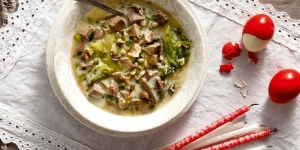
Eating Magiritsa

After the egg cracking, it’s time for the traditional magiritsa! This dish contains the offal of the lamb just before it is roasted, along with some green vegetables (lettuce, dill and onion) boiled together. It is traditional to eat magiritsa because it symbolizes the end of the 40-day fast Greek Orthodox people have right before this day in order to mourn the death of Jesus. This feast of drinking and eating lasts till the early hours, sleeping only to get up and make the Easter Sunday lunch.

Easter Sunday: The skewering of the lamb

The Easter Sunday is another day to celebrate. Families gather again before noon to roast the lamb on a spit and then enjoy a long lunch with lots of meat, potatoes, salads and drinks. The custom of skewering comes from the Jewish traditions. The Jews even painted the entrance of their houses with the blood of the sacrificial lamb, as a representation of the night of their departure from Egypt. The sacrificial lamb is then made into a spear (it is roasted on a spit) and symbolizes the “lamb” of God who was sacrificed for humanity.

Tsoureki of Thessaloniki: The must of Easter

If anything cannot be missing from the Easter table, this is definitely tsoureki with the red egg… or without it! A real advertisement for the city and its gastronomy which is consumed as the most characteristic dessert of Easter and Thessaloniki. The traditional sweet bread, which is prepared throughout the year, symbolizes the Resurrection of Jesus Christ as the flour “comes to life” and “transforms” into bread.

Undoubtedly, the most famous version during Easter is the braid, with the red egg. However, apart from the classic buns that are prepared with the traditional recipe, in many small and large confectioneries of the city you can find buns with coatings or stuffed with chestnut, praline or chocolate.

For the adventurous, Easter is a good opportunity to…raid the kitchen! Just follow the instruction step-by-step and the fluffy buns for Easter will be on your table!

More

Discover Greek customs & morals

Published in Easter in Thessaloniki

Red cloths on the balconies and red eggs

On Holy Thursday, raise your eyes on the balconies for the red fabrics. There are many housewives who follow the custom of red cloth in parallel with the dyeing of red eggs. You may see a lot of red fabrics, and they were not hung there by chance. Fabric and dyeing of red eggs symbolize the red blood of Jesus Christ, but, at the same time, it expresses the joy that the Resurrection brings with it as well. According to traditions, the cloth used by housewives only to dye eggs. While in the recent years the eggs are dyed also in other colors, two things remain traditional for the Greek Easter Eggs: the specific day to dye eggs and the eggs cracking after Jesus Resurrection from the dead.

Lambada, traditional Greek Easter candle

Late on Saturday night, before midnight all the people go to all the churches, which all seem full to bursting.  Then follows a festival of light that is a true delight - at midnight the church goes dark and the bells ring out to proclaim the resurrection, and people start cheering and letting off fireworks and crackers!  The Greeks young and old buy or make their own Easter candles which they take to the church on this night.  The priest lights a candle representing of Jesus’ eternal flame and everyone receive the Holy Light and pass it on to others.  People carefully carry their candle home and make a black cross on their house with the flame to bless themselves. For Greek Orthodox Easter, it is tradition that the Godparents give the gift of an Easter lambada to their godchild.

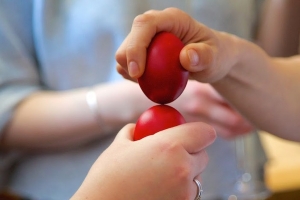
Red Egg Cracking

Despite this deep religious meaning, egg cracking has evolved into a fun tradition for the faithful of all ages in Greece and beyond, which many look forward to each Easter. Everyone selects one egg, carefully choosing the one that seems the strongest. Then the egg cracking begins! One cracks their chosen egg on top of another’s chosen eggs, saying “Christos Anesti” (meaning “Christ has risen”). The other one responds, “Alithos Anesti” (meaning “Indeed, he did!”). Each time there is a winner and loser. Loser is obviously the one with the cracked egg. The egg cracking keeps on going, until there is only one winner- the chosen one with the un-cracked egg! The one with the strongest egg is said the have good luck for the whole year. Egg cracking, starts on the night of the Resurrection Service, the night before Easter, and continues the next day at the Greek Easter feast.

More

The upcoming festivals in Thessaloniki that you just can´t miss

Published in Tips

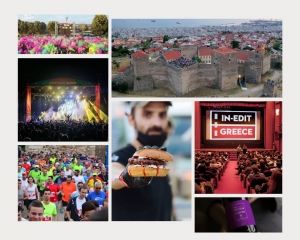
Thessaloniki becomes a meeting point for all those who love music, art and new flavors. In the rich cultural calendar of Thessaloniki, the festivals have their own special place. Dynamic enhancement tool of all forms of art and expression, are a very good opportunity to visit the city and discover the modern cultural production, flooded with music, ideas and colors!

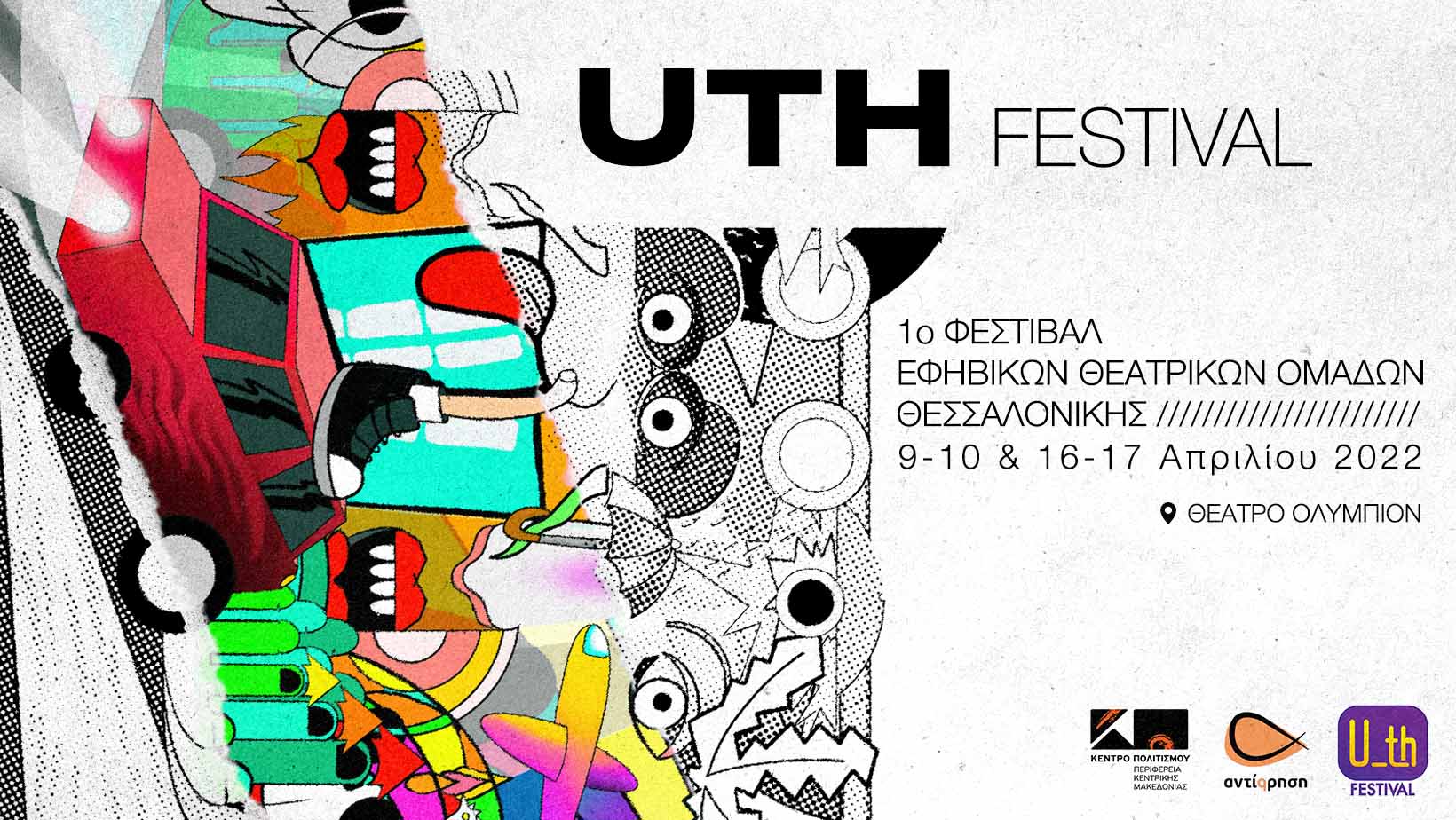
1st Festival of Adolescent Theatrical Groups of Thessaloniki «U_th festival»

u th

The 1st Festival of Adolescent Theatrical Groups of Thessaloniki -«U_th festival»- is organized by the Cultural Center of the Region of Central Macedonia, in collaboration with the Antikrisi Theater Company and it is supported by Thessaloniki Film Festival. Teenagers of nineteen institutions from Thessaloniki will be on the stage of the Olympion Theater to highlight their work in a special theatrical celebration. A special note in the festival will be given by theatrical groups from schools of Italy, France, Spain and Poland that are hosted in our city and will present their work.

Dates: 9 - 17 April 2022 | Olympion Theater | Admission: Free


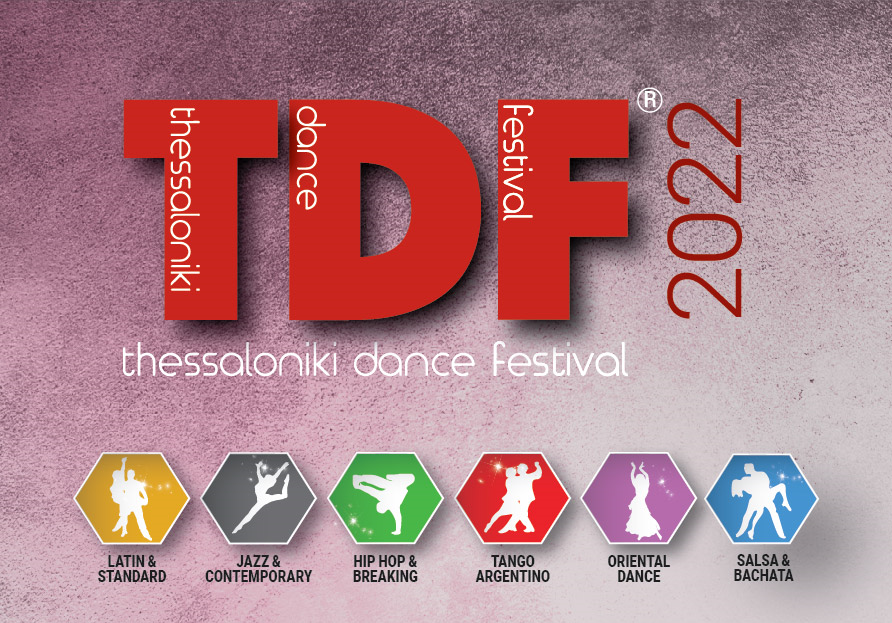
6ο Thessaloniki Dance Festival

6o thessaloniki dance festival

With the participation of 1,500 dancers from all over Greece, the Balkans and other European countries, this year, from April 15 to 17, comes the 6th Thessaloniki Dance Festival (TDF), which has been established as the largest dance festival in the country and as one of largest in Southeastern Europe. The festival is co-organized by TIF-Helexpo and the All-Star Dance school. TDF competitions and seminars will take place at the Conference Center «Ι. Vellidis», as well as in Kiosk 6 of the Thessaloniki International Exhibition Center. Latin/Standard, Modern/Jazz, Street Style/Breaking, Salsa/Bachata, Arg.Tango και Oriental, will meet in five venues at the same time, with the special permission of the National Dance Athletic Federation of Greece.

Dates: 15 – 17 April 2022 | Conference Center «Ι. Vellidis»| Two-day tickets: general: 15 euros, children: 5 euros (3-12 years old), family: 35 euros (parents and 2 children up to 12 years old) - with Saturday tickets as a gift the Free Pass on Sunday.


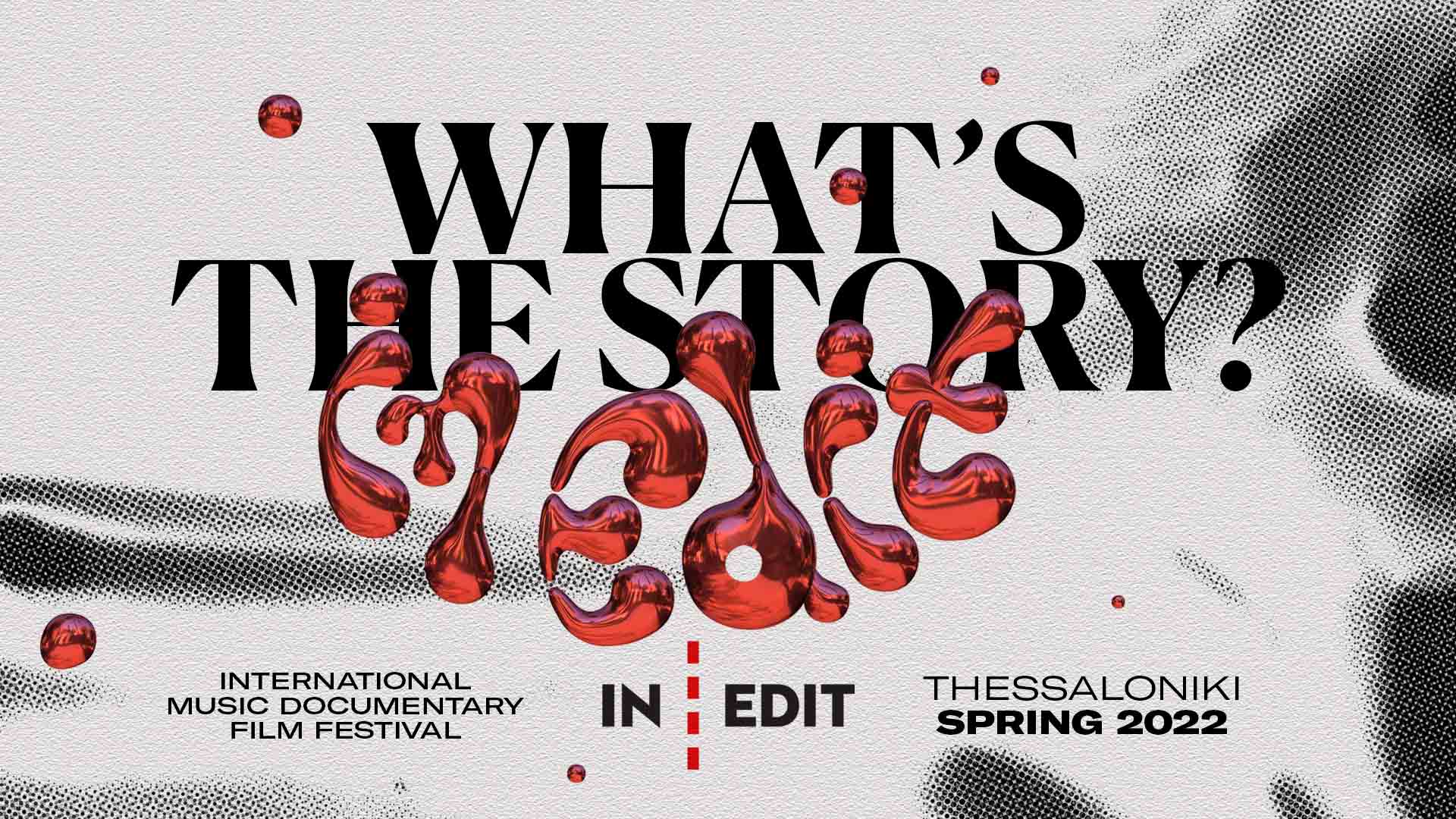
In-Edit Greece

in edit

IN-EDIT Festival is a global festival that links the two strongest parts of the cultural industries: music and cinema. It is the background of the musical world and its program, which includes the most important musical documentaries of recent years combined with a series of parallel events, giving the public the opportunity to attend both the stories behind the emergence of different genres along with the stories behind the people who, starting from obscurity, conquered the music scene worldwide.  In-Edit Greece returns dynamically to where it started and from 5 to 11 May 2022 turns the city of Thessaloniki into a ‘’Α port of Music’’. Moby ‘s electronic sound, the music of the Beatles ‘s introduction to Indian culture, the mystical Swans, the explosive Laurent Garnier, the Max Richter and the fantastic ZZ Top are just some of the protagonists of this year ‘s event that flood the streets with notes of Thessaloniki!

Dates: 5 -11 May 2022 | Port of Thessaloniki | Ticket pre-sale information as well as the full schedule will follow shortly.


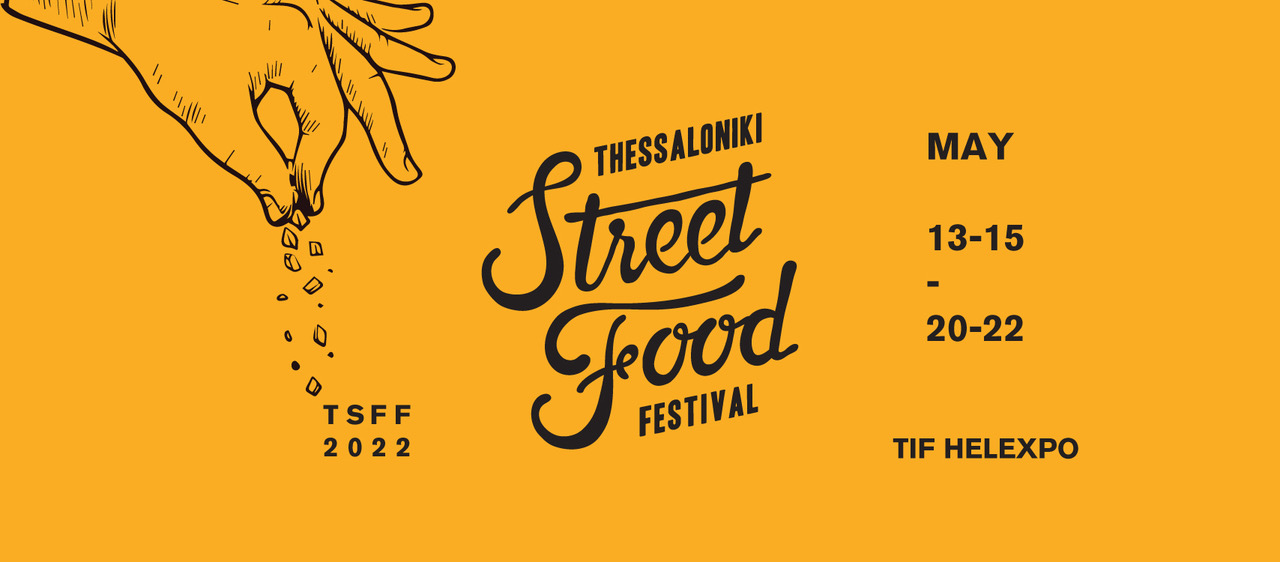
Thessaloniki Street Food Festival 2022

TSFF22 FB COVER

The creative team of Soulfood Thessaloniki returns with Thessaloniki Street Food Festival 2022! This year #TSFF2022 grows and transforms Thessaloniki International Fair, into a meeting place for all foodies in the country and abroad. Rare recipes, official first appearances but also classic favorite street foods will fill the whole city with aromas and flavors.

Dates: 13 – 22 May 2022 | TIF HELEXPO | Hours: Friday (13/5) & (20/5): 18:00 – 00:00, Saturday (14/5 | 21/5) & Sunday (15/5 | 22/5): 12:00 – 00:00 | Tickets: general: 3€, 3-day ticket: 7€, Presale : http://www.viva.gr/tickets/festival/thessaloniki-street-food-festival-2022/


Thessaloniki International Monument Festival

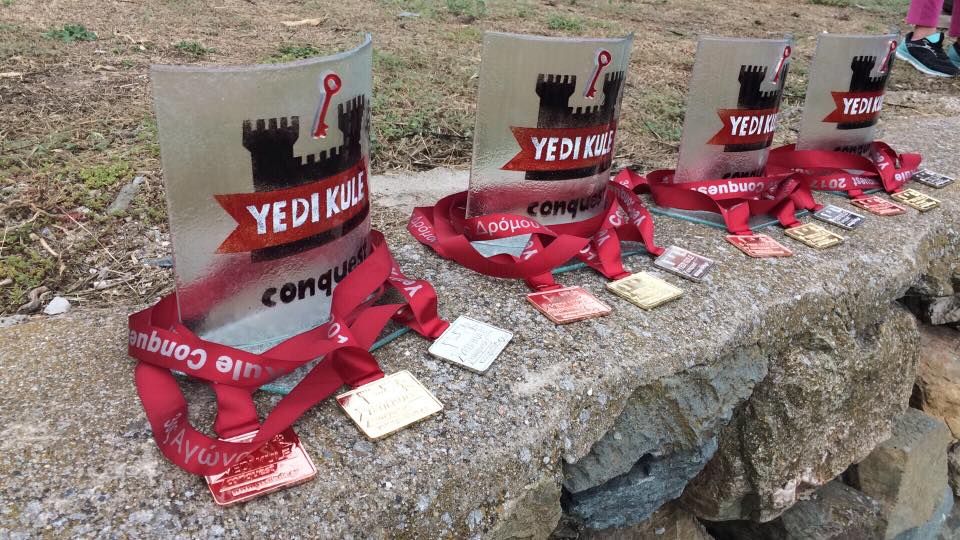
yedi

Thessaloniki International Monuments Festival opens its gates on June 3rd and introduces us a three-day cultural and sports event, full of music, events and entertainment. The sports and cultural festival centered on Yedikule, a place identical to the history of Thessaloniki, enables competitors, visitors and spectators to get to know the Eptapyrgio, the old town and experience beautiful moments through routes in its historical alleys and monuments.The winners of the race, get the key of the castle of Eptapyrgio or Yedi Kule, bringing worthily the title of conqueror of Yedi Kule Conquest for the following year. The route of the race will have the peculiarity of highlighting eight monuments of Ano Poli and specifically: The Fortress of Eptapyrgio, Vlatadon Monastery, church of Saint David, the Byzantine Bath, the church of Agios Nikolaos of Orphans, Islahane, the Gardens of Pasha, the Trigonion Tower.

On June 5, 2022 at 19:00, the start of the 6th Yedi kule Conquest race will begin.

Dates: 3-5 June 2022 | Registration starts on 28th of March at https://www.smfsports.gr/


Heptapyrgion Festival

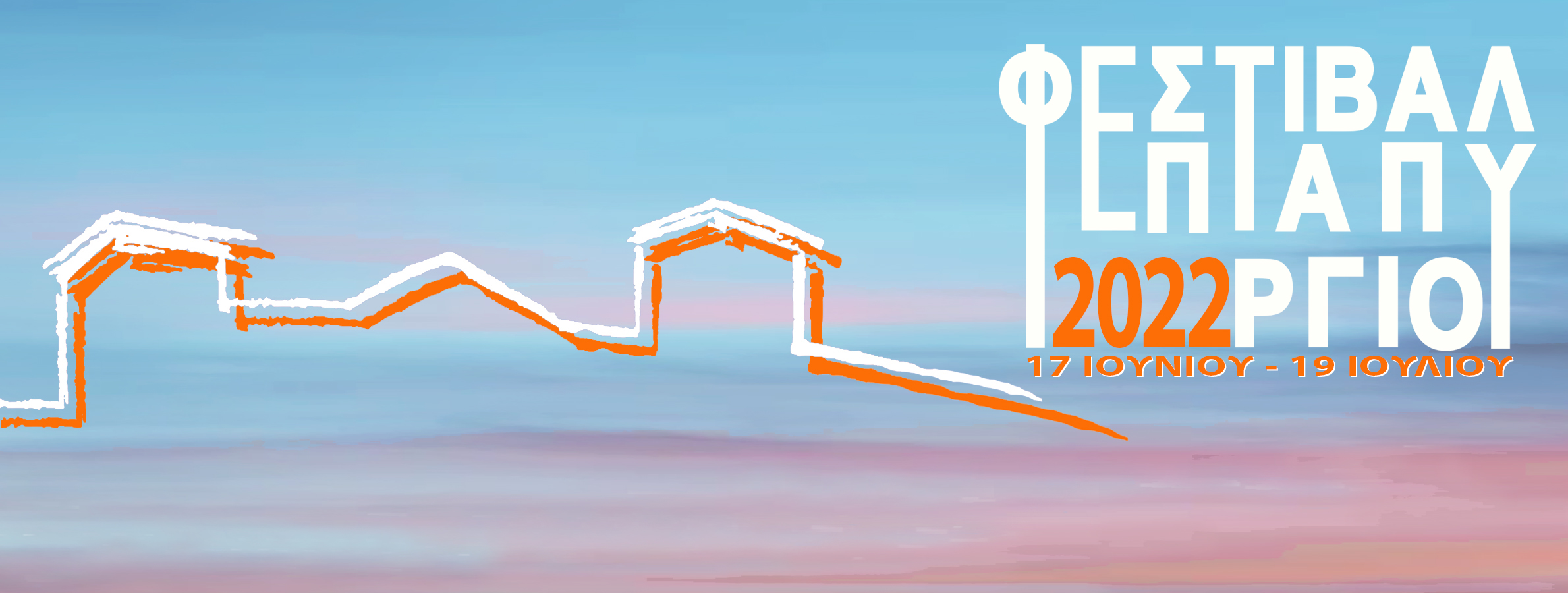
eptapyrgiou

In one of the undeniably beautiful areas of the city, Thessaloniki hosts a festival that will take place in the inner courtyard of Heptapyrgion and its content is mainly artistic. Heptapyrgion Festival is a big celebration of Culture with music performances, theatrical narrations, poetry, that was born in Thessaloniki in 2019on the initiative of the Cultural Center of the Regional Government of Central Macedonia in collaboration with the Ephorate of Antiquities of the City of Thessaloniki. The festival is under the auspices of UNESCO and takes place at the inner courtyard of Heptapyrgion Fortress. During this year's Festival that will take place from June 17th to July 20th 2022, 13 performances, including major productions, will be held.

Dates: 17 June - 20 July 2022 | Heptapyrgio | Pre-sale of tickets from www.viva.gr


Thessaloniki Colour Day 2022

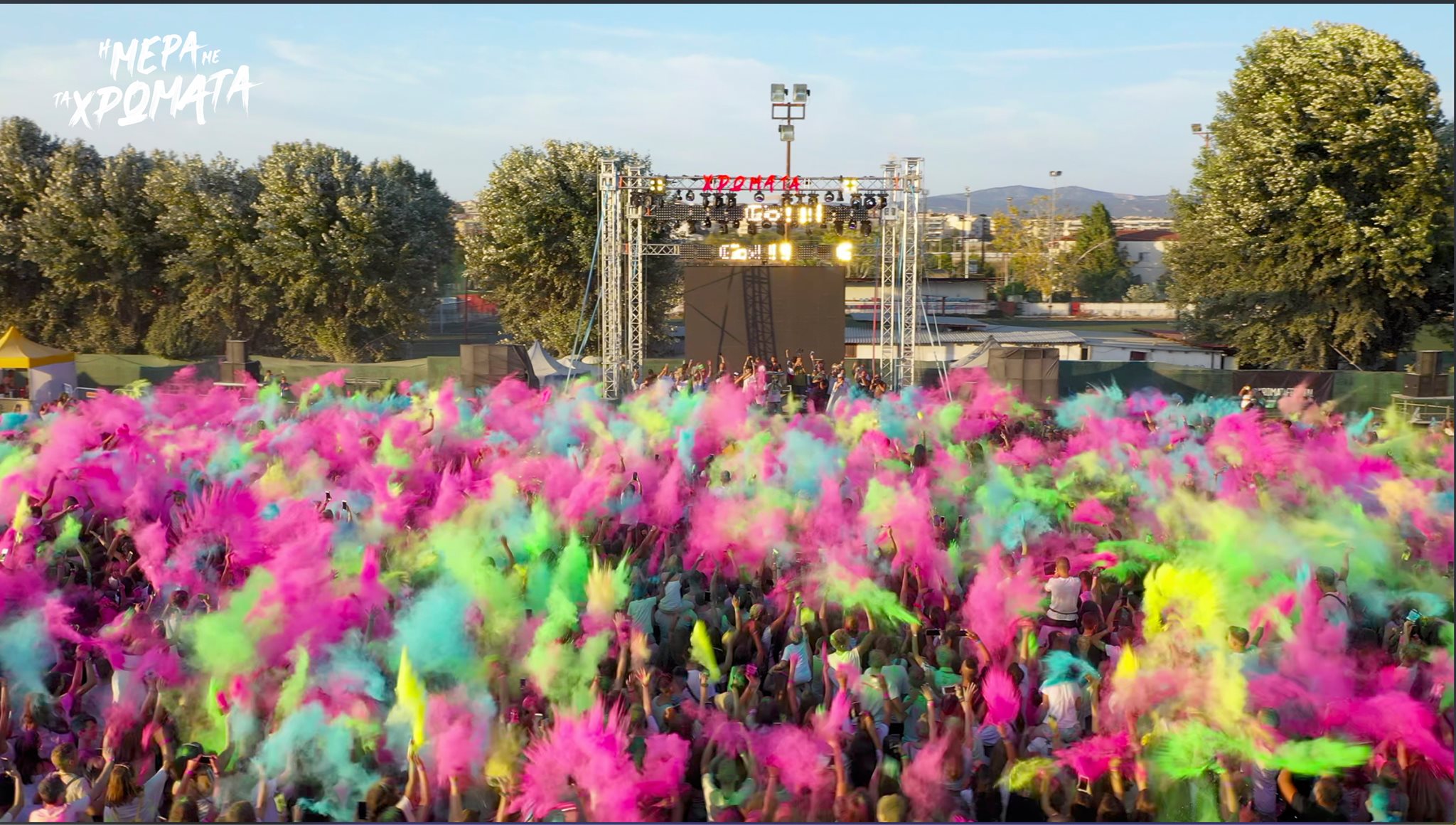
mmtch

The most colorful action returns to Thessaloniki and promises us dynamic and innovative events! The participation of the people, the communication and the game are the quiver with its weapons to become better and more creative every year. The purpose of the festival is to make its audience feel good and even better, as an institution in order to give color and create.

Date: 3 September 2022 | Kaftantzogleio


Street Mode Festival 2022

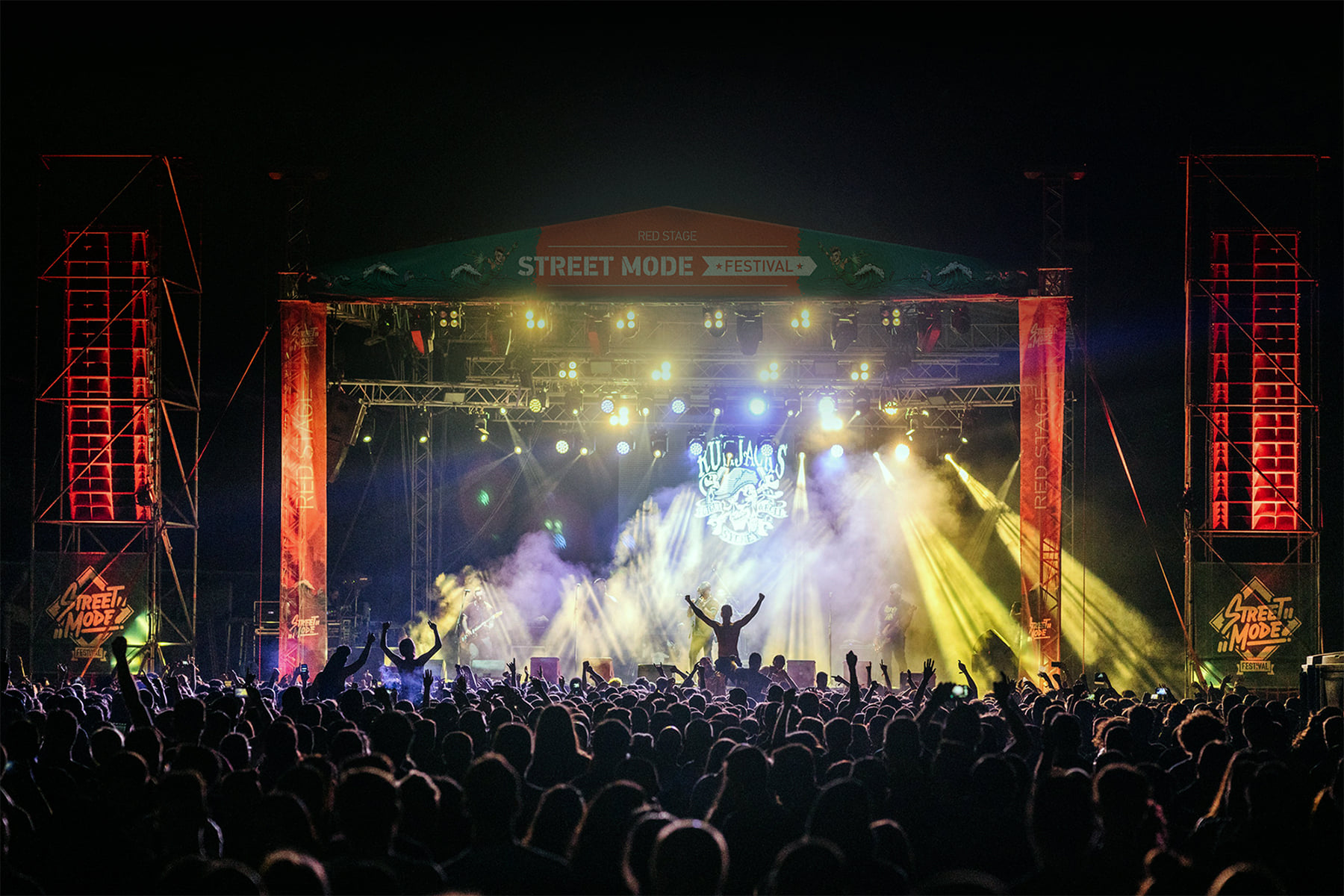
street mode

Street Mode Festival returns after 3 years! An annual music, art and sports festival held in Thessaloniki since 2009. It is one of the largest festivals in Greece, reaching thousands of visitors, with a program that includes musical performances in 5 stages and more than 15 street culture events. Get into ‘’street mode’’ and enjoy 3 days of live music, street art, street dance, action sports and much more! The announcements of the names are expected in the next few days.

Dates: 23-25 September 2022

More
Subscribe to this RSS feed

#visitthessaloniki