pinelopi

pinelopi

9 stops in Halkidiki that you should not miss!
Published in Sea and sun

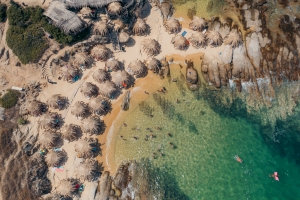
It’s the emerald crystal-clear waters, the golden beaches, the hidden secluded coves and the exotic bays, the reviving Mediterranean light and the pristine nature, the mountainous settlements and the sanctuaries, the treasures of the monastic state of Mount Athos, the vivid nightlife, the intoxicating mixture of the sea breeze and the aroma of the pines… It’s Halkidiki that invites you to truly discover a place of dreams!

We’ve gathered the 9 (out of the countless!) things you should not miss in Halkidiki!

1. Admire the monastic state of Mt Athos
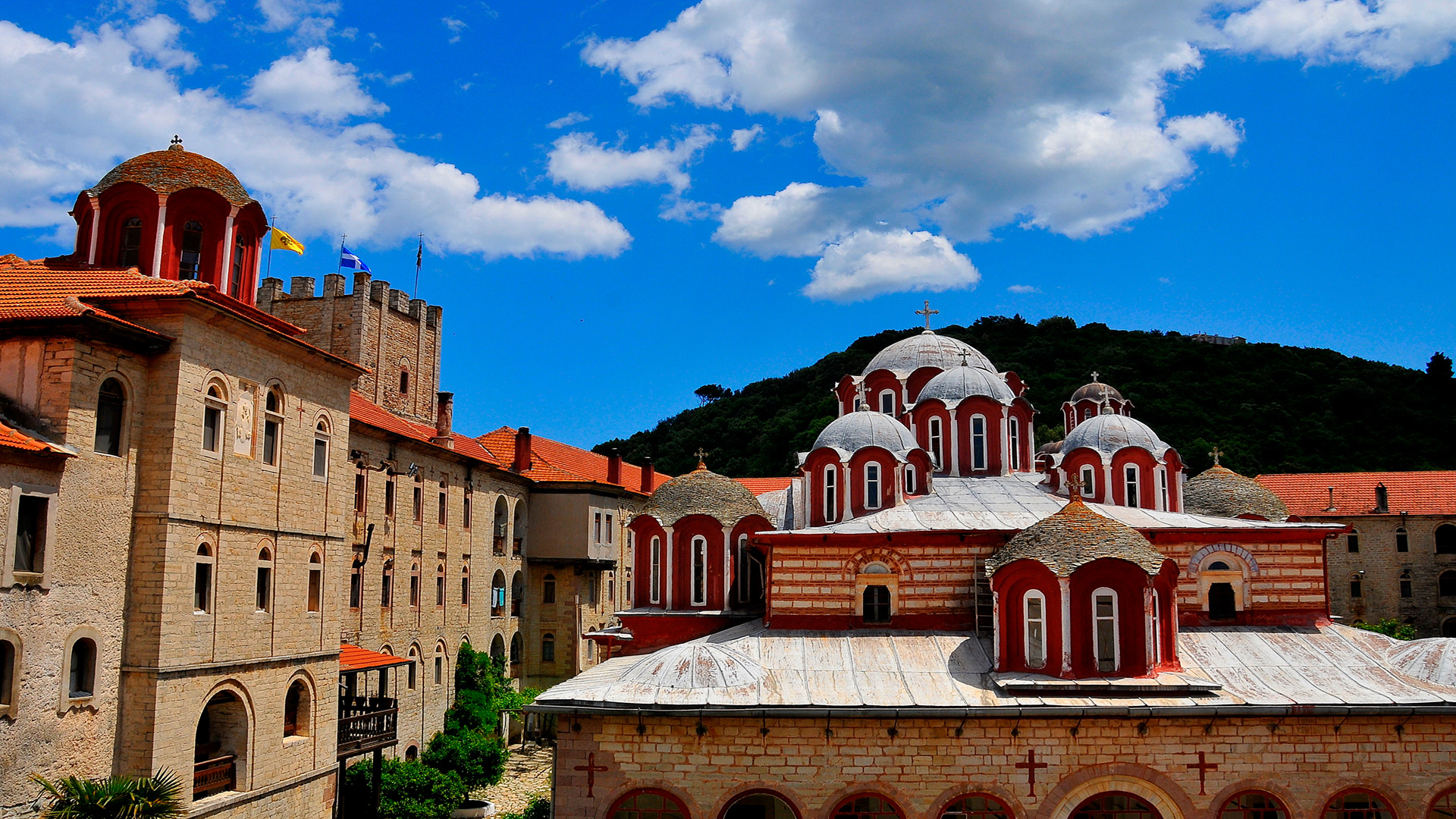
Mount Athos esfigmenou monastery

The monastic community of Mount Athos is located in the peninsula of Athos and has access only from the sea. Τhere are twenty monasteries. The entry to Mt Athos is a privilege of men but you can do a cruise around the peninsula by boat. You need a special permission in order to enter and admire the architecture of the monasteries and the hagiographical tradition of Mt Athos. Due to the outstanding architecture and invaluable treasures of the monastic community, since 1988 it is included in the UNESCO list as a World Heritage Site.

** To admire up close the architecture of the monasteries and the great hagiographic tradition of Mount Athos a special permit is required.

2. Take a tour in the homeland of the ancient Greek philosopher Aristotle
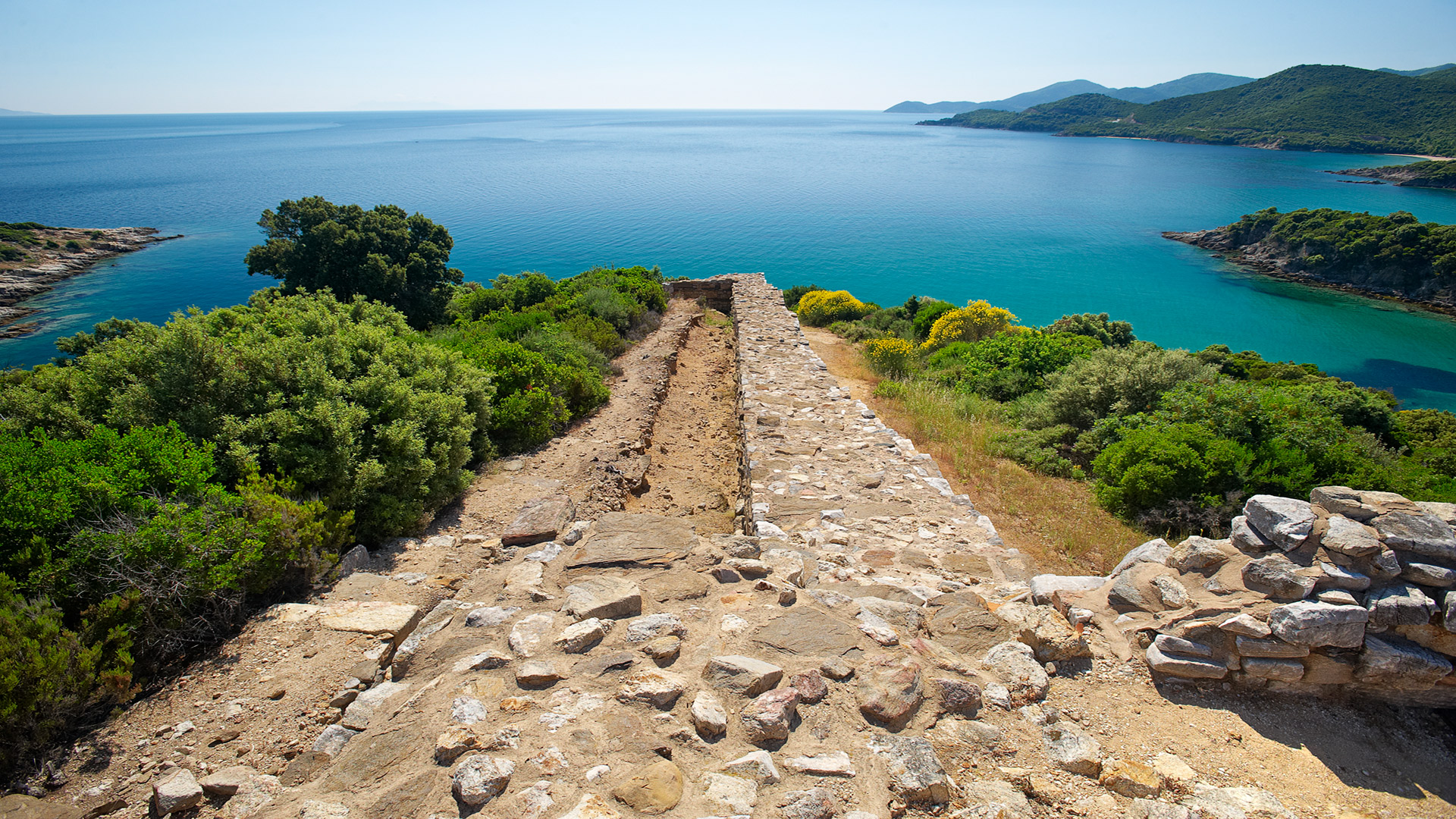
East Coast Ancient Stagira

Τhe ancient town of Stagira, the birthplace of the Greek philosopher Aristotle (384 BC – 322 BC) was a colony of Andros, founded in 655 B.C. The city was occupied by King Phillip II in 349 BC after the fall of Olynthos. King Phillip rebuilt the city in order to honor the great philosopher and in return of Aristotle’s tutoring to his son Alexander the Great. When Aristotle died, his fellow-citizens transferred his body to Stagira where he was buried with great honors. He was declared a “founder” of the city and an altar was built on his tomb. Aristotle is one of the greatest international personalities of all time and one of the most important founding figures in Western philosophy. He was the father of logic, laid the foundations of sciences and determined the principles of politics.

3. Travel back in time at Ancient Olynthos
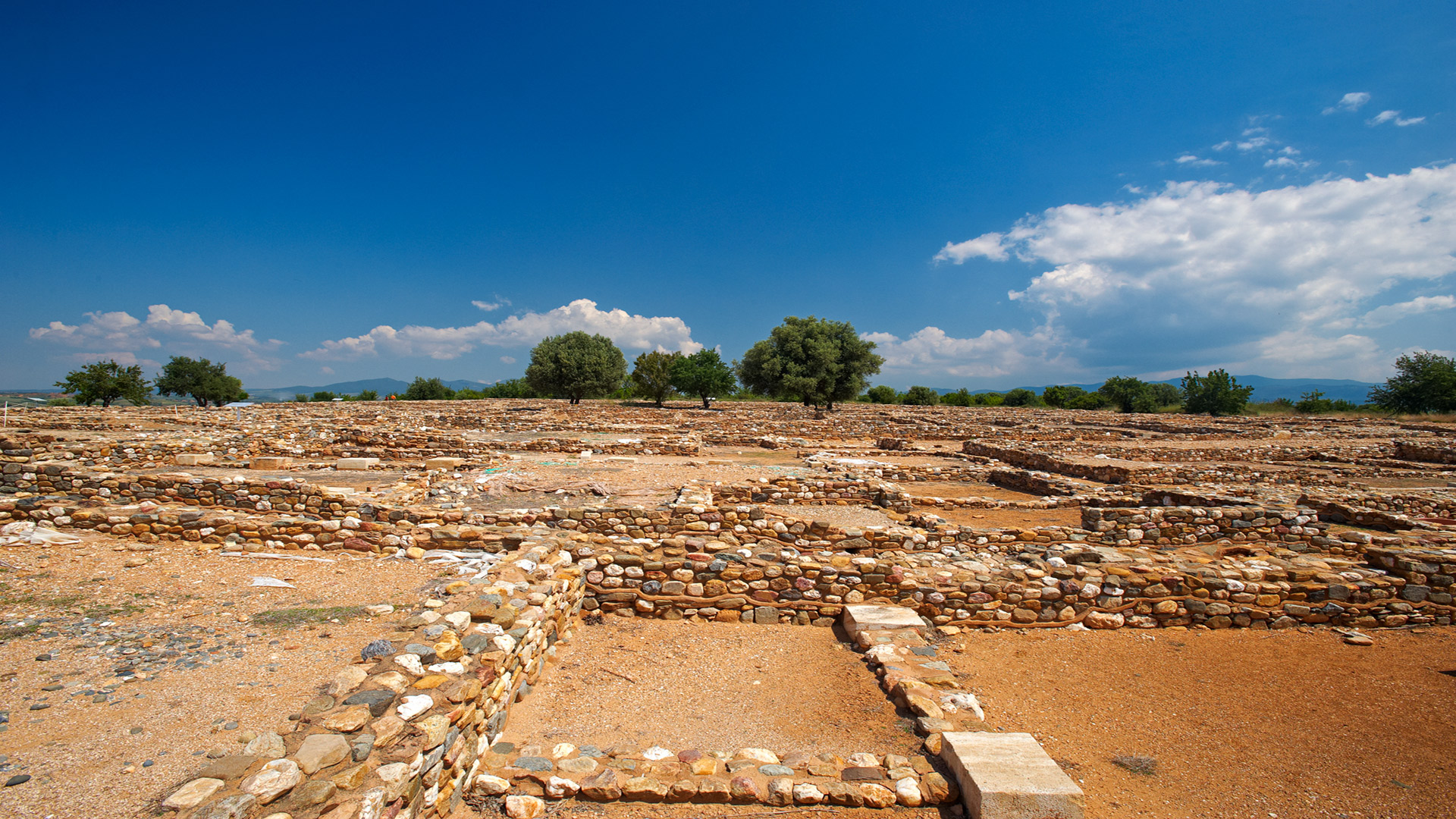
Central Halkidiki Ancient Olynthos 2

Ancient Olynthus is located 70 km from Thessaloniki and 16 km from Polygyros. For 100 years Olynthos was the most important city of Halkidiki. The area was constantly inhabited since the Neolithic Age. The evidence from the excavations shows that the archaic city, which was a continuation of the prehistoric one, was built on the southern hill. The city was destroyed in 480 B.C. by the Persians. Then, it became the capital of the Euboan colonies in Halkidiki and during the Peloponnesian War grew more. In 348 BC the Macedonian army conquered it and destroyed it. Although the ruins are remarkable, the findings of the excavations are exhibited at the Museums of Thessaloniki and Polygyros.

4. Discover the mountain trails of Holomon
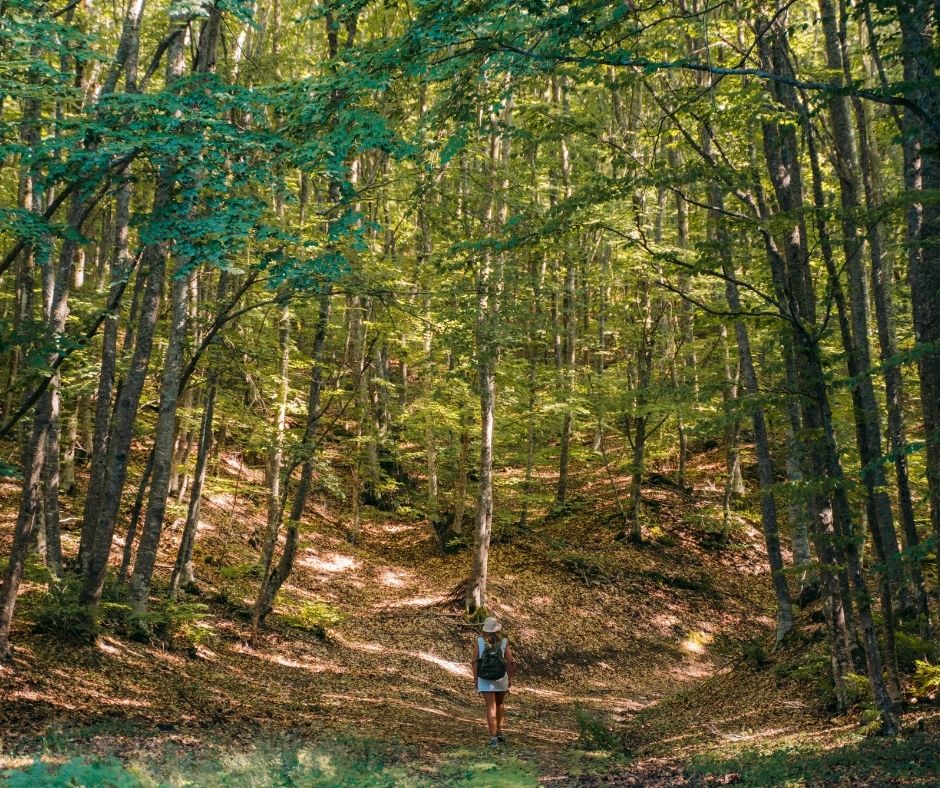
Σχέδιο χωρίς τίτλο 3

The Peninsula of Halkidiki is famous for its beaches but it is also endowed with a beautiful and unexplored mountainous territory. Vegetation is lush in the mountain paths of Mt. Cholomon, the Itamos range and the waterfalls at Varvara. Discover the stone mansions in the traditional villages and the chapels hidden in the pine forests. Go horseback riding and ride along exciting 4x4 dirt tracks or take your bikes around mountain cycling route.

5. Explore the famous Halkidiki towers
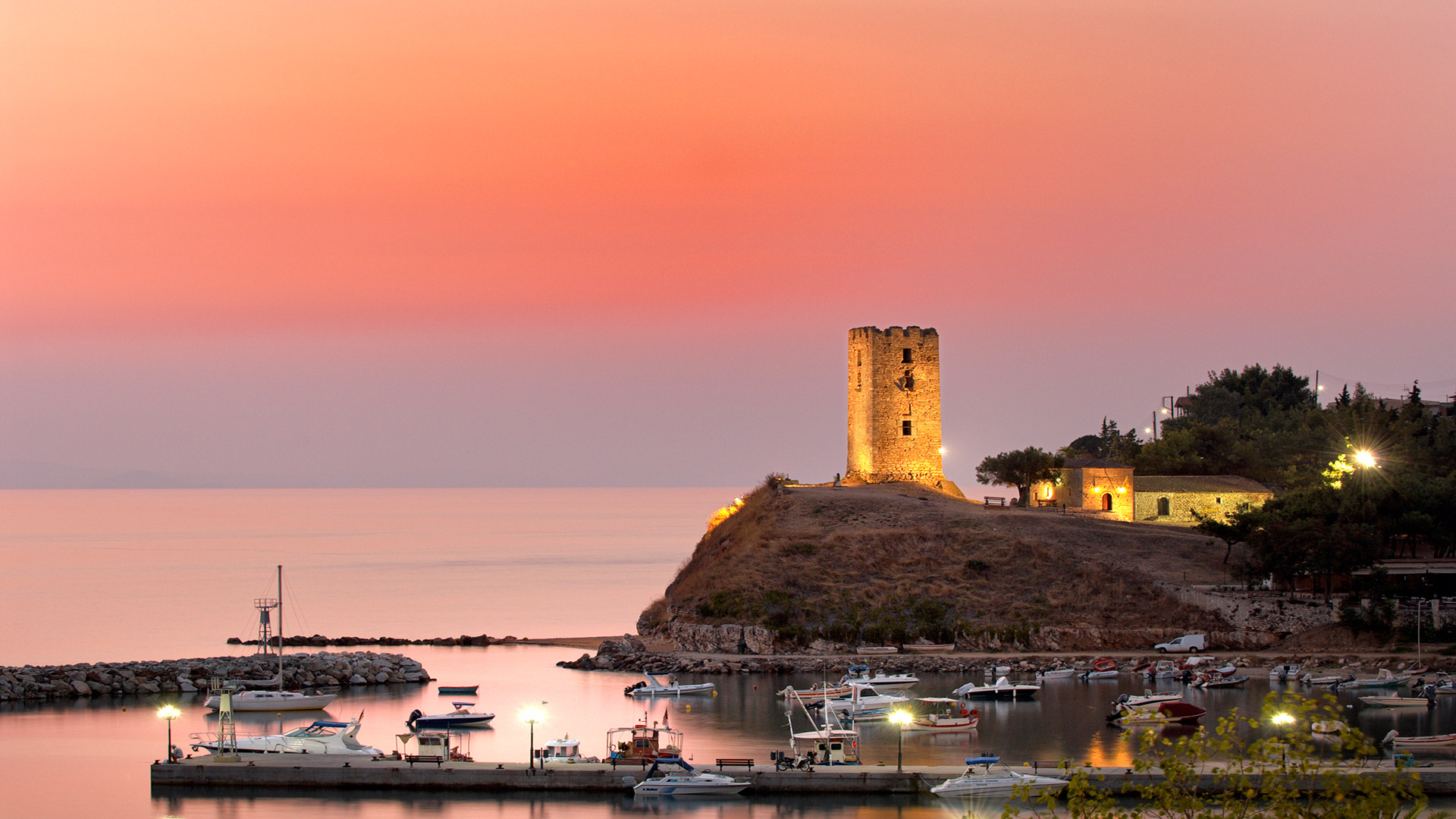
Kassandra Byzantine tower Nea Fokea 2

Discover the famous Halkidiki towers that seem to come straight out of a film scene! Built during the Byzantine period in prominent positions, thus primarily found on hills and hillocks, they were originally used for “communication” among the inhabitants of Halkidiki. A trip to the most important towers of Halkidiki will take you back in time, while you will enjoy breathtaking panoramic views! A few of these are the impressive stone tower of Agios Pavlos in Nea Fokaia, the biggest and best-preserved tower of Prosforio in Ouranopoli, the Byzantine tower of the monastery of Stavronikitas, in the Sani region. You will find remarkable towers in the area of ancient Olynthos- the tower of Mariana, the tower of Krouna in Ierissos and the tower in Galatista, with its unique architecture.

6. Spend a day at the unique theme park of Halkidiki
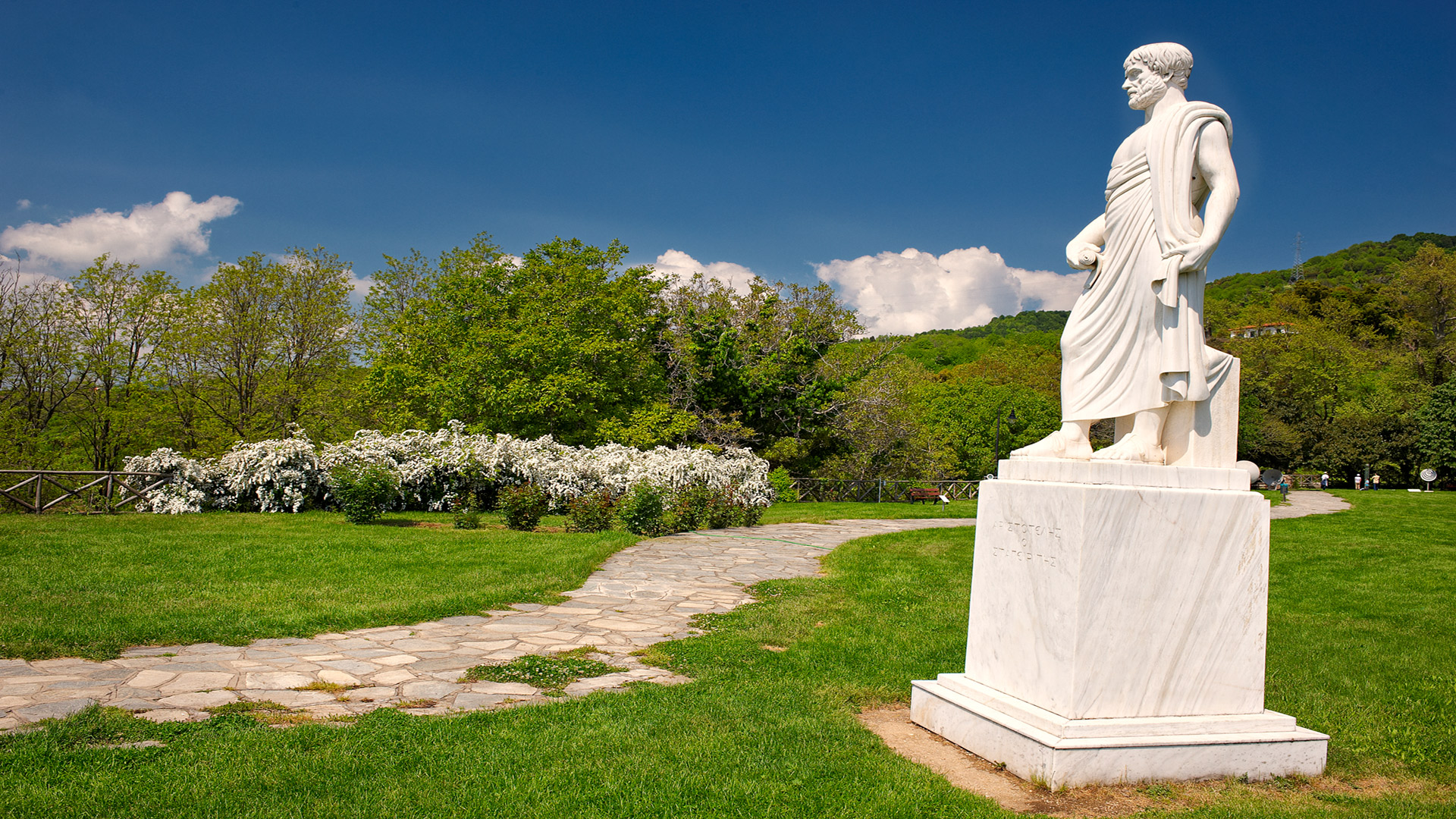
East Coast Aristotle park 2

Aristotle’s Park is located in Stagira. The Theme Park is located in a most beautiful area with a marvelous view toward the gulf of Ierissos and the whole peninsula of Athos. When the weather is good you can see some of the monasteries on Mount Athos using the telescopes. The Theme Park includes a series of other instruments which when used properly will show the phenomena of nature. Aristotle’s Park is an excellent place to learn about activities and interactive games.

7. Swim in the turquoise waters
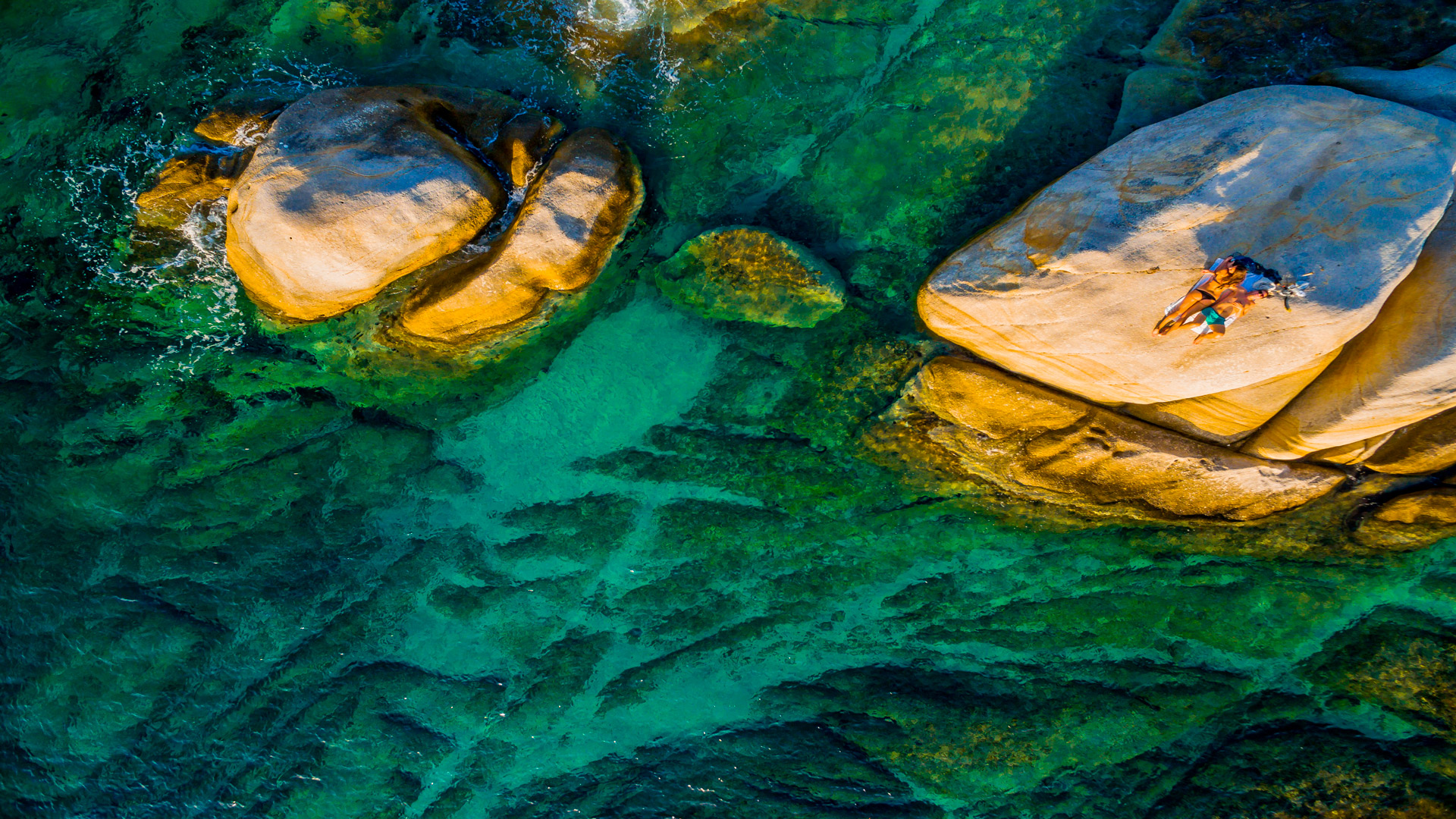
Sithonia Kavourotripes beach1

Halkidiki can boast an amazing 550km of coastline, featuring a thousand different beaches, some offering an endless expanse of golden sand, others rocky. Here you may find popular beach bars-with music and water sport facilities-ideal for socializing on one hand and on the other, you may discover secluded beaches and deserted coves, perfect for chilling out. There are shallow beaches offering family activities-where children can play safe-yet there are places with deep waters ideal for scuba diving. All of them though are blessed with crystal clear and turquoise waters reflecting the deep green of the pine-tree forests. The Blue Flags that Halkidiki is being awarded every year are rightly deserved.

8. Sail to Ammouliani for swimming and appetizers on the beach
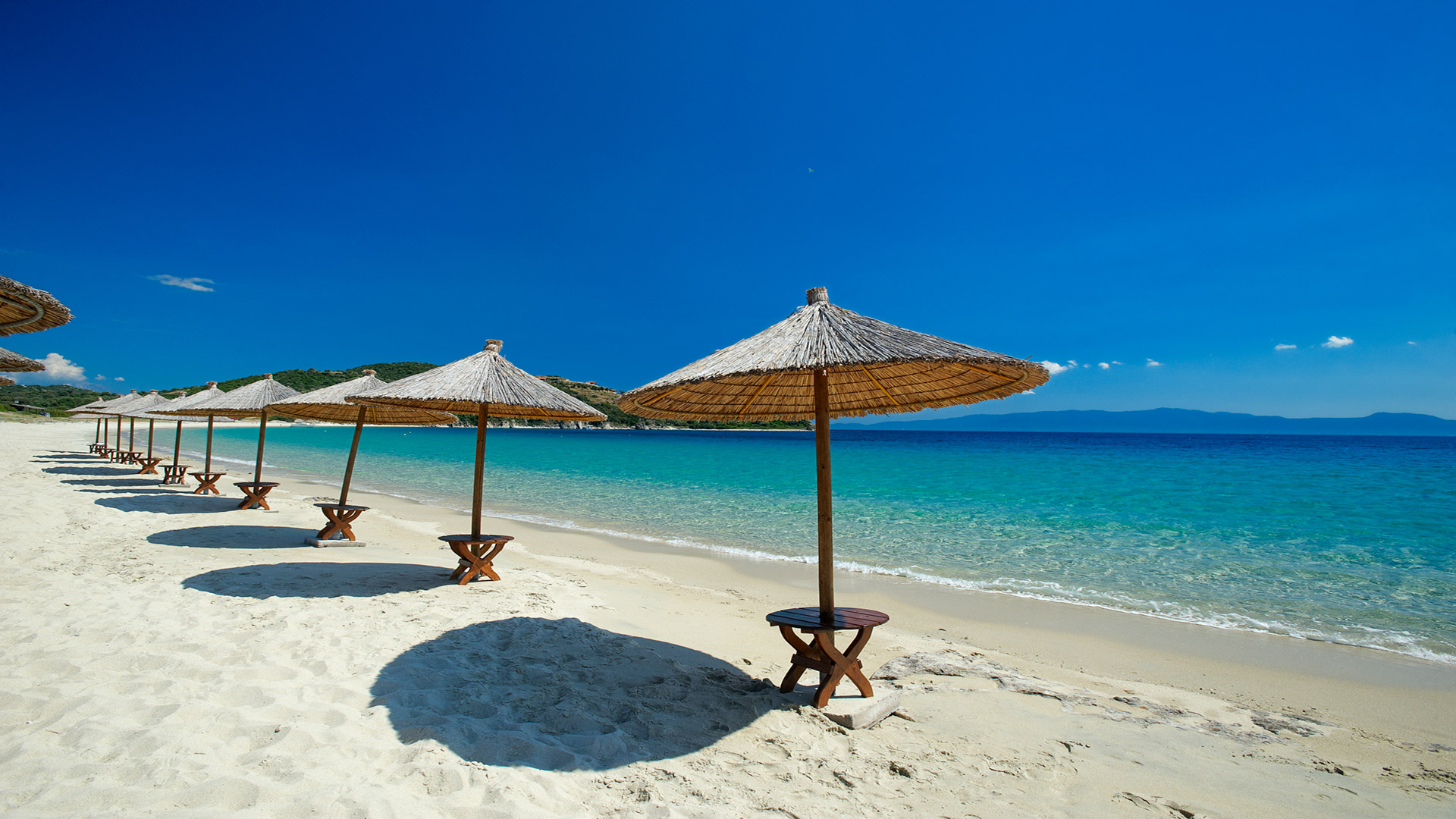
East Coast Alykes beach Ammouliani island

Ammouliani is the only island in Halkidiki with a permanent population. since its formation. About 600 people arrived as refugees from Asia Minor. The island has a surface area of 4,5 km. There are hotels here, as well as rented rooms, camping sites, picturesque tavernas, cafes etc. The island has wonderful beaches with picturesque bays. It can be reached by ferry from Tripiti and lies just two nautical miles from the coast.

9. Wander around the picturesque villages
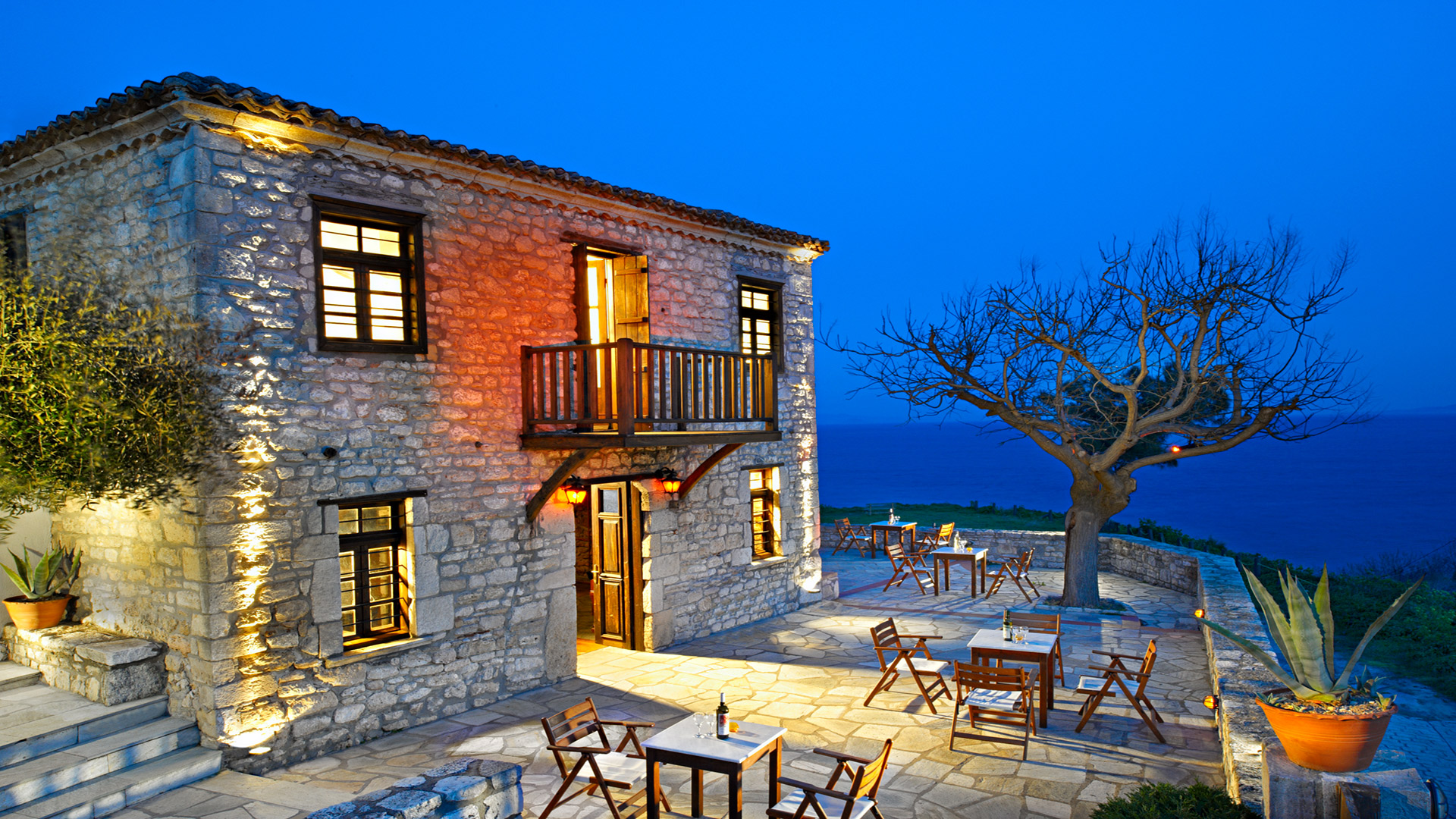
Kassandra Afitos traditional village

Combining the unspoiled land, the lively communities, unique architecture and gastronomy, and a glorious past to explore, Halkidiki is an eclectic destination. A visit to Afitos, Parthenonas and Arnea is a must for those looking for an authentic, traditional experience. Walk up to the village of Afitos on the western Kassandra peninsula, with its cobbled streets and stone-built houses. Arnea is where you should go to get a real feel of what life is like in Halkidiki’s mountains, to see examples of traditional architecture and to find out more about old-time crafts such as weaving. Another must-stop is the village of Parthenonas which is known for its well-maintained Macedonian houses, its original folk art museum and, more recently, for its summer film festival.

More information: https://www.visit-halkidiki.gr/ 

More
Moni Lazariston: The orphanage that became a symbol of culture

Published in Hidden gems

Landmark of culture; Ornament of Western Thessaloniki; Architectural gem;

Moni Lazariston, one of the most emblematic buildings of Thessaloniki, is a special symbol of cultural memory for the people of Thessaloniki - and not only -, a connection between the present and the past of the city.

History

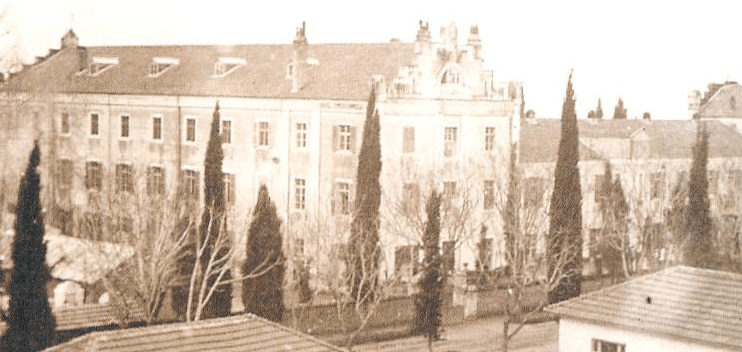
On the road to Lagadas and Serres, according to the Major Nicholaos Schinas’ descriptive notes (1886), there is nothing else worth mentioning except Moni Lazariston, on the left side of the road. Moni Lazariston was the only building that someone could notice in the area during the late 19th century, along with the sisters of Mercy Abbey, better known as Moni Kalograion. The horse carriage used to terminate its itineraries there, departing from Vardaris Square. There were only a few houses spotted on the horizon, long before the Allied Forces settled down in the area during the World War I.

The construction of the site began in 1886 by the Lazaristes, a congregation of Catholic monks from the Saint Lazare church in Paris. The Lazaristes moved to Greece in the 18th century, taking over all the wealth of the Jesuits, who - by the 17th century - had already developed important projects of educational and social character in the Greek territory. Their presence became evident from 1861, when the sisters of Mercy Abbey was built in the area of ‘Zeitenlik’, in an acreage which the Lazaristes had bought in 1859 in order to shelter the first children’s asylum. The same building accommodated the French school of nuns ‘Agios Pavlos’ and many other activities, which were managed by the Catholic nuns. The Lazaristes engaged in relevant activities in the Abbey Seminary, which was especially famous for the quality and the level of education that offered, and managed to function successfully until the outbreak of the Balkan Wars in 1912.

The primary mission of the Lazaristes was to convert the Slavians of the Balkans to Catholicism, and due to that, they firstly addressed to the Bulgarian speaking population, where their action found a positive response. The mission of the Lazaristes was to provide care to the poor, to educate the clergy and to spread the Catholic values. Their strong devotion resulted in a significant and complete program of sociopolitical changes, which are obvious up until today.

1912-13 is a year of great historic importance for the city, as it is the time that, after the political and military conflicts, it was returned to Greek command. This is the last year of operation for the Abbey Seminary, which opened for the last time with 32 Bulgarian and 10 Greek Catholics from Syra, in the autumn of 1913. When the school period ended, the Abbey Seminary closed indefinitely in the spring of 1914.

The successive wars lead to constant changes in the function of the building, according to the different needs and situations. Of course, the decline of the Abbey Seminary postponed for many decades the completion of the west wing, which was constructed a lot later during the restoration of the whole venue.

μονη λαζαριστων2

In 1915 and during the World War I, Thessaloniki becomes a supply station of the Allied Forces, that set up camps in the greater area. By the end of the war, the building accommodated refugees of the big fire that destroyed the center of Thessaloniki in 1917, while a part of it was still in the hands of the Lazaristes. In 1922, the year of Asia Minor’s destruction, some Catholics, mostly Armenians, arrived along with the refugees, and during the War World II the building was taken over by the Germans (1941) for the needs of the army of occupation. The story continues during the civil war too: the surroundings of the building turn into a battlefield, since it operates as the headquarters of the Regime Troops. After the civil war, several Catholic families from all over Greece settled down in Moni Lazariston, cohabiting with the remaining refugees. In the ground floor, there was also a small Catholic chapel. At least 10 families stayed in the building until 20th June, 1978.

Due to the “Great Earthquake” of 1978 in Thessaloniki and the many damages that it had caused, Moni Lazariston was included in the ‘Red’, as they were called, inappropriate in terms of any use buildings. Moni Lazariston was ruled out as dangerous and was abandoned. However, because of its historic, as well as architectural importance, the building was declared as worthy of preservation, just two years later.

In 1983, the Greek State bought it, due to the celebration of the 2300 years since the foundation of the city, and turned it into a Cultural Center of Western Thessaloniki. However, it took about 15 years for the commencement of the reconstruction, when it was included in the program of the big projects, which were developed by the Organization of the Cultural Capital of Europe “Thessaloniki 1997”.

Today the Moni Lazariston is a cultural paradise in Western Thessaloniki. Within a short distance from the city center and easily accessible even by bus, it is a multi-purpose "jewel" for the west.

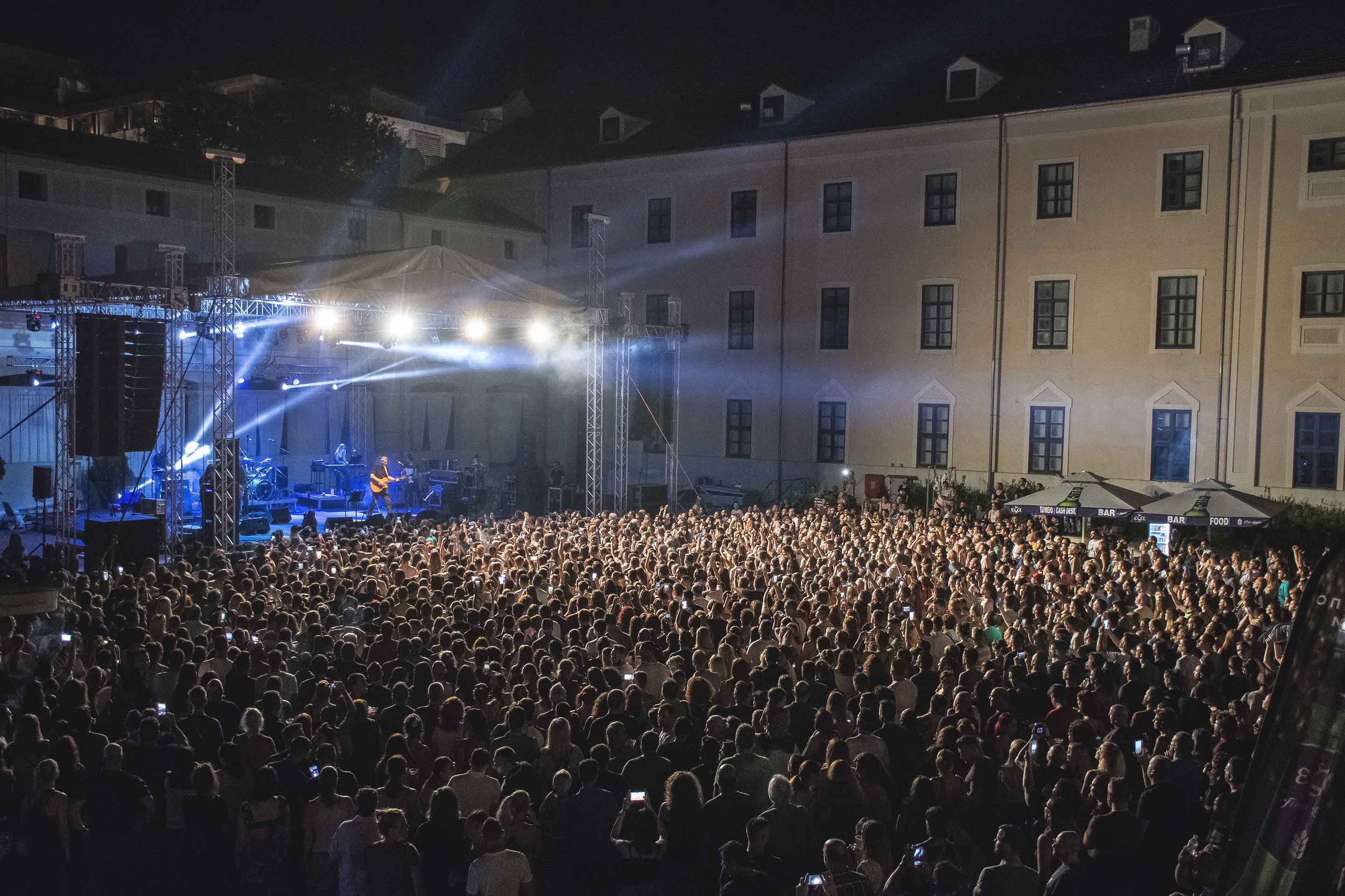
At the Small Theater of the Moni Lazariston and at the Socrates Karantinos Stage, the State Theater of National Theatre of Northern Greece presents a number of performances, promoting the cultural decentralization of the city. Also, MOMus- Museum of Modern Art-Kostakis Collection has its headquarters in the old part of the building. In summer, the outdoor space that can hold up to 3,000 spectators, becomes the venue of the events of Moni Lazariston Festival.


Moni Lazariston Festival

μονη λαζαριστων3

The first event is held at Moni Lazariston, on the occasion of the promotion of the building in 1992.

In the following years, a special festival is held against the background of the ruined building every summer, with the aim of creating a modern cultural center. In 2002, a diverse Festival is instituted and organized with its current characteristics, which is constantly evolving.

For 25 years in a row, it has hosted hundreds of artists and dozens of performances from the entire range of artistic production, attended by thousands of spectators.

The Festival of Moni Lazariston is organized every summer in the emblematic space of Lazariston Monastery and it is a unique event in every way: artistic, educational and entertaining.

More

Thessaloniki: Gastronomy

Published in Food & Drink

Thessaloniki is famous for being a destination in Greece for its cuisine. Here, food is made with heart to give joy and pleasure. Natural ingredients, delicious flavors, recipes and little secrets of taste bring people together around the big table of friends.

Colors, flavors, landscapes, sounds, history, culture; These ingredients, all mixed up, compose the gastronomical identity of Thessaloniki. Ingredients that satisfy even the most demanding visitor, revealing gastronomic experiences and delicious pleasures that are hidden in every corner of Greece’s second largest city.

Trends may come and go, establishments may open or close following the tide of opinion, but Thessaloniki’s cuisine has always reflected the city’s multiethnic and inclusive history. There are so many interesting food choices in Thessaloniki, that one hardly knows where to start.

More

Discovering the beautiful and promising area of Kalamaria

Published in Nature oasis in the city

Natural landscape, unforgettable flavors and unique places of art and gastronomy compose an alternative choice for an outing in Kalamaria!
It’s not only the heart of the city that offers plenty of downtown options in fun and entertainment. Being one of the oldest and high-end neighborhoods of Thessaloniki with more and more new entries and facilities, Kalamaria offers a complete and careful all-day experience.


(Old) Government Office Building (Small Palace)

PALATAKI min

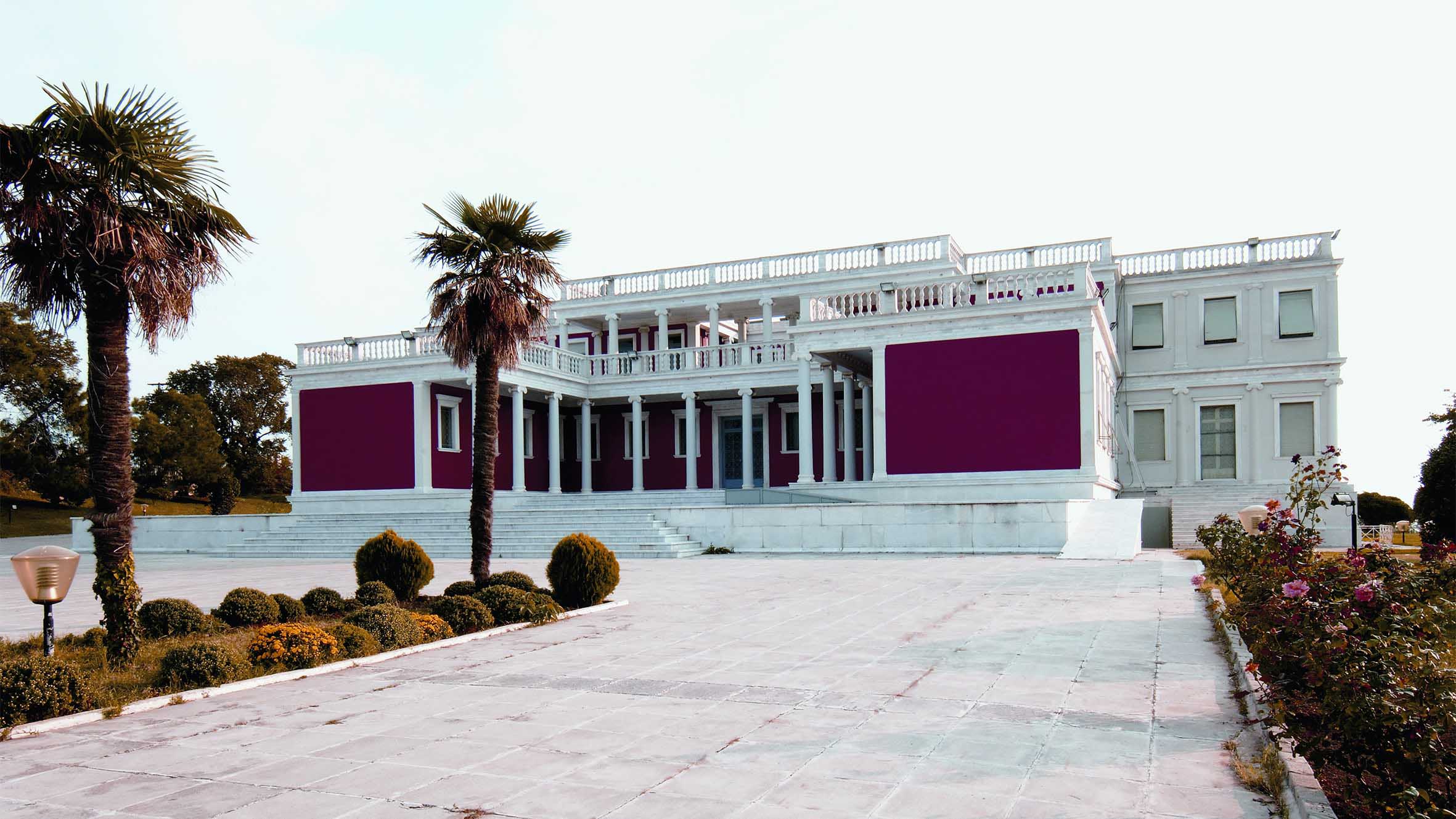
Neoclassical monument, landmark of Kalamaria. It is located at a key point, at the tip of the coastline, with a panoramic view. It was designed by Pericles Sakellarios in the 1950s and inaugurated in 1960. It was then given to the Greek Royal Family as a summer private residence, but they did not use it, except for one night. In 1968, during the dictatorshuip of the Colonels, the use of the property was attributed to the Ministry of Northern Greece. After 1974 it was used as a residence by the Minister of Macedonia - Thrace and by the Prime Minister and later President of the Republic, Konstantinos Karamanlis during his visits to the city. The last tenant of the Government was the Minister of Macedonia - Thrace, Nikos Tsiartsionis.

Today it is managed by the Public Real Estate Company (ETAD), which undertook its exploitation. Proposals are discussed regarding its use as a space that will host cultural and social events, as it dominates with its impressive architecture and environment of exceptional beauty. It is granted to the Municipality for the events of the festival «Para Thinalos», lending a little of its glamor and in a way that proves its suitability for the promotion of the culture and its value as a pole of attraction for visitors from all over the country, but also abroad.


Kalamaria Beach (Aretsou)

aretsou3 min

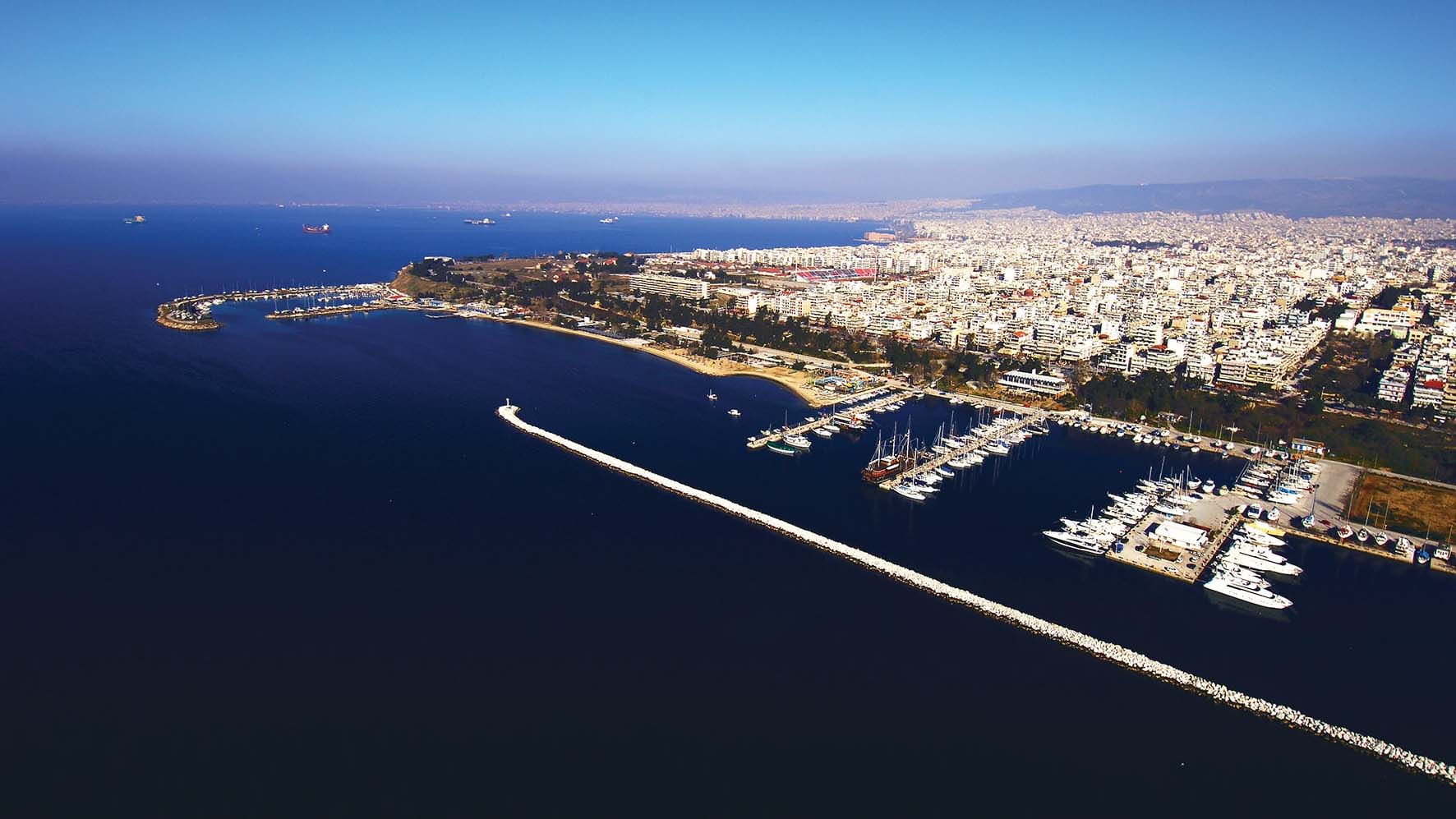
The coastal front of Kalamaria extends at a distance of 6.5 km, part of which is specially designed to combine relaxation with modern entertainment, a very short distance from the noisy city center. The historical value and memory of the beach comes from the fact that there once was the station for disembarkation, stay and disinfection of refugees from Asia Minor, the so-called «disinfectants».

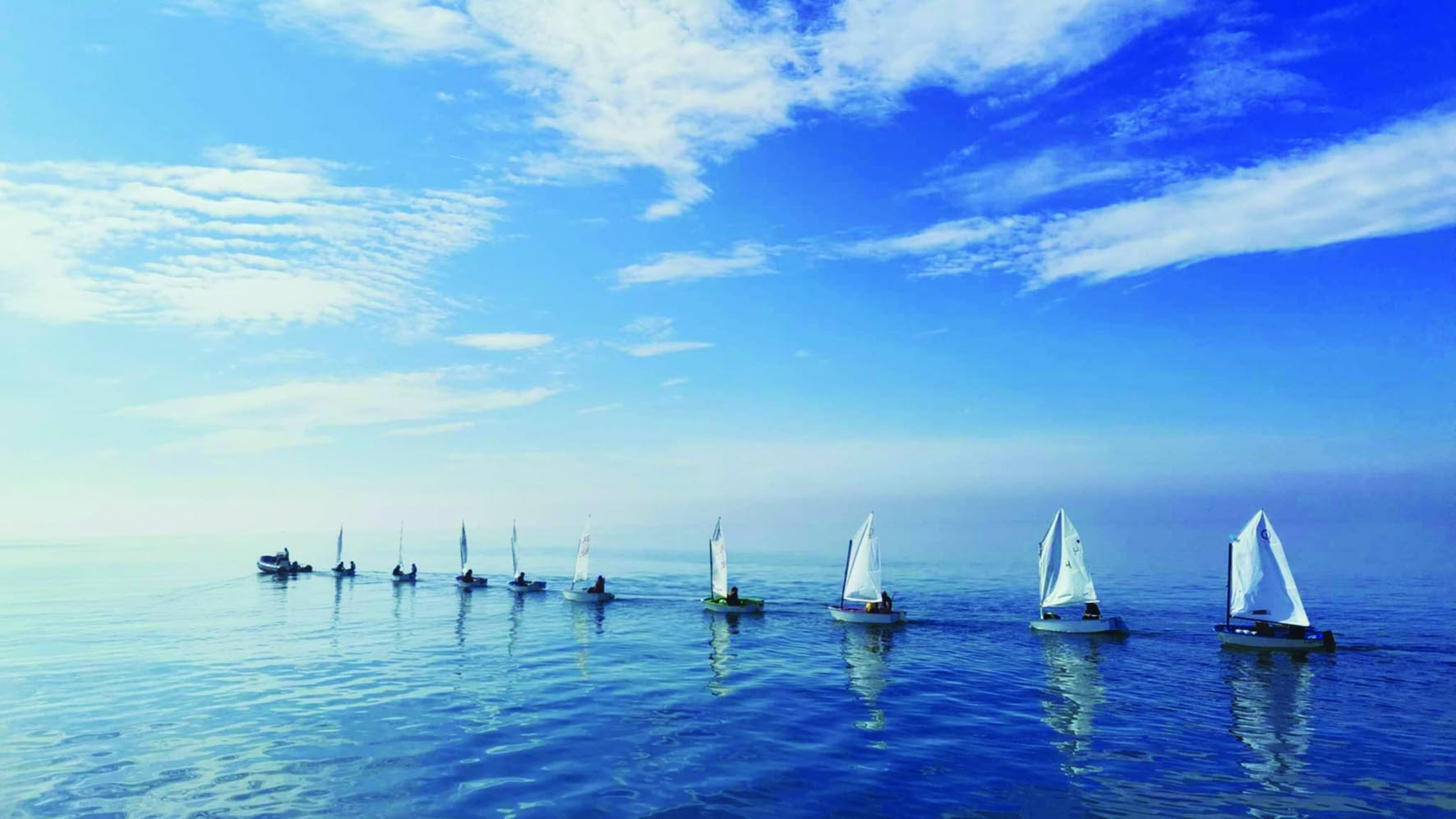
It now functions as a place of relaxation and recreation, with sea access and overlooking Mount Olympus and Pieria mountains. There is a refreshment shop and a summer cinema, offering various options for leisure during the summer. Nevertheless, there are many activities of sports (rowing, sailing etc) during the winter, as well as winter swimmers who visit the beach. The Municipality takes care of all the necessary sampling checks in order to certify the purity of the beach waters.


Pedestrian Zone (Shopping Center)

pezodromos

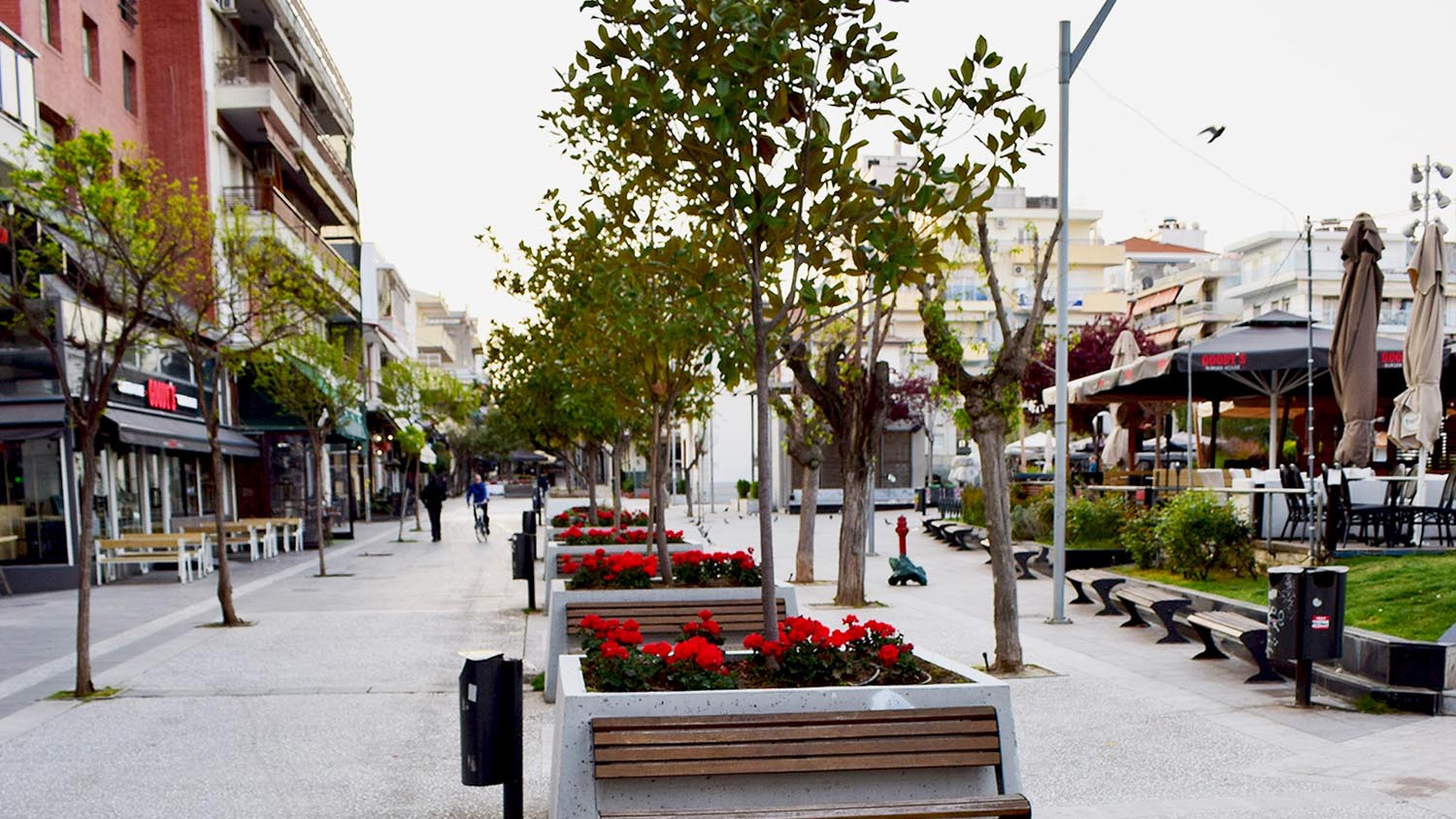
Walking towards the center of the area, you will end up at the Pedestrian Street of Kalamaria, the place that is full of life and refers more to a suburb, with facilities and shops that cover every need. The pedestrian zone, where the heart of Kalamaria beats, is a safe, comfortable and clean area, far away from the hustle and bustle of the city. A meeting point for many visitors, as it combines restaurants, cafes, bars with shops of all kinds. The square dominates in the center of this area, where the City Hall is housed and social, sports and other activities are organized. A street full of life that soon a branch of it will develop into an «open mall» of modern design and with many attractions!


Αllied Cemeteries

vr koim2 min

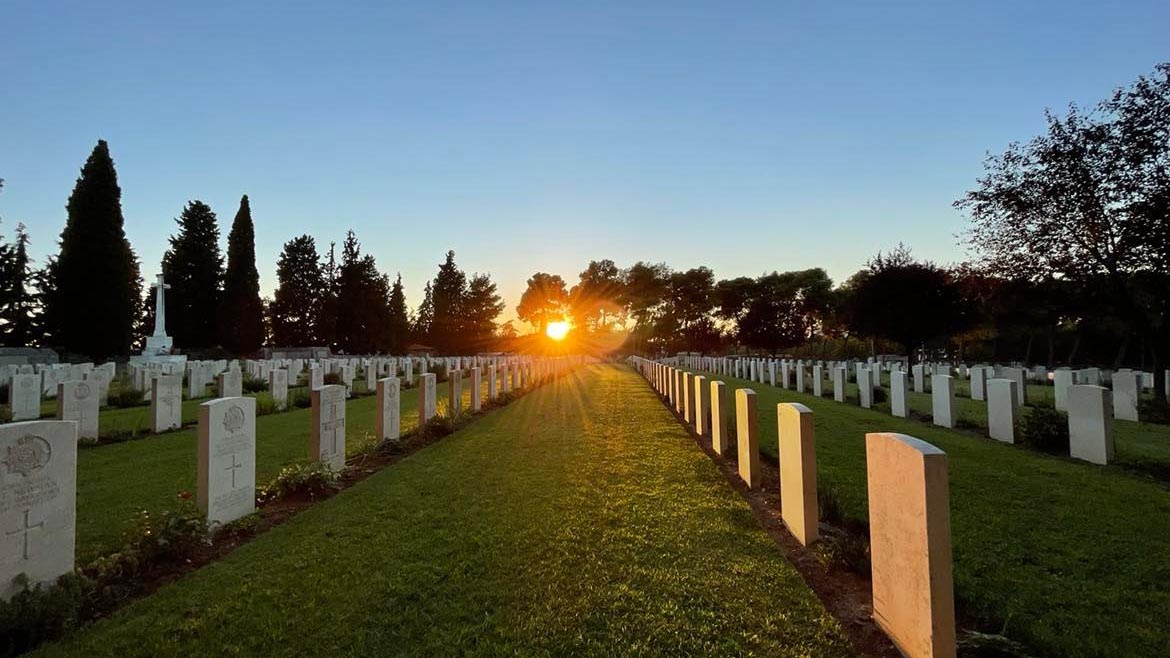
An option for lovers of dark tourism and not only are the Allied Military Cemeteries on Konstantinou Karamanli Street in Kalamaria, next to the municipal cemeteries and behind the Dalipi military camp. Many who sacrificed their lives hundreds of kilometers away from their homelands are buried in this place. 1810 soldiers are buried in these cemeteries. Most came from countries of the then British Commonwealth but there are also 147 soldiers of other nationalities (Greeks, Russians, Bulgarians and Turks). Also in the cemetery there are memorial columns for the almost 500 victims who came from the sinking of the allied ships ["Marquette", "Ivernia", "Arcadian", Fleet Messenger "Princess Alberta" as well as the hospital ship Brittanic (British) - one from the three "sister" ships of the Titanic, and sank on 11/21/1916 sailing near Kea]. There is also a memorial to the approximately 500 nurses, military personnel and Commonwealth men who lost their lives at sea while transporting troops by ship to the Mediterranean.Few places remain to remind us of this dark side of history like this. The well-kept garden, the marble slabs arranged in rows and the Cross of Sacrifice in the center. On them are engraved the details of each soldier and a few lines about how important each of them was for his family, for the gap he left in his absence, for the "future encounter".


Plastira Street

general

The coastal avenue of Kalamaria or the so called “Riviera” of Thessaloniki. A place where young and old can take a walk, enjoy their food or coffee and a wonderful sunset with stunning sea views.


Aretsou Marina

MARINA 1 min

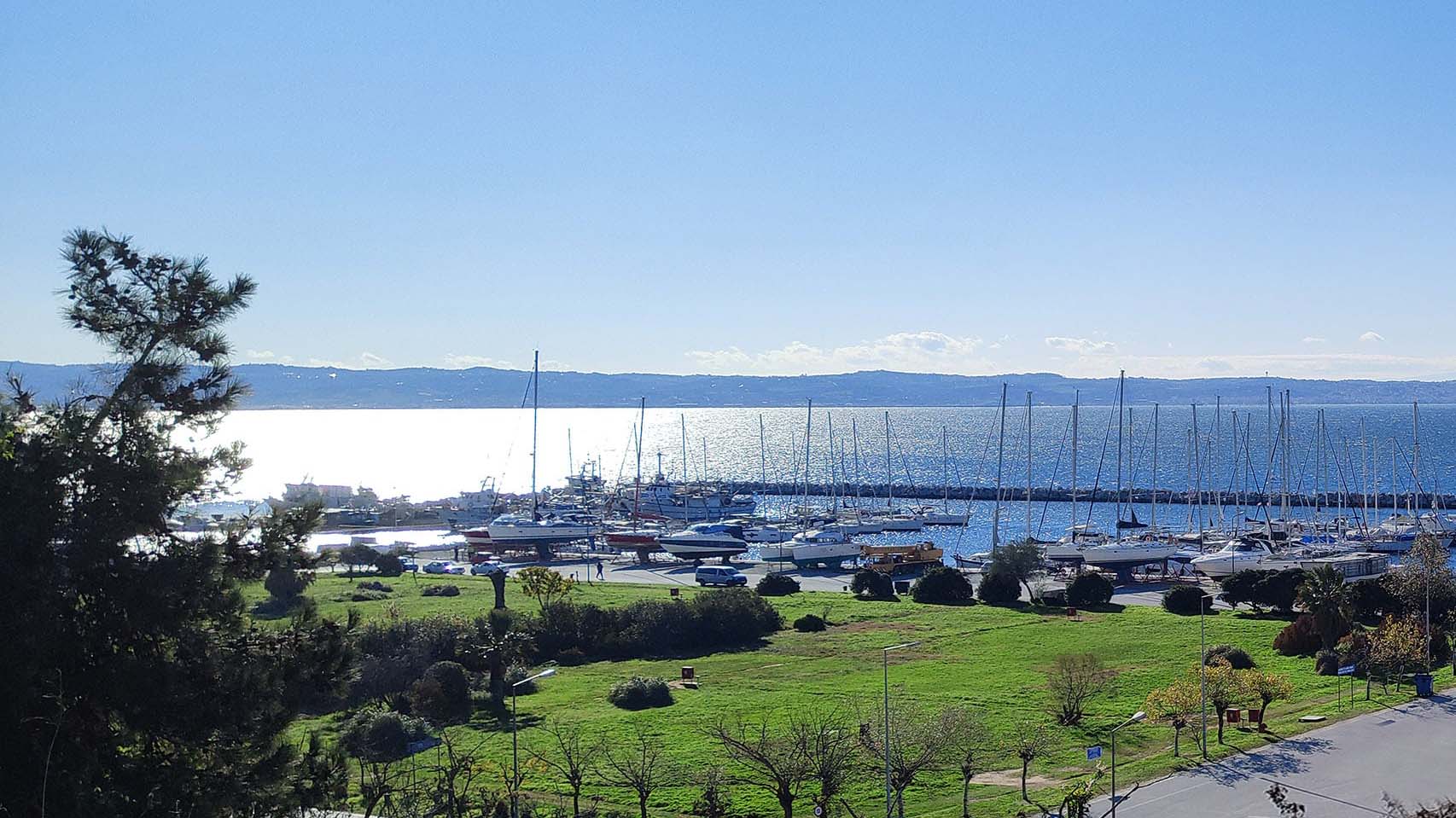
Time for ​​Aretsou!  The Marina has berthing capacity for 380 vessels up to 50 meters in length. It is open all year round and has a clean and green environment. An ambitious plan is currently being drawn up according to which the marina will be utilized and renovated, making it the jewel of the city and the pole of attraction for every citizen who wants to visit it.

This is your best chance to enjoy your coffee with the absolute morning calm of the sea or pick your…lunch option! Ask for the famous rib carpaccio, the delicious sea bass tartare, pasta with seafood and many more suggestions based on the pure ingredients of the sea and of course, with a great dose of imagination and care. Combine your meal with one of the fine wine labels and indulge in the seaside setting and intense flavors.

More

Noesis – Where Thessaloniki meets science and science meets fun!

Published in Arts & Culture

Thinking of visiting Thessaloniki with kids? Here are only some of the reasons why Noesis should be on your must- visit list!

SHOWS

You can watch an astronomy show at the Planetarium, a large format film or 3D movie in the Cosmotheater or do a ride show at the motion Simulator, all of them at the same place. Have you ever been underwater, through lava and in a whirlpool following a volcanic eruption? We bet not!


TECHNOLOGY MUSEUM

From the ancient Greek Technology exhibition to Classic Cars exhibition to Technopark, your journey to technology has just began.


TECHNOPARK

A fun adventure to begin with and definitely a hands-on area for all! At Technopark you can take part in an interactive journey of the world of Physics and make everyday life experiments and examples from electricity to magnetism, mechanics, optics etc.


ANCIENT GREEK TECHNOLOGY EXHIBITION 

Samples of technological innovations and works of Ancient Greek inventors, reconstructions based on written evidence of the everyday life, constructions, naval engineering, measurements etc. are only a few of the things that you ‘ll have the chance to experience at Noesis Museum.


CLASSIC CARS EXHIBITION

Meet special exhibits to compare the trends of the past with current or future designs and get to know cars classified as “milestones” of automotive technology.

P.S. No need to have a license to enter the exhibition!


EDUCATIONAL PROGRAMMS         

Summer programs, science shows, children’s parties, for groups and individual visitors are also available.

At Noesis you can also finds:

  • A 200-seat Amphitheater, equipped with up-to-date audiovisual and translation systems
  • Temporary Exhibition Hall, a place suitable to host exhibitions from other museums and cultural organizations from Greece and abroad
  • Library, with relevant books, DVDs and computer working stations (1Gb internet)
  • Digital Lab, a place where multimedia productions and 3D animations can be created in-house (about to be completed)
  • Café and Restaurant

Tip: All exhibitions and shows available in English language with audio guide, phone application or headphones, so don’t forget to ask for availability at the reception!

More

Discovering the Open Museum of Rural Life in Ossa

Published in Getaways

Built on the slopes of Mount Vertiskos, at an altitude of 650 m and 40 km NE of Thessaloniki, Ossa is one of the oldest, most historic and picturesque settlements of Central Macedonia, with natural, archaeological, folklore, religious and architectural interest.

Antiquities of prehistoric, Hellenistic and Byzantine times have been found in the area, but ancient Ossa is located a little further east and is referred to as the town of Visaltia, which cut its own currency. In modern times the today’s settlement is referred to as Vyssoka, answering to an Ottoman registry of 1568.

The oldest known reference to Visoka dates back to the Ottoman settlement of 1568, where it is noted as a prosperous settlement with a small minority of Muslim inhabitants. In the following centuries, the settlement is referred to as Vyssoka or Vyrsoka. Its inhabitants were mainly engaged in tanning, footwear, hair trade, coal mining and mining, while women were involved in the manufacture of ornate and colorful woolen woven fabrics.

The inhabitants of Ossa are local, native Macedonians. Some families have their origins in Epirus and Thessaly, while after 1922 about 30 families from Almali in the East Thrace settled in the village. Residents of Ossa also moved to Nigrita and Soho, which shows the close relationship between the three settlements, which is also reflected in the common cultural tradition, such as customs, traditions, songs and clothing.

Particularly developed, at the end of the 19th and the beginning of the 20th century, was the educational activity in Ossa with the operation of exclusively Greek schools, male and female schools, as well as the famous Urban School of Vyssoka.

Nowadays, Ossa is inhabited by about 300 permanent residents, who are engaged in agricultural production, animal husbandry and freelancers. 

The village operates, with the care and voluntary support of the Cultural Association of Ossa citizens “Agia Kyrana”.


What to do

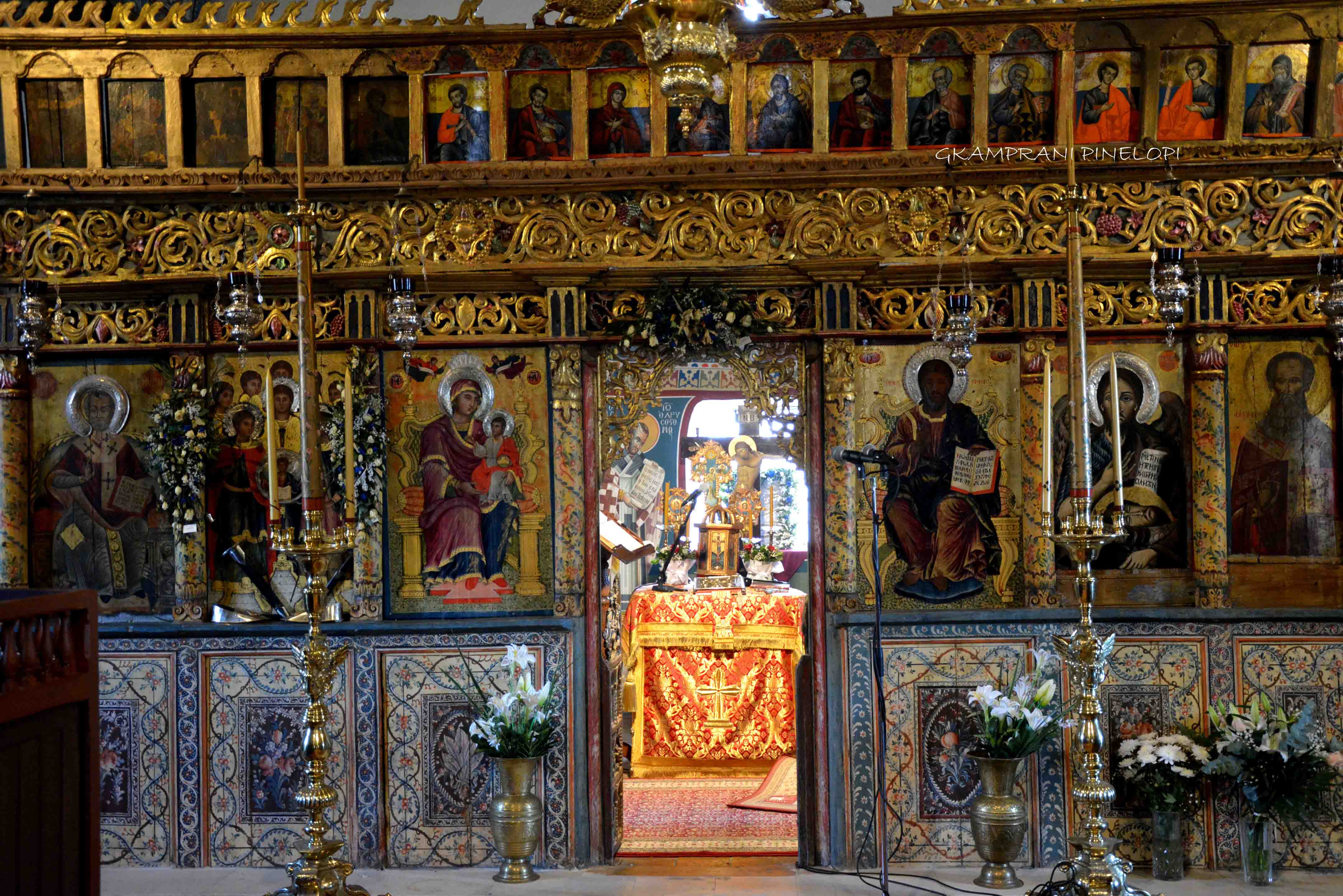
Make a stop at the two churches of the village, Taxiarches (1804) and Agia Kyrana (1868).

The two churches of the village are of artistic interest. The oldest of the Brigadiers of 1804 with the rare wood-carved iconostasis and the icons of Koulakiotes painters and the second of 1840/60 dedicated to the patroness of the village of Agia Kyranna, inside which is kept its despotic icon, a work by Christodoulos Zografos.

DSC 0012


Visit the Folklore Collection of Ossa.

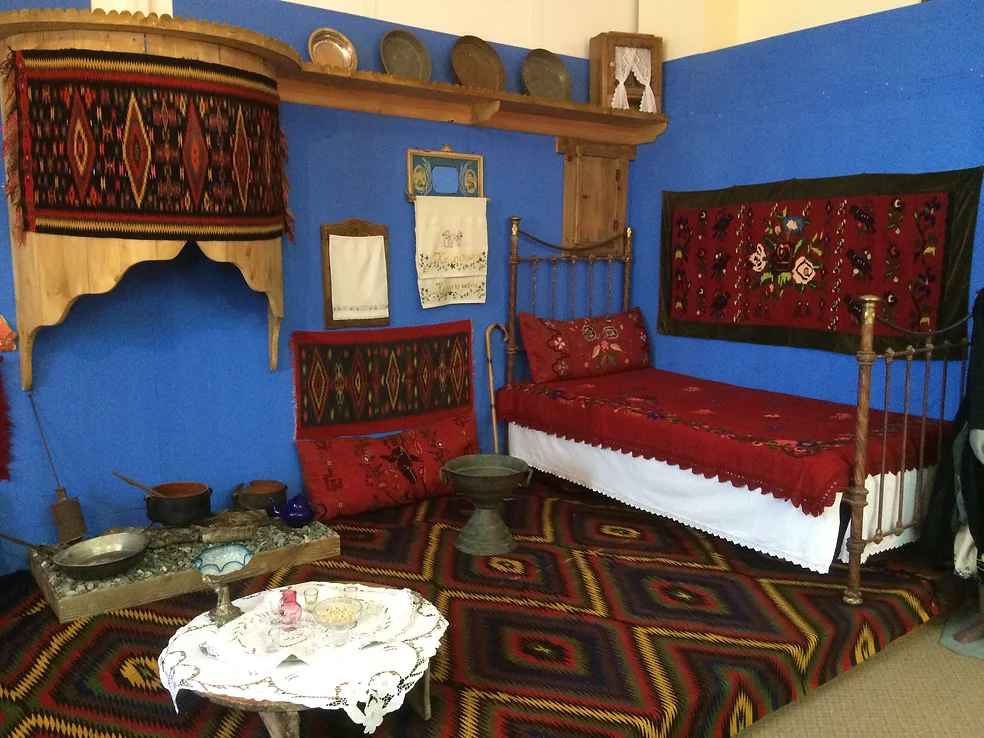
The Ossa Folklore Collection, housed on the floor of the preserved old Primary School (1926) was created in August 1992 by a group of young people, in order to save any kind of object related to the history and tradition of their village. Thus, an exhibition emerged, highlighting elements from rural life and everyday life, such as agricultural and livestock tools, photographs, textiles, everyday objects, costumes, shoemaking and shoemaking tools, as well as others representing local folk tradition and art.

129bff c13720d6a36e4fd791e6ed7b67f9b7d6 mv2


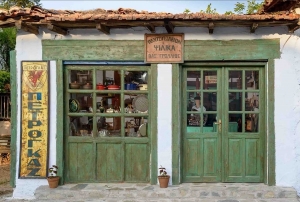
Discover the Old Grocery Store

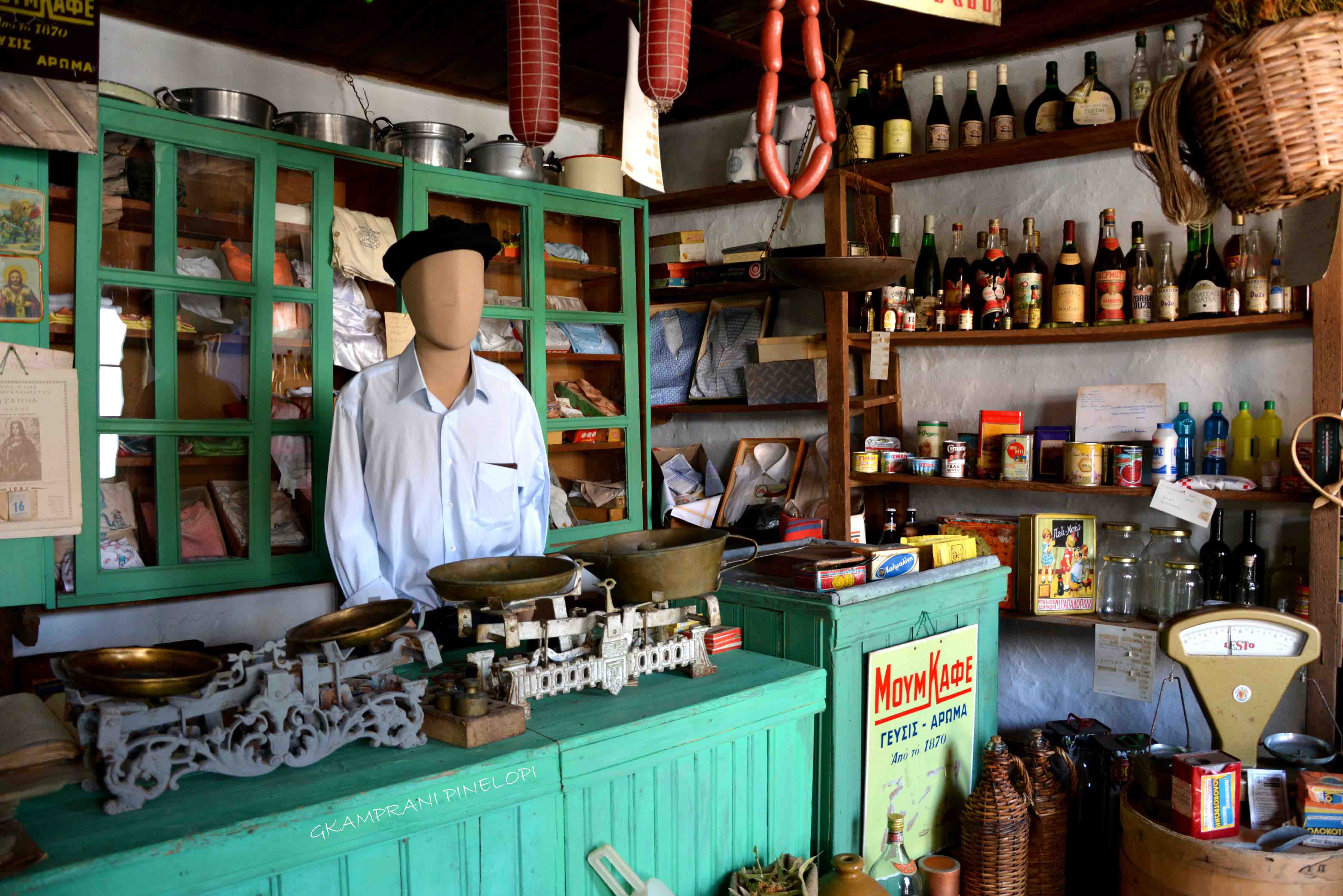
In the Lower Market of Ossa, which was once the historical, economic, social and administrative center of the village, and which in recent decades has remained neglected and degraded, the association took the initiative and proceeded to restore and revive an old grocery store. The wooden bench and display cases, the old scales and boxes, the boxes with the threads and buttons, the cupboards and bottles, the old student bags and all kinds of boxes and product packaging, as well as many rare metal billboards, were placed. in the area of ​​the old grocery store to evoke nostalgic memories of the older ones and to "tell" pages of modern history to the younger ones.

DSC 0043


Find out the long history of Ossa’s shoemakers

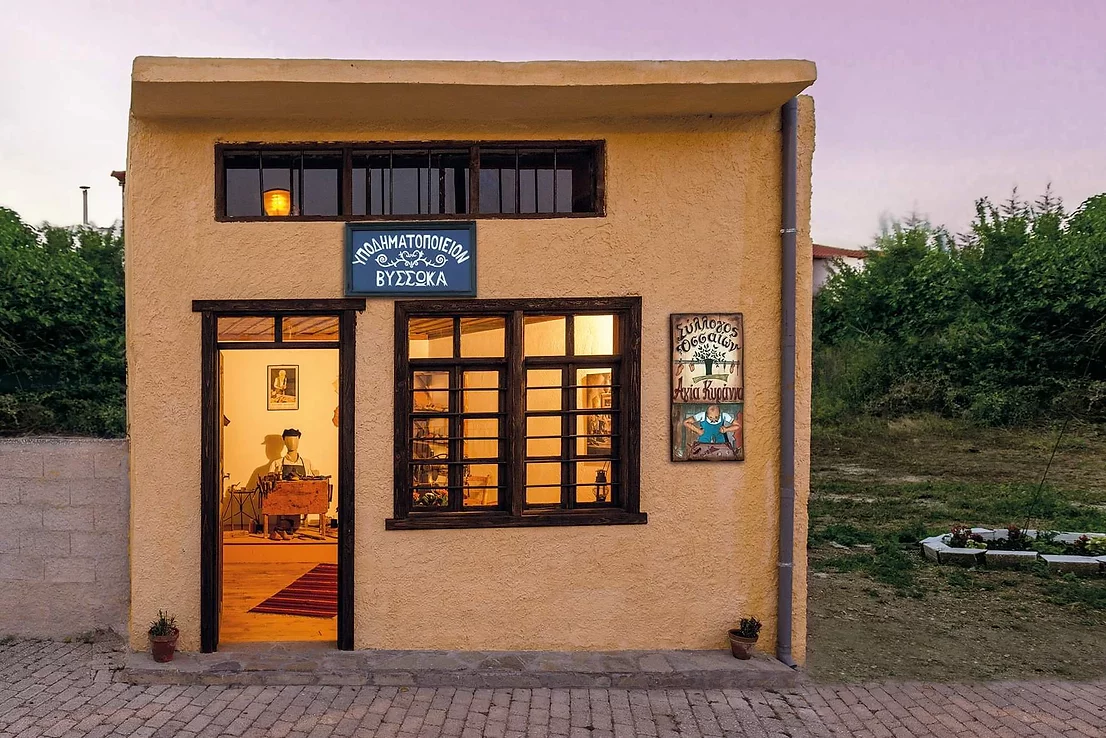
Ossa's famous shoemakers, the shoemakers of Vyssoka, as they were more widely known in Central Macedonia, were a prosperous and powerful union of professionals who not only left their mark on Ossa's recent history and economy throughout the 18th, 19th and 20th century, but also in the wider area of northern Greece. The descriptions in the sources of the beginning of the 20th century vividly and clearly describe the long history, the organization and the operation of the trade union of the Vyssoka's tanners and shoemakers. The scenographic revival of an old shoemaking workshop in the form of an exhibition, keeps alive the memories of the village, saving the material evidence of this traditional profession, which for many centuries developed in the settlement. The Old Tsagkaradiko is the precursor "The Shomaker 's House", the first and only multimedia showroom for the systematic recording of the shoemaking history in Greece, with main reference to the settlement of Ossa!

129bff 38012b6b5a794ba5bac723b2ff01f031 mv2


Go for wine-tasting at Babatzimopoulos Estate

Within a short distance from the settlement, you can find the Organic Vineyards of Ossa – Babatzimopoulos Estate and the Agios Georgios and Kioski forest recreation areas. 

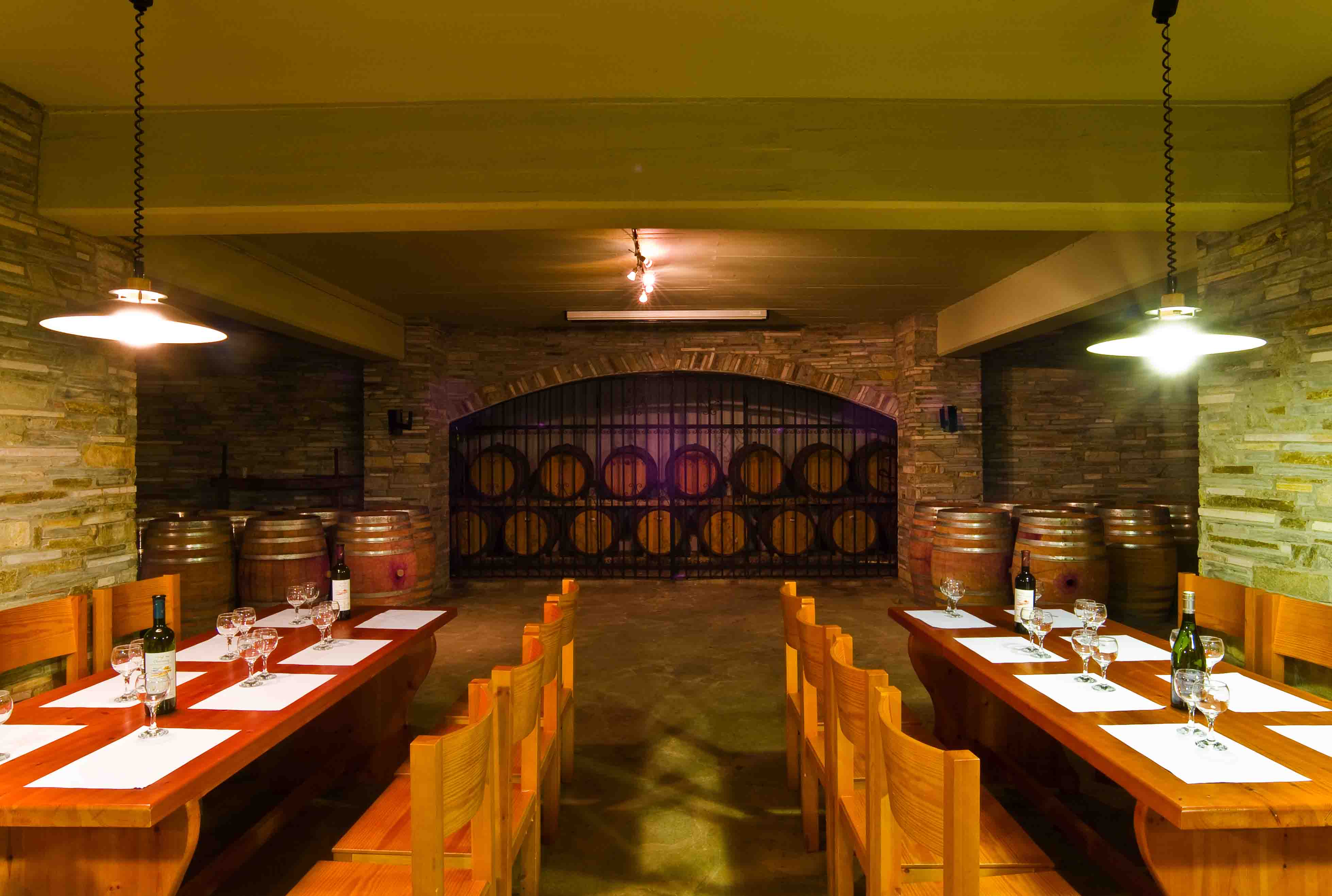
The domaine stretches over 500 acres, 264 of which are being organically cultivated with Greek and foreign wine varieties, while the rest is covered by forest, branding it as an excellent agro-tourism destination. Apart from the vineyard, you’ll also come across an up-to-date winery for bottling organic wine, wineaging areas, wine-tasting rooms, a permanent photo exhibition and a distillery for ouzo, tsipouro, grape extracts and other distillates’ production by the brand name of BABATZIM, true to the family’s tradition since 1875 in Constantinople.

The magnificent outdoors of Domaine Anestis Babatzimopoulos and the numerous activities provided at the vineyard attract many wine, distillates and nature lovers, thus numerous recreation and food and beverage facilities are available.

Ossa Papatzimopoulos 2


Blend in with the locals in “Cherry Festival”

The particular soil and climatic conditions of Ossa, characterized by a healthy, cool and dry climate, favor the production of high-quality agricultural products, with a tradition of growing crisp cherries. On the occasion of this production, the local cultural club successfully organizes the annual “Cherry Festival” events every year (end of June). Residents celebrate the excellent quality of their production, organizing parallel cultural events.

More

Mt Hortiatis: Traditional by Nature

Published in Getaways

Just a short drive from Thessaloniki, this low-key mountain offers an excellent escape from the city.

Largely unknown and virtually untouched by mass tourism, Mount Hortiatis, just 30-50 kilometers southeast of Thessaloniki, hosts scenic villages, rich traditions and customs, bountiful natural attractions and a wealth of opportunities for outdoor activities. Just 27 kilometers from the city center on the road to Polygyros, after leaving Nea Redestos and the Thermi springs behind, turn left and follow the sign to Peristera. Approaching the massif, the winding uphill road leaves the Anthemountas Plain behind and enters a somewhat unexpected wild rocky terrain covered in holm oak and dotted with animal pens. Six kilometers on is Peristera, at 600 meters above sea level, with the Thermaikos Gulf on the far horizon.

Peristera is more than 12 centuries old and a stroll around it reveals interesting samples of Macedonian architecture.

The small central square, Mana, with a plane tree, a 50s-style cafe and water fountain offers a step back in time. Right above the square lies the Church of Aghios Andreas, part of an old monastery founded in 870. The alleyways around the church, with their whitewashed and stone houses, comprise one of the most interesting sections of Peristera. The square above the church is an ideal starting point for walks. One easy forest path leads to the Chapel of Aghios Haralambos about 300 meters on. Continuing east, you’ll shortly come to a hill with a small pavilion, providing panoramic views of the plain, the mountain summit (1,201 m) and the Thermaikos Gulf. If you can, stay to see the sunset.

Seven pleasant kilometers east of Peristera is the town of Livadi, perched on a ridge at 750 meters above sea level. Some samples of Macedonian architecture have been restored, some not. An old plane tree dominates the central square.

The 11-kilometer journey from Livadi to Petrokerasa is one of the most idyllic routes in the area. Pine, beech, chestnut and oak forests alternate with small green valleys and rocky hills. Five kilometers on, an uphill dirt road on the right leads to Profitis Ilias, on the summit of Omvrianos (1,009 m). At the 6.5 km mark, the downhill road meets a right turn that leads to the Makropana spring – a shady, green recreation area.

Petrokerasa, at 600 m, is a model village. Thanks to an energetic former community leader, its inhabitants systematically tend to their flower gardens and whitewash their houses, while also parking their tractors outside the village. Cars are not allowed into the square, which forms a most pleasant picture, with benches, small cafes and tavernas. In the quaint alleyways of Petrokerasa, you will see the traditionally wide covered balconies, stone ovens and picturesque chimneys.

What to see & do

In Petrokerasa: the rich Folk History Museum, the tsipouro distillery, the beeswax press and the flour mill; a trail through the forest with 900 steps from Mavrokopana leads to the top of Mt Omvrianos; a 4×4 route from Paliomana to Omvrianos summit; picnics at the chapels of Ai Giorgis, Ai Giannis, Aghia Triada, Panagia and Aghios Athanasios. In Livadi: at Pefka, there is a recreation area with views and a spring; at 3.5 kilometers on the road to Petrokerasa, take a right which leads to Kalogeriko – a paragliding spot (2310.476000).

ATHENSPLUS • FRIDAY, APRIL 30, 2010

More

Thessaloniki Documentary Festival

Published in Events

Thessaloniki Documentary Festival returns! 10-20 March 2022 ?

The 24th Thessaloniki Documentary Festival will be held from Thursday 10 to Sunday 20 March, abiding by all health and safety protocols in force, in both physical spaces and online. Within the framework of the 24th TDF, 233 full-length and short film documentaries will be screened, at the time-honored home ground of the Festival, Olympion and Pavlos Zannas theaters, as well as in the movie theaters Frida Liappa, Tonia Marketaki, John Cassavetes and Stavros Tornes, at the Port of Thessaloniki. In addition, the audience will have the opportunity to watch films online through the Festival’s digital platform, online.filmfestival.gr.

Check out the Festival's program

Click here to download the physical screenings

Click here to download the online screenings


More

TOP 10 things to do in Thessaloniki

Published in Tips


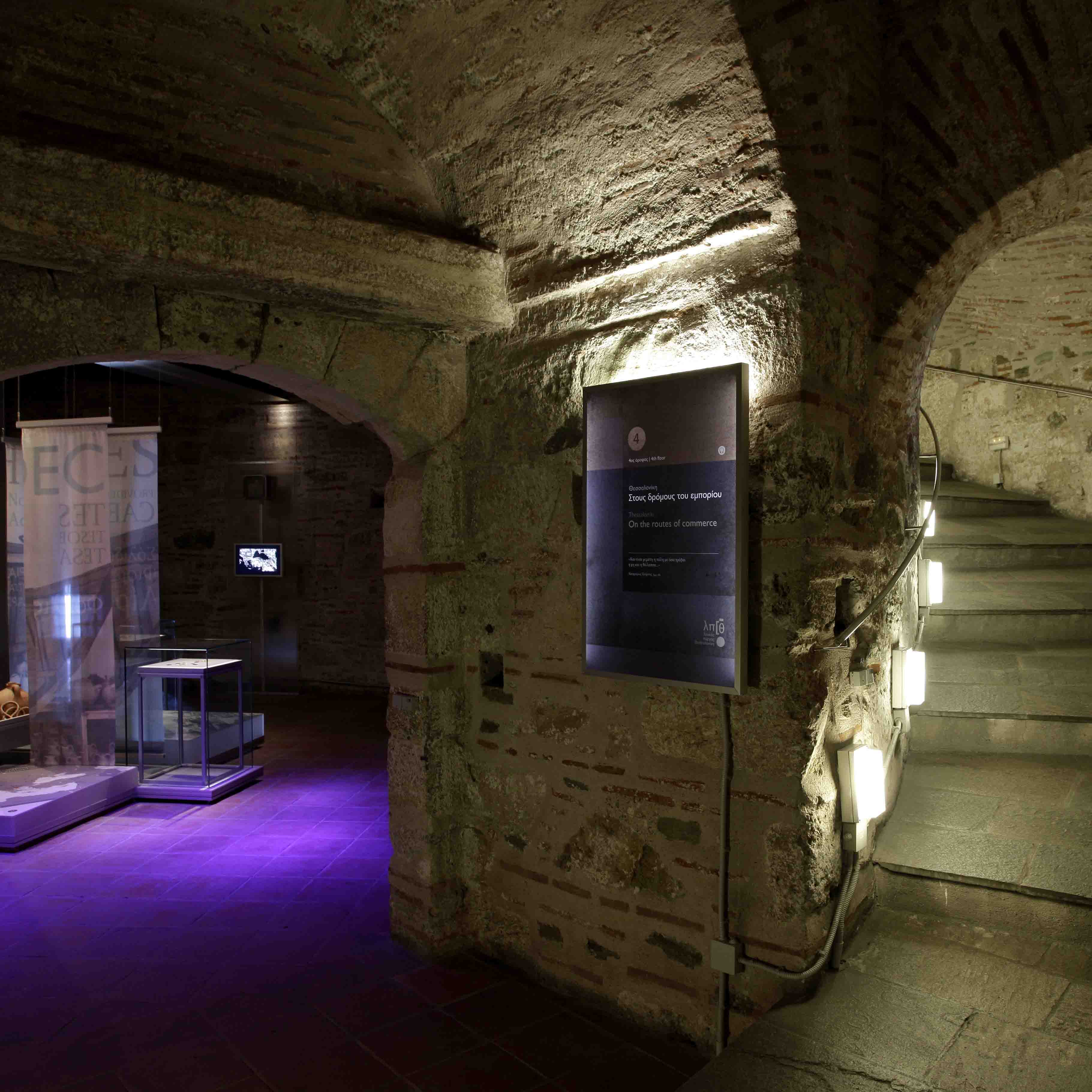
Join a tour in the White Tower and watch the multimedia exhibition on the history of the city.

ΜΟΥΣΕΙΟ ΛΕΥΚΟΥ ΠΥΡΓΟΥ


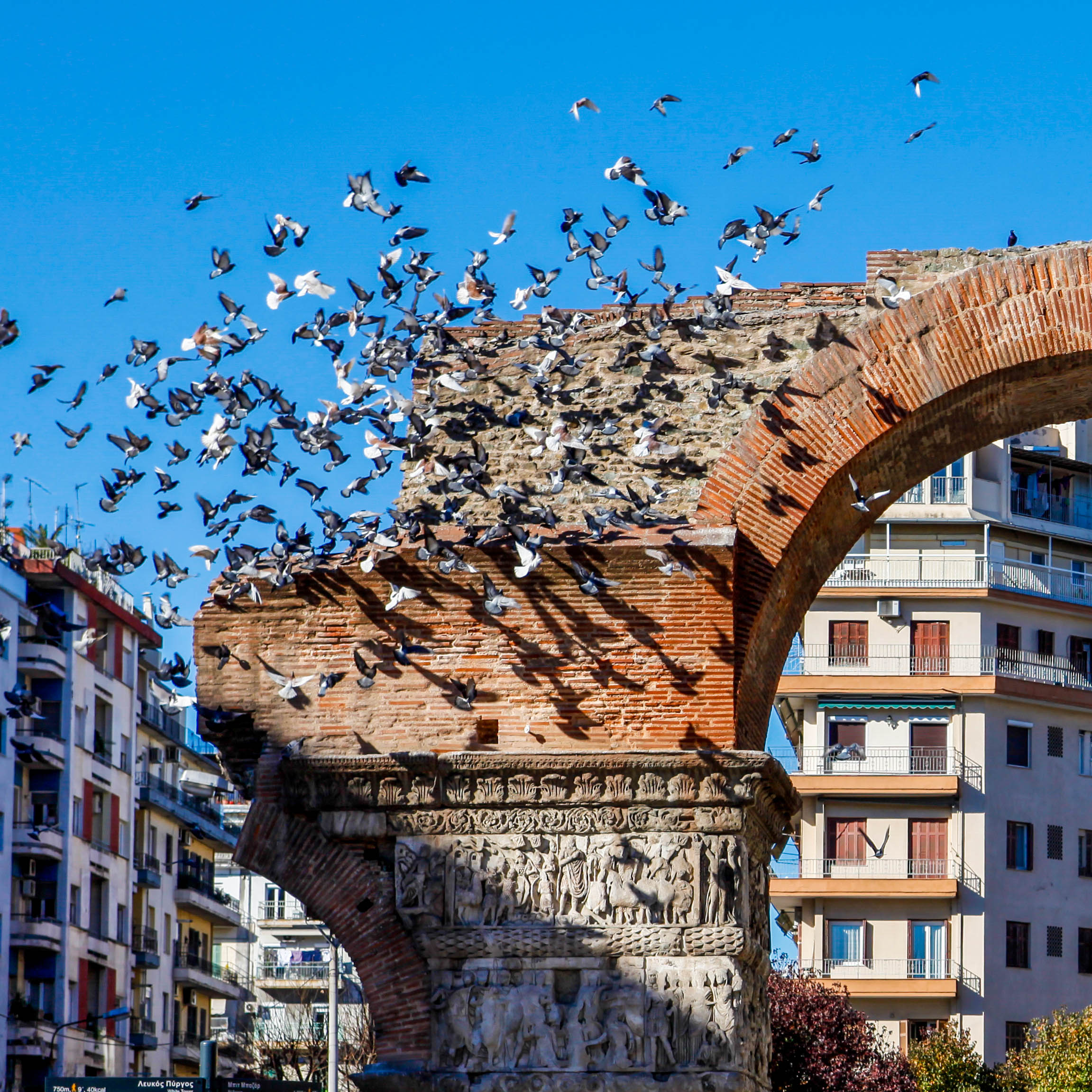
Meet up at Kamara and wander in thewider area before you enter Rotunda.

ΚΑΜΑΡΑ 3


Go on a pilgrimage to the UNESCO monuments of St. Demetrius, Acheiropoietos, Vlatadon monastery or Panagia Chalkeon.

vlatadon


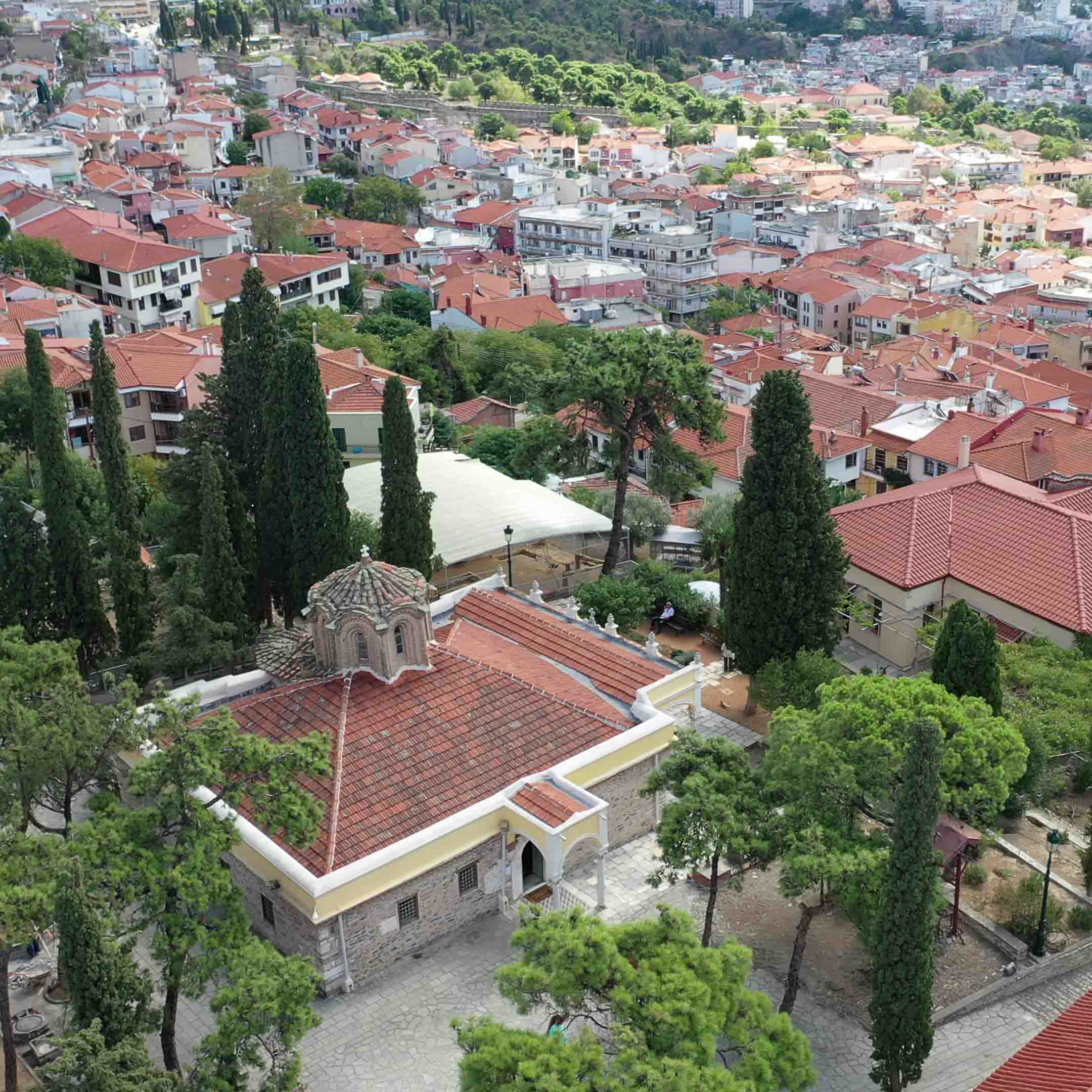
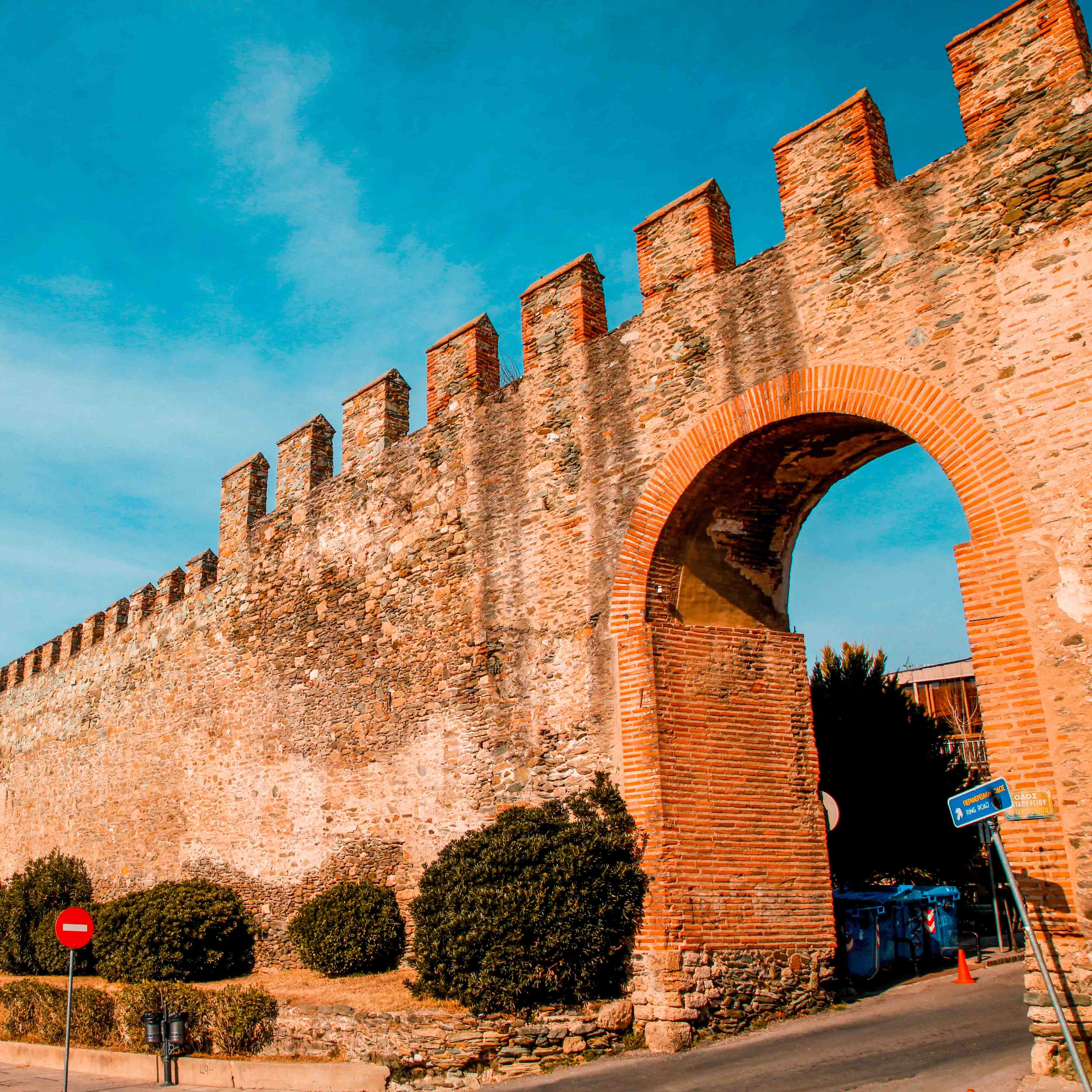
Walk in Ano Poli with the cobbled streets, the fortress structures and the walls.

I.D. KASTRA AREA 1


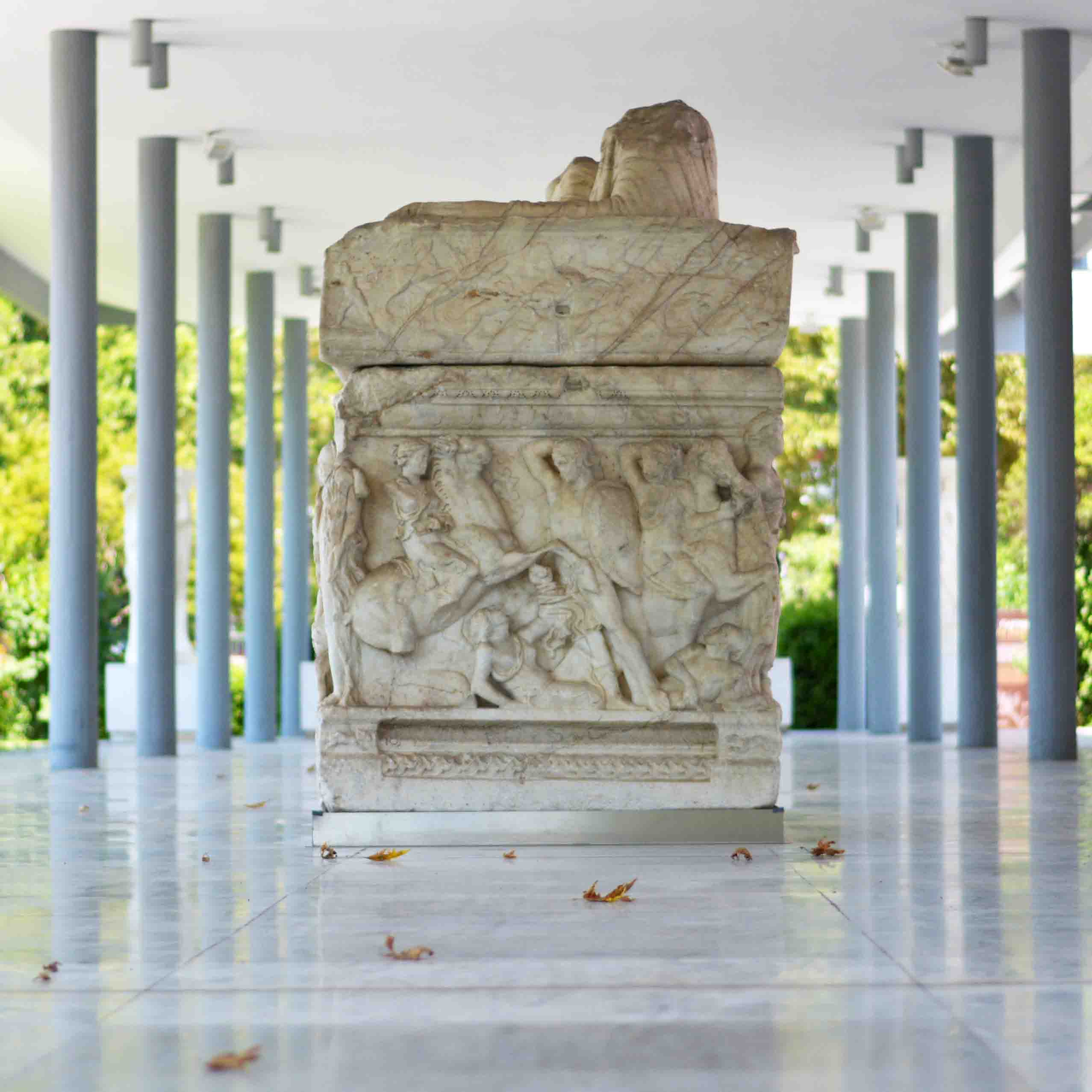
Visit the city museums: Archaeological, Byzantine, Jewish, Photography and many more!

amth


Discover the nearby escapes on two wheels, on horseback riding or just by walking around.

Nimfopetra


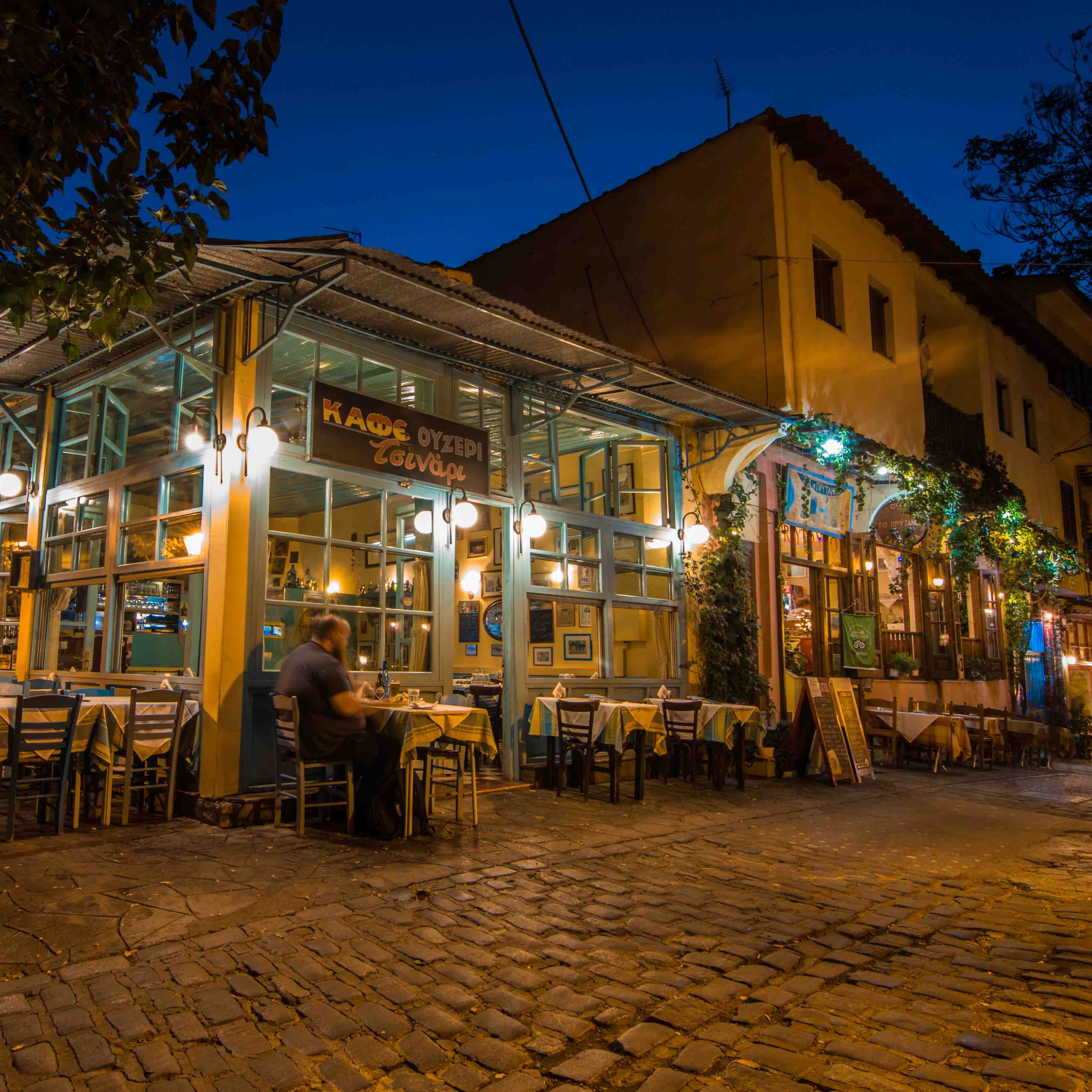
Enjoy mezedes, meat dishes and local recipes at small taverns you will find at every corner 

3S5A9664


Search for events, festivals, exhibitions, theatrical performances and concerts

intl


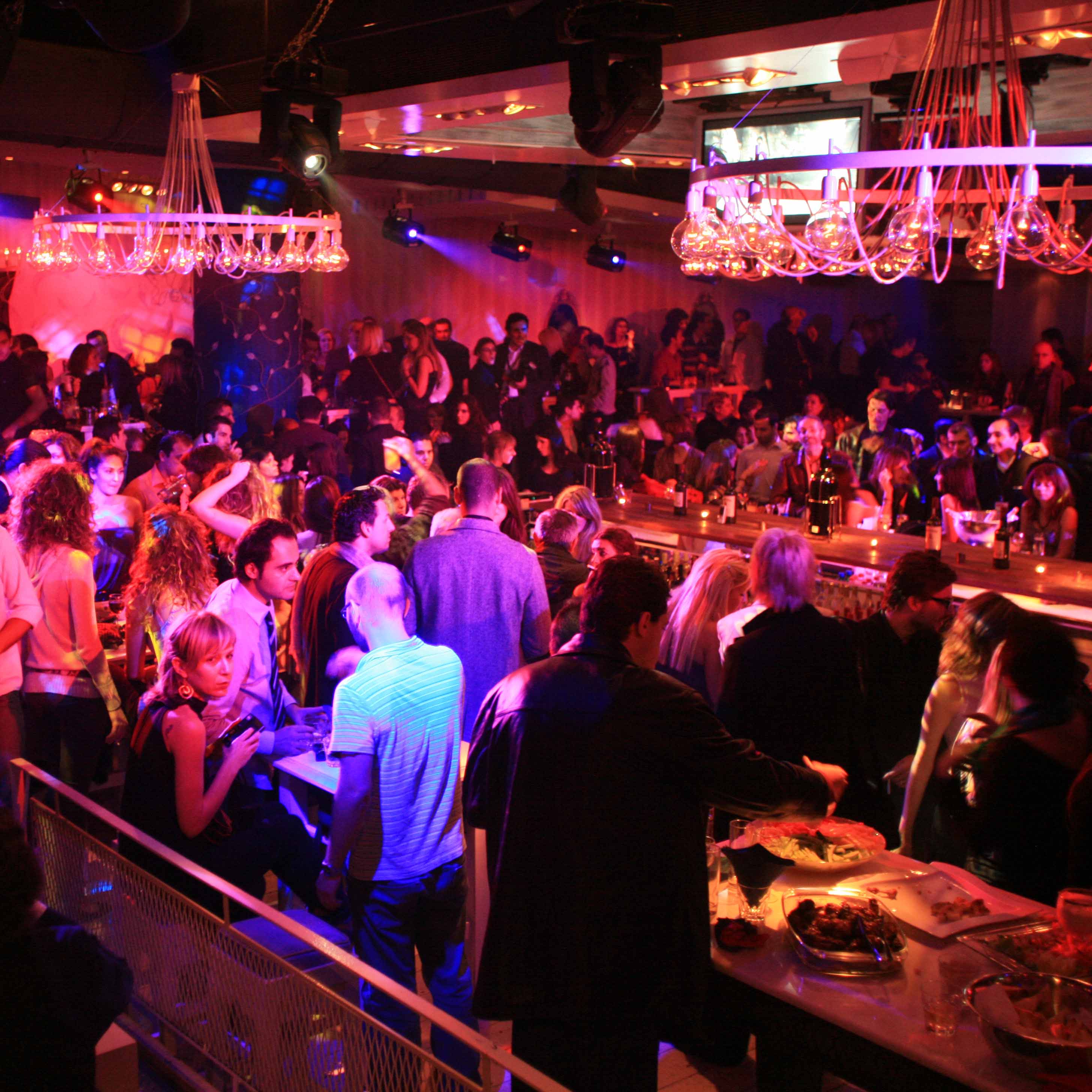
Party all night at the districts of Ladadika and Valaoritou

club


More

How to ask for a price in Greek

Published in It’s all Greek to me

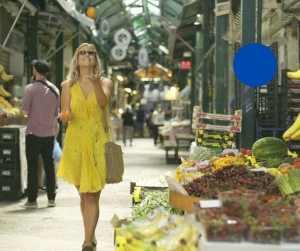
You are in the grocery store. Or maybe in a fish auction. Or maybe in a farmers market! Here your guide to communicate in Greek and ask for a price!

  • Poso kostizi?                          (How much does it cost?)          Pronounced as "pόso kostίzi?"
  • Poso kani?                             (How much is it?).                       Pronounced as "pόso kani?"
  • Pia ine i timi?                         (What's the price?)                     Pronounced as "pia ίne i timί?"
  • Pio ine to kostos?                  (What's the cost?)                      Piό ίne to kόstos?


More
Subscribe to this RSS feed

#visitthessaloniki